ComputerVoltageSources group photo

Yahoo Groups archive

ComputerVoltageSources

Archive for ComputerVoltageSources.

Index last updated: 2026-03-30 01:00 UTC

Thread

Power Supply Connections

Power Supply Connections

2006-03-15 by Larry T.

I would like to suggest that, if at all possible, we include both the
Blacet/MOTM 4 pin +/-15v power connector. and the Synthesizers.com
+5/+/-15v 6 pin connector. The board could allow for the optional +15
to +5 regulators when using the 4 pin connector. Some of us already
have +5 in our systems, and generally, no matter how much ANYTHING you
come up with will use (short of a room heater), the +5v supply is
never anywhere near being used to it's rated output. I note that some
of the newer MOTM boards also use a seperate +5v supply.

I bring this up in part because of the LED/LCD/VFD discussions, and
partly because the MPU in consideration has requirements for +5v, and
I really don't want to add more +15 to +5 regulators to my already
stressed out +15v supply, when I have 4-6A of un-touched +5 just
sitting around asking to be used.

Larry T.

Re: Power Supply Connections

2006-03-15 by mate_stubb

What about modcan and wiard - do they get any power supply connector love?

Moe

--- In ComputerVoltageSources@yahoogroups.com, "Larry T." <larry@...>
wrote:
>
> I would like to suggest that, if at all possible, we include both the
> Blacet/MOTM 4 pin +/-15v power connector. and the Synthesizers.com
> +5/+/-15v 6 pin connector. The board could allow for the optional +15
> to +5 regulators when using the 4 pin connector. Some of us already
> have +5 in our systems, and generally, no matter how much ANYTHING you
> come up with will use (short of a room heater), the +5v supply is
> never anywhere near being used to it's rated output. I note that some
> of the newer MOTM boards also use a seperate +5v supply.
>
> I bring this up in part because of the LED/LCD/VFD discussions, and
> partly because the MPU in consideration has requirements for +5v, and
> I really don't want to add more +15 to +5 regulators to my already
> stressed out +15v supply, when I have 4-6A of un-touched +5 just
> sitting around asking to be used.
>
> Larry T.
>

RE: [ComputerVoltageSources] Power Supply Connections

2006-03-15 by John Loffink

Good point. Here's what could be supported based upon PCB stuffing options:

Synthesizers.com 6 pin 0.100"
MOTM/Blacet 4 pin 0.156" add 5 V regulator
MOTM 6 pin 0.156"
Modcan 3 pin 0.156" add 5 V regulator

Any others?

John Loffink
The Microtonal Synthesis Web Site
http://www.microtonal-synthesis.com
The Wavemakers Synthesizer Web Site
http://www.wavemakers-synth.com


> -----Original Message-----
> From: ComputerVoltageSources@yahoogroups.com
> [mailto:ComputerVoltageSources@yahoogroups.com] On Behalf Of Larry T.
>
> I would like to suggest that, if at all possible, we include both the
> Blacet/MOTM 4 pin +/-15v power connector. and the Synthesizers.com
> +5/+/-15v 6 pin connector. The board could allow for the optional +15
> to +5 regulators when using the 4 pin connector. Some of us already
> have +5 in our systems, and generally, no matter how much ANYTHING you
> come up with will use (short of a room heater), the +5v supply is
> never anywhere near being used to it's rated output. I note that some
> of the newer MOTM boards also use a seperate +5v supply.
>
> I bring this up in part because of the LED/LCD/VFD discussions, and
> partly because the MPU in consideration has requirements for +5v, and
> I really don't want to add more +15 to +5 regulators to my already
> stressed out +15v supply, when I have 4-6A of un-touched +5 just
> sitting around asking to be used.
>

Re: [ComputerVoltageSources] Re: Power Supply Connections

2006-03-15 by john mahoney

Any allowances for +/-12V systems? Doesn't matter to me, personally, but
it's worth mentioning.

Looks to me that the specs are firming up nicely.

This group is doing a great job of "group think"! Excellent
suggestions/research/insight from... well, from a number of you guys. (I'm
not naming names out of fear that I'll leave out a worthy one.)
--
john (group cheerleader)

Re: [ComputerVoltageSources] Power Supply Connections

2006-03-15 by harrybissell

IMHO trying to make 5V from 15V with an onboard linear
regulator is a loser. The power dissipation is going to
be so high you are just installing a space heater for
your VCOs.

I think that the .156" connector should be supported, and the
.1" connector added ~if and only if~ board density permits.

You could easily make up an adapter harness for ANY of the above...

10V of drop on the regulator (guaranteed :^) is too much (imho)

H^) harry

John Loffink wrote:
>
> Good point. Here's what could be supported based upon PCB stuffing
> options:
>
> Synthesizers.com 6 pin 0.100"
> MOTM/Blacet 4 pin 0.156" add 5 V regulator
> MOTM 6 pin 0.156"
> Modcan 3 pin 0.156" add 5 V regulator
>
> Any others?
>
> John Loffink
> The Microtonal Synthesis Web Site
> http://www.microtonal-synthesis.com
> The Wavemakers Synthesizer Web Site
> http://www.wavemakers-synth.com
>
> > -----Original Message-----
> > From: ComputerVoltageSources@yahoogroups.com
> > [mailto:ComputerVoltageSources@yahoogroups.com] On Behalf Of Larry
> T.
> >
> > I would like to suggest that, if at all possible, we include both
> the
> > Blacet/MOTM 4 pin +/-15v power connector. and the Synthesizers.com
> > +5/+/-15v 6 pin connector. The board could allow for the optional
> +15
> > to +5 regulators when using the 4 pin connector. Some of us already
> > have +5 in our systems, and generally, no matter how much ANYTHING
> you
> > come up with will use (short of a room heater), the +5v supply is
> > never anywhere near being used to it's rated output. I note that
> some
> > of the newer MOTM boards also use a seperate +5v supply.
> >
> > I bring this up in part because of the LED/LCD/VFD discussions, and
> > partly because the MPU in consideration has requirements for +5v,
> and
> > I really don't want to add more +15 to +5 regulators to my already
> > stressed out +15v supply, when I have 4-6A of un-touched +5 just
> > sitting around asking to be used.
> >
>
> SPONSORED LINKS
>
> Music instrument stores Electronic Instruments
>
> Module
>
> ----------------------------------------------------------------------
> YAHOO! GROUPS LINKS
>
> + Visit your group "ComputerVoltageSources" on the web.
>
> + To unsubscribe from this group, send an email to:
> ComputerVoltageSources-unsubscribe@yahoogroups.com
>
> + Your use of Yahoo! Groups is subject to the Yahoo! Terms of
> Service.
>
> ----------------------------------------------------------------------

RE: [ComputerVoltageSources] Re: Power Supply Connections

2006-03-15 by John Loffink

7805 or 78L05 regulators can take either +12 V or + 15 V and give 5 volts
out.

What's +/-12V other than Wavemakers? :-)

John Loffink
The Microtonal Synthesis Web Site
http://www.microtonal-synthesis.com
The Wavemakers Synthesizer Web Site
http://www.wavemakers-synth.com


> -----Original Message-----
> From: ComputerVoltageSources@yahoogroups.com
> [mailto:ComputerVoltageSources@yahoogroups.com] On Behalf Of john mahoney
>
> Any allowances for +/-12V systems? Doesn't matter to me, personally, but
> it's worth mentioning.
>

RE: [ComputerVoltageSources] Power Supply Connections

2006-03-15 by John Loffink

Synth circuits use 78L05s all the time: MOTM, CGS, etc.

What do you propose? Not all systems have 5 volts.

Why make users build messy harnesses or adapters when multiple power
connectors could be supported on the PCBs? I disagree, 0.100" should be
supported as well as any other common power connectors.

John Loffink
The Microtonal Synthesis Web Site
http://www.microtonal-synthesis.com
The Wavemakers Synthesizer Web Site
http://www.wavemakers-synth.com


> -----Original Message-----
> From: ComputerVoltageSources@yahoogroups.com
> [mailto:ComputerVoltageSources@yahoogroups.com] On Behalf Of harrybissell
> Sent: Tuesday, March 14, 2006 10:26 PM
>
> IMHO trying to make 5V from 15V with an onboard linear
> regulator is a loser. The power dissipation is going to
> be so high you are just installing a space heater for
> your VCOs.
>
> I think that the .156" connector should be supported, and the
> .1" connector added ~if and only if~ board density permits.
>
> You could easily make up an adapter harness for ANY of the above...
>
> 10V of drop on the regulator (guaranteed :^) is too much (imho)
>
> H^) harry
>

Re: [ComputerVoltageSources] Power Supply Connections

2006-03-15 by harrybissell

I suggest a big wish list, then pare down to the amount that
will fit on the PCB size you want without making the
density too high.

Really high density will amke the layout hard, possibly
affect yeild and the ability of some folks to successfully
complete the project.

I'm all for incorporating a good feature set, but its for sure
that 'creeping featurism' will set in if we're not careful.

The 78L05 is very unlikely to support the requirements of the LCD
backlight.

I'm agreeing if you just want the 5V for the LCD itself... the 78L05
will handle that.

(maybe I'm not up to speed yet, there are only a couple hundred posts
not counting files etc... :^)

H^) harry

John Loffink wrote:
>
> Synth circuits use 78L05s all the time: MOTM, CGS, etc.
>
> What do you propose? Not all systems have 5 volts.
>
> Why make users build messy harnesses or adapters when multiple power
> connectors could be supported on the PCBs? I disagree, 0.100" should
> be
> supported as well as any other common power connectors.
>
> John Loffink
> The Microtonal Synthesis Web Site
> http://www.microtonal-synthesis.com
> The Wavemakers Synthesizer Web Site
> http://www.wavemakers-synth.com
>
> > -----Original Message-----
> > From: ComputerVoltageSources@yahoogroups.com
> > [mailto:ComputerVoltageSources@yahoogroups.com] On Behalf Of
> harrybissell
> > Sent: Tuesday, March 14, 2006 10:26 PM
> >
> > IMHO trying to make 5V from 15V with an onboard linear
> > regulator is a loser. The power dissipation is going to
> > be so high you are just installing a space heater for
> > your VCOs.
> >
> > I think that the .156" connector should be supported, and the
> > .1" connector added ~if and only if~ board density permits.
> >
> > You could easily make up an adapter harness for ANY of the above...
> >
> > 10V of drop on the regulator (guaranteed :^) is too much (imho)
> >
> > H^) harry
> >
>
> SPONSORED LINKS
>
> Music instrument stores Electronic Instruments
>
> Module
>
> ----------------------------------------------------------------------
> YAHOO! GROUPS LINKS
>
> + Visit your group "ComputerVoltageSources" on the web.
>
> + To unsubscribe from this group, send an email to:
> ComputerVoltageSources-unsubscribe@yahoogroups.com
>
> + Your use of Yahoo! Groups is subject to the Yahoo! Terms of
> Service.
>
> ----------------------------------------------------------------------

RE: [ComputerVoltageSources] Power Supply Connections

2006-03-15 by John Loffink

Dave has proposed testing the actual LCD as his experience is that much less
current is required for the backlight than specified. A 78L05 is specified
to handle 100 mA. I'd recommend derating of 60%, for 60 mA. Backlight
specification was 160 mA, Dave has run a similar one at 16 mA with good
results.

I'm ordering one myself tonight.

Regardless, there's tons of room on the LCD Support PCB, 30 x 85 mm,
assuming it mounts parallel to the LCD assembly using standoffs. We could
fit a T-220 7805 or LM341 if needed.

John Loffink
The Microtonal Synthesis Web Site
http://www.microtonal-synthesis.com
The Wavemakers Synthesizer Web Site
http://www.wavemakers-synth.com


> -----Original Message-----
> From: ComputerVoltageSources@yahoogroups.com
> [mailto:ComputerVoltageSources@yahoogroups.com] On Behalf Of harrybissell
> Sent: Tuesday, March 14, 2006 10:46 PM
>
> I suggest a big wish list, then pare down to the amount that
> will fit on the PCB size you want without making the
> density too high.
>
> Really high density will amke the layout hard, possibly
> affect yeild and the ability of some folks to successfully
> complete the project.
>
> I'm all for incorporating a good feature set, but its for sure
> that 'creeping featurism' will set in if we're not careful.
>
> The 78L05 is very unlikely to support the requirements of the LCD
> backlight.
>
> I'm agreeing if you just want the 5V for the LCD itself... the 78L05
> will handle that.
>
> (maybe I'm not up to speed yet, there are only a couple hundred posts
> not counting files etc... :^)
>

Re: [ComputerVoltageSources] Power Supply Connections

2006-03-15 by harrybissell

OK lets do the math (check my figures)

78L05 has "100mA with suitable heatsink" and with short leads
to a PCB... 160C/W junction to ambient. Max junction temp is 125C

.016A x 10V (voltage drop) = .16W x 160 = 25.6C rise over ambient.

Even with a 25C ambient this is going to run HOT. You will not want
to touch it...

OK, we can use the 7805 which is MUCH better (and bigger).

If you are assuming two PCBs thats not a problem... as long as the
connector between the boards does not get silly. Still, two PCB
will double the cost. Best to avoid that if possible.

H^) harry

John Loffink wrote:
>
> Dave has proposed testing the actual LCD as his experience is that
> much less
> current is required for the backlight than specified. A 78L05 is
> specified
> to handle 100 mA. I'd recommend derating of 60%, for 60 mA.
> Backlight
> specification was 160 mA, Dave has run a similar one at 16 mA with
> good
> results.
>
> I'm ordering one myself tonight.
>
> Regardless, there's tons of room on the LCD Support PCB, 30 x 85 mm,
> assuming it mounts parallel to the LCD assembly using standoffs. We
> could
> fit a T-220 7805 or LM341 if needed.
>
> John Loffink
> The Microtonal Synthesis Web Site
> http://www.microtonal-synthesis.com
> The Wavemakers Synthesizer Web Site
> http://www.wavemakers-synth.com
>
> > -----Original Message-----
> > From: ComputerVoltageSources@yahoogroups.com
> > [mailto:ComputerVoltageSources@yahoogroups.com] On Behalf Of
> harrybissell
> > Sent: Tuesday, March 14, 2006 10:46 PM
> >
> > I suggest a big wish list, then pare down to the amount that
> > will fit on the PCB size you want without making the
> > density too high.
> >
> > Really high density will amke the layout hard, possibly
> > affect yeild and the ability of some folks to successfully
> > complete the project.
> >
> > I'm all for incorporating a good feature set, but its for sure
> > that 'creeping featurism' will set in if we're not careful.
> >
> > The 78L05 is very unlikely to support the requirements of the LCD
> > backlight.
> >
> > I'm agreeing if you just want the 5V for the LCD itself... the 78L05
> > will handle that.
> >
> > (maybe I'm not up to speed yet, there are only a couple hundred
> posts
> > not counting files etc... :^)
> >
>
> SPONSORED LINKS
>
> Music instrument stores Electronic Instruments
>
> Module
>
> ----------------------------------------------------------------------
> YAHOO! GROUPS LINKS
>
> + Visit your group "ComputerVoltageSources" on the web.
>
> + To unsubscribe from this group, send an email to:
> ComputerVoltageSources-unsubscribe@yahoogroups.com
>
> + Your use of Yahoo! Groups is subject to the Yahoo! Terms of
> Service.
>
> ----------------------------------------------------------------------

Re: Power Supply Connections - LCD current measured

2006-03-15 by djbrow54

I pulled my modular LCD apart and measured the backlight current. I
am running at 18 mA. It's of average brightness, certainly easy to
read but not overly bright. I purposely set it as low as I could to
minimize current.

It's hard to tell what the real spec is. The LCD is a Optrex
DMC20261NY-LY-ANE-CI. There is a safe operating area curve for the
backlight that max's at 260 mA at 25 C. It looks like 152 mA is safe
to 50 C. The forward voltage drop is measured at 130 mA. It's
probably pretty similar the the LCD we're planning on using so I'm
still guessing we can run the backlight at much lower current.
However, every backlight will probably be a bit different.

My 8x2 PSIM LCD does not have separate connections for the backlight
and draws about 70 mA of current. It is brighter. I do locally
regulate the +5 at the module. I have 4 cabinets and only one has +5
volts in it. I used a 7805 and bypassed it with a 220 ohm 1 w
resistor to split the current. I don't like running heat sinks if at
all possible and the resistor resulted in a reasonable heat rise for
both components.

I would vote for whatever connectors fit but would certainly want to
have a 6 pin MTA156 connector (ala MOTM) for those with +5 volts and
room for local regulation.

Dave

--- In ComputerVoltageSources@yahoogroups.com, harrybissell > >
> > Backlight specification was 160 mA, Dave has run a similar one
> > at 16 mA with good results.

Re: Power Supply Connections

2006-03-15 by Grant Richter

Just a few observations, please nobody get offended. Specially Harry who is a kick ass
musician, top notch engineer and all around fine fellow.

1. The Basic Atom Pro data sheet doesn't list the current draw. But the Basic Atom 28M is
listed at 5 ma.

2. Everything on the board runs on +/- 15 volts (op-amps, DACs, voltage references,
indicator LEDs etc.) except the processor and Speakjet chip.

3. The processor carrier board has a built in 5 volt regulator. It says it is limited to +12
volt input, but that is because it is a surface mount LM2936MM-5.0 SOIC-8 with no
heatsink (look at the schematic in the data sheet). It is in the files section Basic Arom Pro
24M.pdf Notice the cute charge pump they used to get a negative voltage for the RS-232
output to use from the RS-232 input negative voltage.

4. A 78L05LCZ in a TO-92 is overkill for the 20 ma. or so actually needed for both chips
but a generic 7805 in a TO-220 is less expensive (God Bless Capitalism).

5. A fully expanded PSIM with input pots, MIDI interface, DIN interface and Speakjet chip
with 36 dB octave reconstruction filter draws 110 ma from the +15 volt supply and 20 ma.
from the negative supply (I just measured it on mine). That includes whatever the 5 volt
regulator is drawing. So (0.11+0.02 = 0.13) amps times 15 volts = 1.95 watts for the total
assembly. 30 ma is used just for the LEDs.

--- In ComputerVoltageSources@yahoogroups.com, harrybissell <harrybissell@...> wrote:
>
> OK lets do the math (check my figures)
>
> 78L05 has "100mA with suitable heatsink" and with short leads
> to a PCB... 160C/W junction to ambient. Max junction temp is 125C
>
> .016A x 10V (voltage drop) = .16W x 160 = 25.6C rise over ambient.
>
> Even with a 25C ambient this is going to run HOT. You will not want
> to touch it...
>
> OK, we can use the 7805 which is MUCH better (and bigger).
>
> If you are assuming two PCBs thats not a problem... as long as the
> connector between the boards does not get silly. Still, two PCB
> will double the cost. Best to avoid that if possible.
>
> H^) harry
>
> John Loffink wrote:
> >
> > Dave has proposed testing the actual LCD as his experience is that
> > much less
> > current is required for the backlight than specified. A 78L05 is
> > specified
> > to handle 100 mA. I'd recommend derating of 60%, for 60 mA.
> > Backlight
> > specification was 160 mA, Dave has run a similar one at 16 mA with
> > good
> > results.
> >
> > I'm ordering one myself tonight.
> >
> > Regardless, there's tons of room on the LCD Support PCB, 30 x 85 mm,
> > assuming it mounts parallel to the LCD assembly using standoffs. We
> > could
> > fit a T-220 7805 or LM341 if needed.
> >
> > John Loffink
> > The Microtonal Synthesis Web Site
> > http://www.microtonal-synthesis.com
> > The Wavemakers Synthesizer Web Site
> > http://www.wavemakers-synth.com
> >
> > > -----Original Message-----
> > > From: ComputerVoltageSources@yahoogroups.com
> > > [mailto:ComputerVoltageSources@yahoogroups.com] On Behalf Of
> > harrybissell
> > > Sent: Tuesday, March 14, 2006 10:46 PM
> > >
> > > I suggest a big wish list, then pare down to the amount that
> > > will fit on the PCB size you want without making the
> > > density too high.
> > >
> > > Really high density will amke the layout hard, possibly
> > > affect yeild and the ability of some folks to successfully
> > > complete the project.
> > >
> > > I'm all for incorporating a good feature set, but its for sure
> > > that 'creeping featurism' will set in if we're not careful.
> > >
> > > The 78L05 is very unlikely to support the requirements of the LCD
> > > backlight.
> > >
> > > I'm agreeing if you just want the 5V for the LCD itself... the 78L05
> > > will handle that.
> > >
> > > (maybe I'm not up to speed yet, there are only a couple hundred
> > posts
> > > not counting files etc... :^)
> > >
> >
> > SPONSORED LINKS
> >
> > Music instrument stores Electronic Instruments
> >
> > Module
> >
> > ----------------------------------------------------------------------
> > YAHOO! GROUPS LINKS
> >
> > + Visit your group "ComputerVoltageSources" on the web.
> >
> > + To unsubscribe from this group, send an email to:
> > ComputerVoltageSources-unsubscribe@yahoogroups.com
> >
> > + Your use of Yahoo! Groups is subject to the Yahoo! Terms of
> > Service.
> >
> > ----------------------------------------------------------------------
>
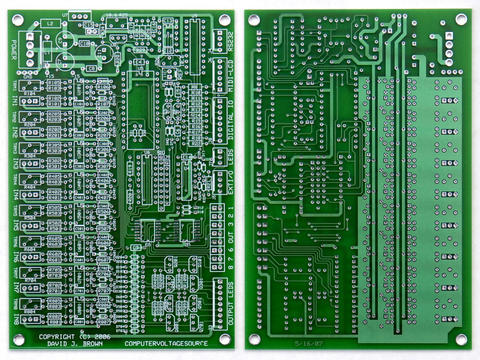
Re: Power Supply Connections

2006-03-15 by Grant Richter

Here is a practical idea.

You have three pads labeled +V, Ground and -V. These go to resetable polyfuses and
1N4001 diodes to protect the circuitry in case the 12 year old science fair student hooks
something up wrong.

direct link to schematic:
http://www.blacet.com/techPS.gif

From John Blacets fine technical page.

http://www.blacet.com/tech.html

Then the end user can wire up ANY kind of connector he wants to hook up to those three
pads.

The 1/3 square inch of board spaced used can substitute for the 2 square inches of board
space it would take to support every possible connector type that will probably change or
go obsolete anyway, and who has all the mechanical drawings need to make the custom
PC board connector footprints? And who is going to take responsibility for everything
being correct with each connector type, and what if the manufacturer changes the pinout
or adds something new??????

Just take an existing "fill in the blank" system power cable, chop one end off and solder
the appropriate three wires to the three pads on the CVS board and be done with it.

--- In ComputerVoltageSources@yahoogroups.com, "John Loffink" <jloffink@...> wrote:
>
> Good point. Here's what could be supported based upon PCB stuffing options:
>
> Synthesizers.com 6 pin 0.100"
> MOTM/Blacet 4 pin 0.156" add 5 V regulator
> MOTM 6 pin 0.156"
> Modcan 3 pin 0.156" add 5 V regulator
>
> Any others?
>
> John Loffink
> The Microtonal Synthesis Web Site
> http://www.microtonal-synthesis.com
> The Wavemakers Synthesizer Web Site
> http://www.wavemakers-synth.com
>
>
> > -----Original Message-----
> > From: ComputerVoltageSources@yahoogroups.com
> > [mailto:ComputerVoltageSources@yahoogroups.com] On Behalf Of Larry T.
> >
> > I would like to suggest that, if at all possible, we include both the
> > Blacet/MOTM 4 pin +/-15v power connector. and the Synthesizers.com
> > +5/+/-15v 6 pin connector. The board could allow for the optional +15
> > to +5 regulators when using the 4 pin connector. Some of us already
> > have +5 in our systems, and generally, no matter how much ANYTHING you
> > come up with will use (short of a room heater), the +5v supply is
> > never anywhere near being used to it's rated output. I note that some
> > of the newer MOTM boards also use a seperate +5v supply.
> >
> > I bring this up in part because of the LED/LCD/VFD discussions, and
> > partly because the MPU in consideration has requirements for +5v, and
> > I really don't want to add more +15 to +5 regulators to my already
> > stressed out +15v supply, when I have 4-6A of un-touched +5 just
> > sitting around asking to be used.
> >
>

RE: [ComputerVoltageSources] Re: Power Supply Connections

2006-03-15 by John Loffink

It is true that a TO-220 will allow us to more safely dissipate heat even if
we're not using all the current generating capability.

78L05 (296-1365-1-ND) in TO-92 package is 40 cents from Digi-Key
7805 (LM7805CT-ND) in TO-220 package is 48 cents from Digi-Key

Other parts sources may put the 7805 price at an advantage, as noted by
Grant. It's worth it anyway for the "built in heatsink" from the larger
TO-220 package.

If I have time this weekend I'll do a preliminary schematic and PCB parts
placement for the LCD Support PCB and see what fits.

John Loffink
The Microtonal Synthesis Web Site
http://www.microtonal-synthesis.com
The Wavemakers Synthesizer Web Site
http://www.wavemakers-synth.com


> -----Original Message-----
> From: ComputerVoltageSources@yahoogroups.com
> [mailto:ComputerVoltageSources@yahoogroups.com] On Behalf Of Grant Richter
>
>
> 3. The processor carrier board has a built in 5 volt regulator. It says it
> is limited to +12
> volt input, but that is because it is a surface mount LM2936MM-5.0 SOIC-8
> with no
> heatsink (look at the schematic in the data sheet). It is in the files
> section Basic Arom Pro
> 24M.pdf Notice the cute charge pump they used to get a negative voltage
> for the RS-232
> output to use from the RS-232 input negative voltage.
>
> 4. A 78L05LCZ in a TO-92 is overkill for the 20 ma. or so actually needed
> for both chips
> but a generic 7805 in a TO-220 is less expensive (God Bless Capitalism).
>
>
> --- In ComputerVoltageSources@yahoogroups.com, harrybissell
> <harrybissell@...> wrote:
> >
> > OK lets do the math (check my figures)
> >
> > 78L05 has "100mA with suitable heatsink" and with short leads
> > to a PCB... 160C/W junction to ambient. Max junction temp is 125C
> >
> > .016A x 10V (voltage drop) = .16W x 160 = 25.6C rise over ambient.
> >
> > Even with a 25C ambient this is going to run HOT. You will not want
> > to touch it...
> >
> > OK, we can use the 7805 which is MUCH better (and bigger).
> >
> > If you are assuming two PCBs thats not a problem... as long as the
> > connector between the boards does not get silly. Still, two PCB
> > will double the cost. Best to avoid that if possible.
> >
> > H^) harry
> >

Re: [ComputerVoltageSources] Re: Power Supply Connections

2006-03-15 by Harry Bissell Jr

Damn good idea.

The polyswitch fuses can also improve on-card
power supply filtering (by being slightly resistive)
and cause a softer start on the power supply.

H^) harry

Grant Richter <grichter@...> wrote: Here is a practical idea.

You have three pads labeled +V, Ground and -V. These go to resetable polyfuses and
1N4001 diodes to protect the circuitry in case the 12 year old science fair student hooks
something up wrong.

direct link to schematic:
http://www.blacet.com/techPS.gif

From John Blacets fine technical page.

http://www.blacet.com/tech.html

Then the end user can wire up ANY kind of connector he wants to hook up to those three
pads.

The 1/3 square inch of board spaced used can substitute for the 2 square inches of board
space it would take to support every possible connector type that will probably change or
go obsolete anyway, and who has all the mechanical drawings need to make the custom
PC board connector footprints? And who is going to take responsibility for everything
being correct with each connector type, and what if the manufacturer changes the pinout
or adds something new??????

Just take an existing "fill in the blank" system power cable, chop one end off and solder
the appropriate three wires to the three pads on the CVS board and be done with it.

--- In ComputerVoltageSources@yahoogroups.com, "John Loffink" <jloffink@...> wrote:
>
> Good point. Here's what could be supported based upon PCB stuffing options:
>
> Synthesizers.com 6 pin 0.100"
> MOTM/Blacet 4 pin 0.156" add 5 V regulator
> MOTM 6 pin 0.156"
> Modcan 3 pin 0.156" add 5 V regulator
>
> Any others?
>
> John Loffink
> The Microtonal Synthesis Web Site
> http://www.microtonal-synthesis.com
> The Wavemakers Synthesizer Web Site
> http://www.wavemakers-synth.com
>
>
> > -----Original Message-----
> > From: ComputerVoltageSources@yahoogroups.com
> > [mailto:ComputerVoltageSources@yahoogroups.com] On Behalf Of Larry T.
> >
> > I would like to suggest that, if at all possible, we include both the
> > Blacet/MOTM 4 pin +/-15v power connector. and the Synthesizers.com
> > +5/+/-15v 6 pin connector. The board could allow for the optional +15
> > to +5 regulators when using the 4 pin connector. Some of us already
> > have +5 in our systems, and generally, no matter how much ANYTHING you
> > come up with will use (short of a room heater), the +5v supply is
> > never anywhere near being used to it's rated output. I note that some
> > of the newer MOTM boards also use a seperate +5v supply.
> >
> > I bring this up in part because of the LED/LCD/VFD discussions, and
> > partly because the MPU in consideration has requirements for +5v, and
> > I really don't want to add more +15 to +5 regulators to my already
> > stressed out +15v supply, when I have 4-6A of un-touched +5 just
> > sitting around asking to be used.
> >
>


SPONSORED LINKS
Music instrument stores Electronic Instruments Module

---------------------------------
YAHOO! GROUPS LINKS


Visit your group "ComputerVoltageSources" on the web.

To unsubscribe from this group, send an email to:
ComputerVoltageSources-unsubscribe@yahoogroups.com

Your use of Yahoo! Groups is subject to the Yahoo! Terms of Service.


---------------------------------


[Non-text portions of this message have been removed]

Re: [ComputerVoltageSources] Re: Power Supply Connections

2006-03-15 by Harry Bissell Jr

Grant Richter <grichter@...> wrote: Just a few observations, please nobody get offended. Specially Harry who is a kick ass
musician, top notch engineer and all around fine fellow.

<snip>

LOL... I never get offended :^P

(I get even :^)

H^) harry


[Non-text portions of this message have been removed]

RE: [ComputerVoltageSources] Power Supply Connections

2006-03-15 by John Loffink

That's junction to ambient temperature rise. Case temperature will be 8-9
degrees less at this amount of power.

Case temperature of 43 degrees Celsius, for instance, is just 109 degrees
Fahrenheit. That's just a really bad fever. :-) It is not at all unusual
for electronic components to operate in that range.

Still, 7805 has the "built in heatsink" if there's room on the CVS.

John Loffink
The Microtonal Synthesis Web Site
http://www.microtonal-synthesis.com
The Wavemakers Synthesizer Web Site
http://www.wavemakers-synth.com


> -----Original Message-----
> From: ComputerVoltageSources@yahoogroups.com
> [mailto:ComputerVoltageSources@yahoogroups.com] On Behalf Of harrybissell
> Sent: Tuesday, March 14, 2006 11:48 PM
> To: ComputerVoltageSources@yahoogroups.com
> Subject: Re: [ComputerVoltageSources] Power Supply Connections
>
> OK lets do the math (check my figures)
>
> 78L05 has "100mA with suitable heatsink" and with short leads
> to a PCB... 160C/W junction to ambient. Max junction temp is 125C
>
> .016A x 10V (voltage drop) = .16W x 160 = 25.6C rise over ambient.
>
> Even with a 25C ambient this is going to run HOT. You will not want
> to touch it...
>
> OK, we can use the 7805 which is MUCH better (and bigger).
>

Re: Power Supply Connections

2006-03-15 by Larry T.

If you only want to supply pads, thats okay, but PLEASE supply the
pads, polyswitches and diode locations for all 3 voltages. It should
be very easy to make all of the boards switch between using the +15
w/a regulator and using +5 direct by choosing between the regulator
and parts or the polyswitch and parts. I will point out that more and
more +5v components are showing up in our analog systems and probably
has a lot to do with MOTM moving to a 6 pin conector and a 3 voltage
supply.

Larry T.

--- In ComputerVoltageSources@yahoogroups.com, Harry Bissell Jr
<harrybissell@...> wrote:
>
> Damn good idea.
>
> The polyswitch fuses can also improve on-card
> power supply filtering (by being slightly resistive)
> and cause a softer start on the power supply.
>
> H^) harry
>
> Grant Richter <grichter@...> wrote: Here is a practical idea.
>
> You have three pads labeled +V, Ground and -V. These go to
resetable polyfuses and
> 1N4001 diodes to protect the circuitry in case the 12 year old
science fair student hooks
> something up wrong.
>
> direct link to schematic:
> http://www.blacet.com/techPS.gif
>
> From John Blacets fine technical page.
>
> http://www.blacet.com/tech.html
>
> Then the end user can wire up ANY kind of connector he wants to
hook up to those three
> pads.
>
> The 1/3 square inch of board spaced used can substitute for the 2
square inches of board
> space it would take to support every possible connector type that
will probably change or
> go obsolete anyway, and who has all the mechanical drawings need
to make the custom
> PC board connector footprints? And who is going to take
responsibility for everything
> being correct with each connector type, and what if the
manufacturer changes the pinout
> or adds something new??????
>
> Just take an existing "fill in the blank" system power cable, chop
one end off and solder
> the appropriate three wires to the three pads on the CVS board and
be done with it.
>
> --- In ComputerVoltageSources@yahoogroups.com, "John Loffink"
<jloffink@> wrote:
> >
> > Good point. Here's what could be supported based upon PCB
stuffing options:
> >
> > Synthesizers.com 6 pin 0.100"
> > MOTM/Blacet 4 pin 0.156" add 5 V regulator
> > MOTM 6 pin 0.156"
> > Modcan 3 pin 0.156" add 5 V regulator
> >
> > Any others?
> >
> > John Loffink
> > The Microtonal Synthesis Web Site
> > http://www.microtonal-synthesis.com
> > The Wavemakers Synthesizer Web Site
> > http://www.wavemakers-synth.com
> >
> >
> > > -----Original Message-----
> > > From: ComputerVoltageSources@yahoogroups.com
> > > [mailto:ComputerVoltageSources@yahoogroups.com] On Behalf Of
Larry T.
> > >
> > > I would like to suggest that, if at all possible, we include
both the
> > > Blacet/MOTM 4 pin +/-15v power connector. and the Synthesizers.com
> > > +5/+/-15v 6 pin connector. The board could allow for the
optional +15
> > > to +5 regulators when using the 4 pin connector. Some of us
already
> > > have +5 in our systems, and generally, no matter how much
ANYTHING you
> > > come up with will use (short of a room heater), the +5v supply is
> > > never anywhere near being used to it's rated output. I note
that some
> > > of the newer MOTM boards also use a seperate +5v supply.
> > >
> > > I bring this up in part because of the LED/LCD/VFD
discussions, and
> > > partly because the MPU in consideration has requirements for
+5v, and
> > > I really don't want to add more +15 to +5 regulators to my already
> > > stressed out +15v supply, when I have 4-6A of un-touched +5 just
> > > sitting around asking to be used.

Power Supply Sequencing

2006-03-15 by Grant Richter

On the CVS board, we have to have control of power supply sequencing to prevent blowing
up the expensive DAC chip (see the datasheet). The +5 and Vref supplies HAVE to come
up AFTER the +/- 15 volts. And they can NOT stay on if the 15 volts goes away even for a
few milliseconds. The only way to assure this is to derive these supplies from +15 supply
and minimize the energy stored in capacitors after the 5v regulator.

You have to double check your power supply sequencing, otherwise magic smoke will
appear. On multi supply devices, there are substrate diodes connecting 5 and 15 volts that
don't appear on the schematic. If the 15 volts supply fails or is temporarily shorted, but
not the 5 volt supply, this can reverse bias substrate diodes and blow metal vapor all over
the inside of a chip.

For an LCD display board. I sure hope the 200 ma backlight connector is on a seperate pad
from the main 5 volt so the wires can be run seperately. A display module probably
doesn't need 15 volts at all.

But we will have to consider the case where 5 volts is on but either the +15 or -15 volt
supply is off. We don't want the LCD module supplying destructive currents BACK to the
CVS in a fault condition.

--- In ComputerVoltageSources@yahoogroups.com, "Larry T." <larry@...> wrote:
>
> If you only want to supply pads, thats okay, but PLEASE supply the
> pads, polyswitches and diode locations for all 3 voltages. It should
> be very easy to make all of the boards switch between using the +15
> w/a regulator and using +5 direct by choosing between the regulator
> and parts or the polyswitch and parts. I will point out that more and
> more +5v components are showing up in our analog systems and probably
> has a lot to do with MOTM moving to a 6 pin conector and a 3 voltage
> supply.
>
> Larry T.
>
> --- In ComputerVoltageSources@yahoogroups.com, Harry Bissell Jr
> <harrybissell@> wrote:
> >
> > Damn good idea.
> >
> > The polyswitch fuses can also improve on-card
> > power supply filtering (by being slightly resistive)
> > and cause a softer start on the power supply.
> >
> > H^) harry
> >
> > Grant Richter <grichter@> wrote: Here is a practical idea.
> >
> > You have three pads labeled +V, Ground and -V. These go to
> resetable polyfuses and
> > 1N4001 diodes to protect the circuitry in case the 12 year old
> science fair student hooks
> > something up wrong.
> >
> > direct link to schematic:
> > http://www.blacet.com/techPS.gif
> >
> > From John Blacets fine technical page.
> >
> > http://www.blacet.com/tech.html
> >
> > Then the end user can wire up ANY kind of connector he wants to
> hook up to those three
> > pads.
> >
> > The 1/3 square inch of board spaced used can substitute for the 2
> square inches of board
> > space it would take to support every possible connector type that
> will probably change or
> > go obsolete anyway, and who has all the mechanical drawings need
> to make the custom
> > PC board connector footprints? And who is going to take
> responsibility for everything
> > being correct with each connector type, and what if the
> manufacturer changes the pinout
> > or adds something new??????
> >
> > Just take an existing "fill in the blank" system power cable, chop
> one end off and solder
> > the appropriate three wires to the three pads on the CVS board and
> be done with it.
> >
> > --- In ComputerVoltageSources@yahoogroups.com, "John Loffink"
> <jloffink@> wrote:
> > >
> > > Good point. Here's what could be supported based upon PCB
> stuffing options:
> > >
> > > Synthesizers.com 6 pin 0.100"
> > > MOTM/Blacet 4 pin 0.156" add 5 V regulator
> > > MOTM 6 pin 0.156"
> > > Modcan 3 pin 0.156" add 5 V regulator
> > >
> > > Any others?
> > >
> > > John Loffink
> > > The Microtonal Synthesis Web Site
> > > http://www.microtonal-synthesis.com
> > > The Wavemakers Synthesizer Web Site
> > > http://www.wavemakers-synth.com
> > >
> > >
> > > > -----Original Message-----
> > > > From: ComputerVoltageSources@yahoogroups.com
> > > > [mailto:ComputerVoltageSources@yahoogroups.com] On Behalf Of
> Larry T.
> > > >
> > > > I would like to suggest that, if at all possible, we include
> both the
> > > > Blacet/MOTM 4 pin +/-15v power connector. and the Synthesizers.com
> > > > +5/+/-15v 6 pin connector. The board could allow for the
> optional +15
> > > > to +5 regulators when using the 4 pin connector. Some of us
> already
> > > > have +5 in our systems, and generally, no matter how much
> ANYTHING you
> > > > come up with will use (short of a room heater), the +5v supply is
> > > > never anywhere near being used to it's rated output. I note
> that some
> > > > of the newer MOTM boards also use a seperate +5v supply.
> > > >
> > > > I bring this up in part because of the LED/LCD/VFD
> discussions, and
> > > > partly because the MPU in consideration has requirements for
> +5v, and
> > > > I really don't want to add more +15 to +5 regulators to my already
> > > > stressed out +15v supply, when I have 4-6A of un-touched +5 just
> > > > sitting around asking to be used.
>

Re: Power Supply Sequencing

2006-03-15 by Grant Richter

The note on power supply sequencing is on page 12 of the DAC8420_a.pdf file.

They say it can take some milliseconds of fault condition, but not how many.

I would rather not gamble.

--- In ComputerVoltageSources@yahoogroups.com, "Grant Richter" <grichter@...> wrote:
>
> On the CVS board, we have to have control of power supply sequencing to prevent
blowing
> up the expensive DAC chip (see the datasheet). The +5 and Vref supplies HAVE to come
> up AFTER the +/- 15 volts. And they can NOT stay on if the 15 volts goes away even for
a
> few milliseconds. The only way to assure this is to derive these supplies from +15
supply
> and minimize the energy stored in capacitors after the 5v regulator.
>
> You have to double check your power supply sequencing, otherwise magic smoke will
> appear. On multi supply devices, there are substrate diodes connecting 5 and 15 volts
that
> don't appear on the schematic. If the 15 volts supply fails or is temporarily shorted, but
> not the 5 volt supply, this can reverse bias substrate diodes and blow metal vapor all
over
> the inside of a chip.
>
> For an LCD display board. I sure hope the 200 ma backlight connector is on a seperate
pad
> from the main 5 volt so the wires can be run seperately. A display module probably
> doesn't need 15 volts at all.
>
> But we will have to consider the case where 5 volts is on but either the +15 or -15 volt
> supply is off. We don't want the LCD module supplying destructive currents BACK to the
> CVS in a fault condition.
>
> --- In ComputerVoltageSources@yahoogroups.com, "Larry T." <larry@> wrote:
> >
> > If you only want to supply pads, thats okay, but PLEASE supply the
> > pads, polyswitches and diode locations for all 3 voltages. It should
> > be very easy to make all of the boards switch between using the +15
> > w/a regulator and using +5 direct by choosing between the regulator
> > and parts or the polyswitch and parts. I will point out that more and
> > more +5v components are showing up in our analog systems and probably
> > has a lot to do with MOTM moving to a 6 pin conector and a 3 voltage
> > supply.
> >
> > Larry T.
> >
> > --- In ComputerVoltageSources@yahoogroups.com, Harry Bissell Jr
> > <harrybissell@> wrote:
> > >
> > > Damn good idea.
> > >
> > > The polyswitch fuses can also improve on-card
> > > power supply filtering (by being slightly resistive)
> > > and cause a softer start on the power supply.
> > >
> > > H^) harry
> > >
> > > Grant Richter <grichter@> wrote: Here is a practical idea.
> > >
> > > You have three pads labeled +V, Ground and -V. These go to
> > resetable polyfuses and
> > > 1N4001 diodes to protect the circuitry in case the 12 year old
> > science fair student hooks
> > > something up wrong.
> > >
> > > direct link to schematic:
> > > http://www.blacet.com/techPS.gif
> > >
> > > From John Blacets fine technical page.
> > >
> > > http://www.blacet.com/tech.html
> > >
> > > Then the end user can wire up ANY kind of connector he wants to
> > hook up to those three
> > > pads.
> > >
> > > The 1/3 square inch of board spaced used can substitute for the 2
> > square inches of board
> > > space it would take to support every possible connector type that
> > will probably change or
> > > go obsolete anyway, and who has all the mechanical drawings need
> > to make the custom
> > > PC board connector footprints? And who is going to take
> > responsibility for everything
> > > being correct with each connector type, and what if the
> > manufacturer changes the pinout
> > > or adds something new??????
> > >
> > > Just take an existing "fill in the blank" system power cable, chop
> > one end off and solder
> > > the appropriate three wires to the three pads on the CVS board and
> > be done with it.
> > >
> > > --- In ComputerVoltageSources@yahoogroups.com, "John Loffink"
> > <jloffink@> wrote:
> > > >
> > > > Good point. Here's what could be supported based upon PCB
> > stuffing options:
> > > >
> > > > Synthesizers.com 6 pin 0.100"
> > > > MOTM/Blacet 4 pin 0.156" add 5 V regulator
> > > > MOTM 6 pin 0.156"
> > > > Modcan 3 pin 0.156" add 5 V regulator
> > > >
> > > > Any others?
> > > >
> > > > John Loffink
> > > > The Microtonal Synthesis Web Site
> > > > http://www.microtonal-synthesis.com
> > > > The Wavemakers Synthesizer Web Site
> > > > http://www.wavemakers-synth.com
> > > >
> > > >
> > > > > -----Original Message-----
> > > > > From: ComputerVoltageSources@yahoogroups.com
> > > > > [mailto:ComputerVoltageSources@yahoogroups.com] On Behalf Of
> > Larry T.
> > > > >
> > > > > I would like to suggest that, if at all possible, we include
> > both the
> > > > > Blacet/MOTM 4 pin +/-15v power connector. and the Synthesizers.com
> > > > > +5/+/-15v 6 pin connector. The board could allow for the
> > optional +15
> > > > > to +5 regulators when using the 4 pin connector. Some of us
> > already
> > > > > have +5 in our systems, and generally, no matter how much
> > ANYTHING you
> > > > > come up with will use (short of a room heater), the +5v supply is
> > > > > never anywhere near being used to it's rated output. I note
> > that some
> > > > > of the newer MOTM boards also use a seperate +5v supply.
> > > > >
> > > > > I bring this up in part because of the LED/LCD/VFD
> > discussions, and
> > > > > partly because the MPU in consideration has requirements for
> > +5v, and
> > > > > I really don't want to add more +15 to +5 regulators to my already
> > > > > stressed out +15v supply, when I have 4-6A of un-touched +5 just
> > > > > sitting around asking to be used.
> >
>

Re: Power Supply Sequencing

2006-03-16 by Larry T.

Would it be possible to use a small pc mounted relay to
connect/disconect the +5 and Vref based on +15 being present? That
way loss of +15 protects the part? In which case +5 being from +15
makes no difference.

Larry T.

(If I designed software the way some engineers design hardware, I'd be
out of a job. Interesting that this part is designed for a perfect,
failure proof world!)

--- In ComputerVoltageSources@yahoogroups.com, "Grant Richter"
<grichter@...> wrote:
>
> The note on power supply sequencing is on page 12 of the
DAC8420_a.pdf file.
>
> They say it can take some milliseconds of fault condition, but not
how many.
>
> I would rather not gamble.
>
> --- In ComputerVoltageSources@yahoogroups.com, "Grant Richter"
<grichter@> wrote:
> >
> > On the CVS board, we have to have control of power supply
sequencing to prevent
> blowing
> > up the expensive DAC chip (see the datasheet). The +5 and Vref
supplies HAVE to come
> > up AFTER the +/- 15 volts. And they can NOT stay on if the 15
volts goes away even for
> a
> > few milliseconds. The only way to assure this is to derive these
supplies from +15
> supply
> > and minimize the energy stored in capacitors after the 5v regulator.
> >
> > You have to double check your power supply sequencing, otherwise
magic smoke will
> > appear. On multi supply devices, there are substrate diodes
connecting 5 and 15 volts
> that
> > don't appear on the schematic. If the 15 volts supply fails or is
temporarily shorted, but
> > not the 5 volt supply, this can reverse bias substrate diodes and
blow metal vapor all
> over
> > the inside of a chip.
> >
> > For an LCD display board. I sure hope the 200 ma backlight
connector is on a seperate
> pad
> > from the main 5 volt so the wires can be run seperately. A display
module probably
> > doesn't need 15 volts at all.
> >
> > But we will have to consider the case where 5 volts is on but
either the +15 or -15 volt
> > supply is off. We don't want the LCD module supplying destructive
currents BACK to the
> > CVS in a fault condition.
> >
> > --- In ComputerVoltageSources@yahoogroups.com, "Larry T." <larry@>
wrote:
> > >
> > > If you only want to supply pads, thats okay, but PLEASE supply the
> > > pads, polyswitches and diode locations for all 3 voltages. It
should
> > > be very easy to make all of the boards switch between using the +15
> > > w/a regulator and using +5 direct by choosing between the regulator
> > > and parts or the polyswitch and parts. I will point out that
more and
> > > more +5v components are showing up in our analog systems and
probably
> > > has a lot to do with MOTM moving to a 6 pin conector and a 3 voltage
> > > supply.
> > >
> > > Larry T.
> > >
> > > --- In ComputerVoltageSources@yahoogroups.com, Harry Bissell Jr
> > > <harrybissell@> wrote:
> > > >
> > > > Damn good idea.
> > > >
> > > > The polyswitch fuses can also improve on-card
> > > > power supply filtering (by being slightly resistive)
> > > > and cause a softer start on the power supply.
> > > >
> > > > H^) harry
> > > >
> > > > Grant Richter <grichter@> wrote: Here is a practical
idea.
> > > >
> > > > You have three pads labeled +V, Ground and -V. These go to
> > > resetable polyfuses and
> > > > 1N4001 diodes to protect the circuitry in case the 12 year old
> > > science fair student hooks
> > > > something up wrong.
> > > >
> > > > direct link to schematic:
> > > > http://www.blacet.com/techPS.gif
> > > >
> > > > From John Blacets fine technical page.
> > > >
> > > > http://www.blacet.com/tech.html
> > > >
> > > > Then the end user can wire up ANY kind of connector he wants to
> > > hook up to those three
> > > > pads.
> > > >
> > > > The 1/3 square inch of board spaced used can substitute for
the 2
> > > square inches of board
> > > > space it would take to support every possible connector type
that
> > > will probably change or
> > > > go obsolete anyway, and who has all the mechanical drawings need
> > > to make the custom
> > > > PC board connector footprints? And who is going to take
> > > responsibility for everything
> > > > being correct with each connector type, and what if the
> > > manufacturer changes the pinout
> > > > or adds something new??????
> > > >
> > > > Just take an existing "fill in the blank" system power
cable, chop
> > > one end off and solder
> > > > the appropriate three wires to the three pads on the CVS
board and
> > > be done with it.
> > > >
> > > > --- In ComputerVoltageSources@yahoogroups.com, "John Loffink"
> > > <jloffink@> wrote:
> > > > >
> > > > > Good point. Here's what could be supported based upon PCB
> > > stuffing options:
> > > > >
> > > > > Synthesizers.com 6 pin 0.100"
> > > > > MOTM/Blacet 4 pin 0.156" add 5 V regulator
> > > > > MOTM 6 pin 0.156"
> > > > > Modcan 3 pin 0.156" add 5 V regulator
> > > > >
> > > > > Any others?
> > > > >
> > > > > John Loffink
> > > > > The Microtonal Synthesis Web Site
> > > > > http://www.microtonal-synthesis.com
> > > > > The Wavemakers Synthesizer Web Site
> > > > > http://www.wavemakers-synth.com
> > > > >
> > > > >
> > > > > > -----Original Message-----
> > > > > > From: ComputerVoltageSources@yahoogroups.com
> > > > > > [mailto:ComputerVoltageSources@yahoogroups.com] On Behalf Of
> > > Larry T.
> > > > > >
> > > > > > I would like to suggest that, if at all possible, we include
> > > both the
> > > > > > Blacet/MOTM 4 pin +/-15v power connector. and the
Synthesizers.com
> > > > > > +5/+/-15v 6 pin connector. The board could allow for the
> > > optional +15
> > > > > > to +5 regulators when using the 4 pin connector. Some of us
> > > already
> > > > > > have +5 in our systems, and generally, no matter how much
> > > ANYTHING you
> > > > > > come up with will use (short of a room heater), the +5v
supply is
> > > > > > never anywhere near being used to it's rated output. I note
> > > that some
> > > > > > of the newer MOTM boards also use a seperate +5v supply.
> > > > > >
> > > > > > I bring this up in part because of the LED/LCD/VFD
> > > discussions, and
> > > > > > partly because the MPU in consideration has requirements for
> > > +5v, and
> > > > > > I really don't want to add more +15 to +5 regulators to
my already
> > > > > > stressed out +15v supply, when I have 4-6A of un-touched
+5 just
> > > > > > sitting around asking to be used.
> > >
> >
>

RE: [ComputerVoltageSources] Re: Power Supply Sequencing

2006-03-16 by John Loffink

It would be better to adapt a hot plug type controller based upon +/- 15V
power and FET to the task than a relay, but even that is going to extremes.
I am not proposing this.

Don't you hate it when manufacturers make vague warnings about claims, then
don't characterize them fully?

I looked back at the TI DAC7614P that I recommended, and it is +/-5V or +5V
only. Consequently it doesn't have the power sequencing problem of the
Analog Devices part. But it introduces a new one, requiring precision
amplification to generate 10 volt outputs with 12 bit accuracy. I think
Grant said he was going to op amp buffer the DAC outputs anyway. 12 bit
resolution over 10 volts is about 0.24% accuracy. Scaling using 0.1%
Precision resistors should do it. These are 96 cents each from Mouser. We
need two for each DAC output. So, $8 in resistors, but the 16 pin DIP
DAC7614P is only $16.43 from Digi-Key, not $44.93 like the DAC8420FP. Net
savings is about $20.

You could try matching batches of 1% resistors with a DMM, but a typical 4
digit DMM only has absolute accuracy of 1%. You really need a 5-6 digit DMM
for matching to this precision. I have one, but realize that most DIYers
don't.

John Loffink
The Microtonal Synthesis Web Site
http://www.microtonal-synthesis.com
The Wavemakers Synthesizer Web Site
http://www.wavemakers-synth.com


> -----Original Message-----
> From: ComputerVoltageSources@yahoogroups.com
> [mailto:ComputerVoltageSources@yahoogroups.com] On Behalf Of Larry T.
>
> Would it be possible to use a small pc mounted relay to
> connect/disconect the +5 and Vref based on +15 being present? That
> way loss of +15 protects the part? In which case +5 being from +15
> makes no difference.
>
> Larry T.
>
> --- In ComputerVoltageSources@yahoogroups.com, "Grant Richter"
> <grichter@...> wrote:
> >
> > The note on power supply sequencing is on page 12 of the
> DAC8420_a.pdf file.
> >
> > They say it can take some milliseconds of fault condition, but not
> how many.
> >

Re: Power Supply Sequencing

2006-03-16 by Grant Richter

The advantage of a forum like this is, of course, thart you are free to use any information
here for your own PC board design. I will be interested to see the schematics when you
publish them.

The nature of democracy is that many good ideas appear simultaneously, each with
advantages and disadvantages. Freedom is the possibility of choosing.

My only concern is simplicity and expediency. Perfection I leave to those more worthy than
my humble self.

--- In ComputerVoltageSources@yahoogroups.com, "Larry T." <larry@...> wrote:
>
> Would it be possible to use a small pc mounted relay to
> connect/disconect the +5 and Vref based on +15 being present? That
> way loss of +15 protects the part? In which case +5 being from +15
> makes no difference.
>
> Larry T.
>
> (If I designed software the way some engineers design hardware, I'd be
> out of a job. Interesting that this part is designed for a perfect,
> failure proof world!)
>
> --- In ComputerVoltageSources@yahoogroups.com, "Grant Richter"
> <grichter@> wrote:
> >
> > The note on power supply sequencing is on page 12 of the
> DAC8420_a.pdf file.
> >
> > They say it can take some milliseconds of fault condition, but not
> how many.
> >
> > I would rather not gamble.
> >
> > --- In ComputerVoltageSources@yahoogroups.com, "Grant Richter"
> <grichter@> wrote:
> > >
> > > On the CVS board, we have to have control of power supply
> sequencing to prevent
> > blowing
> > > up the expensive DAC chip (see the datasheet). The +5 and Vref
> supplies HAVE to come
> > > up AFTER the +/- 15 volts. And they can NOT stay on if the 15
> volts goes away even for
> > a
> > > few milliseconds. The only way to assure this is to derive these
> supplies from +15
> > supply
> > > and minimize the energy stored in capacitors after the 5v regulator.
> > >
> > > You have to double check your power supply sequencing, otherwise
> magic smoke will
> > > appear. On multi supply devices, there are substrate diodes
> connecting 5 and 15 volts
> > that
> > > don't appear on the schematic. If the 15 volts supply fails or is
> temporarily shorted, but
> > > not the 5 volt supply, this can reverse bias substrate diodes and
> blow metal vapor all
> > over
> > > the inside of a chip.
> > >
> > > For an LCD display board. I sure hope the 200 ma backlight
> connector is on a seperate
> > pad
> > > from the main 5 volt so the wires can be run seperately. A display
> module probably
> > > doesn't need 15 volts at all.
> > >
> > > But we will have to consider the case where 5 volts is on but
> either the +15 or -15 volt
> > > supply is off. We don't want the LCD module supplying destructive
> currents BACK to the
> > > CVS in a fault condition.
> > >
> > > --- In ComputerVoltageSources@yahoogroups.com, "Larry T." <larry@>
> wrote:
> > > >
> > > > If you only want to supply pads, thats okay, but PLEASE supply the
> > > > pads, polyswitches and diode locations for all 3 voltages. It
> should
> > > > be very easy to make all of the boards switch between using the +15
> > > > w/a regulator and using +5 direct by choosing between the regulator
> > > > and parts or the polyswitch and parts. I will point out that
> more and
> > > > more +5v components are showing up in our analog systems and
> probably
> > > > has a lot to do with MOTM moving to a 6 pin conector and a 3 voltage
> > > > supply.
> > > >
> > > > Larry T.
> > > >
> > > > --- In ComputerVoltageSources@yahoogroups.com, Harry Bissell Jr
> > > > <harrybissell@> wrote:
> > > > >
> > > > > Damn good idea.
> > > > >
> > > > > The polyswitch fuses can also improve on-card
> > > > > power supply filtering (by being slightly resistive)
> > > > > and cause a softer start on the power supply.
> > > > >
> > > > > H^) harry
> > > > >
> > > > > Grant Richter <grichter@> wrote: Here is a practical
> idea.
> > > > >
> > > > > You have three pads labeled +V, Ground and -V. These go to
> > > > resetable polyfuses and
> > > > > 1N4001 diodes to protect the circuitry in case the 12 year old
> > > > science fair student hooks
> > > > > something up wrong.
> > > > >
> > > > > direct link to schematic:
> > > > > http://www.blacet.com/techPS.gif
> > > > >
> > > > > From John Blacets fine technical page.
> > > > >
> > > > > http://www.blacet.com/tech.html
> > > > >
> > > > > Then the end user can wire up ANY kind of connector he wants to
> > > > hook up to those three
> > > > > pads.
> > > > >
> > > > > The 1/3 square inch of board spaced used can substitute for
> the 2
> > > > square inches of board
> > > > > space it would take to support every possible connector type
> that
> > > > will probably change or
> > > > > go obsolete anyway, and who has all the mechanical drawings need
> > > > to make the custom
> > > > > PC board connector footprints? And who is going to take
> > > > responsibility for everything
> > > > > being correct with each connector type, and what if the
> > > > manufacturer changes the pinout
> > > > > or adds something new??????
> > > > >
> > > > > Just take an existing "fill in the blank" system power
> cable, chop
> > > > one end off and solder
> > > > > the appropriate three wires to the three pads on the CVS
> board and
> > > > be done with it.
> > > > >
> > > > > --- In ComputerVoltageSources@yahoogroups.com, "John Loffink"
> > > > <jloffink@> wrote:
> > > > > >
> > > > > > Good point. Here's what could be supported based upon PCB
> > > > stuffing options:
> > > > > >
> > > > > > Synthesizers.com 6 pin 0.100"
> > > > > > MOTM/Blacet 4 pin 0.156" add 5 V regulator
> > > > > > MOTM 6 pin 0.156"
> > > > > > Modcan 3 pin 0.156" add 5 V regulator
> > > > > >
> > > > > > Any others?
> > > > > >
> > > > > > John Loffink
> > > > > > The Microtonal Synthesis Web Site
> > > > > > http://www.microtonal-synthesis.com
> > > > > > The Wavemakers Synthesizer Web Site
> > > > > > http://www.wavemakers-synth.com
> > > > > >
> > > > > >
> > > > > > > -----Original Message-----
> > > > > > > From: ComputerVoltageSources@yahoogroups.com
> > > > > > > [mailto:ComputerVoltageSources@yahoogroups.com] On Behalf Of
> > > > Larry T.
> > > > > > >
> > > > > > > I would like to suggest that, if at all possible, we include
> > > > both the
> > > > > > > Blacet/MOTM 4 pin +/-15v power connector. and the
> Synthesizers.com
> > > > > > > +5/+/-15v 6 pin connector. The board could allow for the
> > > > optional +15
> > > > > > > to +5 regulators when using the 4 pin connector. Some of us
> > > > already
> > > > > > > have +5 in our systems, and generally, no matter how much
> > > > ANYTHING you
> > > > > > > come up with will use (short of a room heater), the +5v
> supply is
> > > > > > > never anywhere near being used to it's rated output. I note
> > > > that some
> > > > > > > of the newer MOTM boards also use a seperate +5v supply.
> > > > > > >
> > > > > > > I bring this up in part because of the LED/LCD/VFD
> > > > discussions, and
> > > > > > > partly because the MPU in consideration has requirements for
> > > > +5v, and
> > > > > > > I really don't want to add more +15 to +5 regulators to
> my already
> > > > > > > stressed out +15v supply, when I have 4-6A of un-touched
> +5 just
> > > > > > > sitting around asking to be used.
> > > >
> > >
> >
>

Re: Power Supply Sequencing

2006-03-16 by djbrow54

The backlight is on a separate connector. I think we can run the
backlight at very low current. I am running a 20x2 backlight at 18
mA, far from the spec of 130+ mA.

As far as voltage feedback and the DAC, the LCD only connect to Tx and
Reset and both are inputs. I don't see any way for it to feedback +5
volts.

My personal feeling is that we can make the LCD board low enough
current that you could feed it off of a 7805 regulator on the main
PCB. The AVR is ~5 mA and the LCD logic is 3 mA. If we can run the
backlight at <20 mA then the entire LCD board is 28 mA.

Dave

--- In ComputerVoltageSources@yahoogroups.com, "Grant Richter"
<grichter@...> wrote:
> For an LCD display board. I sure hope the 200 ma backlight connector
> is on a seperate pad from the main 5 volt so the wires can be run
> seperately. A display module probably doesn't need 15 volts at all.