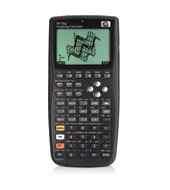
Newton's Method, graphing odd fractional roots
2008-02-17 by kcorjsb
Hello, all. I am an AP Calculus teacher with many years experience
using the 48G. Now trying to make the transition to the 50G and some
things don't work the same way.
For instance, on the 48, you can define N(x)= x-F(x)/F'(x), define F
(x), say x^3-7, enter a numeric value, press N on the var list, and
after eval, have a second iteration of the approximate root of F(x)
near x. So, the N(x) recognizes x, F(x) and F'(x).
When the same strategy is used on the 50, I always get an answer of
infinity. Either the N function doesn't recognize the F or the
derivative is made equal to zero. Any ideas?
Secondly, I have tried many different ways to graph f(x)=x^(odd
fractional power), for instance x^(5/3). It seems crazy, but the only
way I can get the 50 to give the entire graph is to let F(x) = x^2/ x
(1/3). This is truly pathetic and I hope someone knows a more elegant
solution. Thanks in advance for all help!
using the 48G. Now trying to make the transition to the 50G and some
things don't work the same way.
For instance, on the 48, you can define N(x)= x-F(x)/F'(x), define F
(x), say x^3-7, enter a numeric value, press N on the var list, and
after eval, have a second iteration of the approximate root of F(x)
near x. So, the N(x) recognizes x, F(x) and F'(x).
When the same strategy is used on the 50, I always get an answer of
infinity. Either the N function doesn't recognize the F or the
derivative is made equal to zero. Any ideas?
Secondly, I have tried many different ways to graph f(x)=x^(odd
fractional power), for instance x^(5/3). It seems crazy, but the only
way I can get the 50 to give the entire graph is to let F(x) = x^2/ x
(1/3). This is truly pathetic and I hope someone knows a more elegant
solution. Thanks in advance for all help!