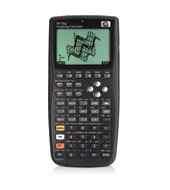
The role of the HP50g
2013-09-17 by <willowvst@...>
I'm reading again William C Wickes book "HP48 Insights". It's a great read for anyone with a scientific bent- he was one of the designers of the original HP48 and the manual is written quite differently from the standard HP manual. It got me thinking about the role of the calculator in the modern era. When the HP35 came out, there were no PCs, and the calculator was a real enabling technology for engineers. Suddenly calculating logs, sines and so forth was easy whereas previously it had been a matter of slide rules, tables and the earlier apparatus of computation.
The HP41 was another big milestone in computation. In the book he goes into how the programming language in the HP48 (and earlier HP28) evolved; the problems they were trying to solve and in many ways succeeded in solving.
In another way the HP48 is a victim of its own magnificence; there are at least three ways to do a relatively simple program; you can use the stack with one set of functions; you can write in RPN, or you can write alphanumerically in speech marks and use the "eval" button to evaluate the text.
All of which is extremely confusing for a beginner (I certainly found this) but it could be a great thing for an expert. But when you have a PC on your desk, with a decent calculator on it, do you really need a handheld calculator at all?
Well most engineers I know have a calculator. It still seems to have a place. And the incredible $10 scientific calculators do most of what is needed; they even show your calculations in semi-graphical form nowadays.
The problem is that the calculator is now competing with Excel, and nearly everyone has a copy of Excel on their desktop not far away. But it looks like HP are trying to find a winning product; they have a new product with wifi and colour displays which looks very interesting.
But the HP48 series has something special; it can do some incredible things, like integration and differentiation and solving simultaneous equations. I guess the question is whether the user can harness the power of the calculator (at least this user!). Beneath its slightly forbidding exterior and 2300 functions lies a great computational elegance which only really becomes apparent when the philosophy behind its design is explained in Mr Wickes' book.
I bought it at a time when I was thinking of buying Mathcad, and that is the real competition, PC based programs such as these on the PC. Maybe if it could be made easier to connect to a PC then a calculator can again be a force in the market?