Hello all.
As these calculators are highly advanced, I found after wasting time and money on the HP 33s, I needed to buy one. For me, I like complex numbers and matrices for use in electrical engineering.
It is something I had to learn about whilst at night school, and I continued to use ever since.
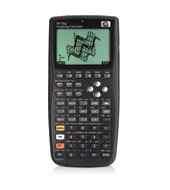
I soon discovered that the HP33s was seriously limited when it came to complex numbers. I then went out and bought the HP 50g.
However, I soon realised that this machine was very complicated in deed. I spent a great deal of time trying to learn how to set the calculator up for my purposes rather than use it for what I intended. This I found rather frustrating.
After some time I sadly gave up on the HP50g and bought the Texas TI89 Titanium. This is also a complex beast. It has a nice quality feel to it and a nice display. Also it has built into it a program which covers just about everything imaginable to electronics engineers.
After some time in use, I find it is no easier to set up than the HP50, and I DO NOT like Algebraic notation. I am a RPN type and that's it.
Returning to the HP 50g, I have persevered and finally got to grips with it just enough to do what I want.
I just wish that the documentation for the HP 50g was as good as the TI 89 and that there was some other support out there in the way of good books that I could obtain.
As these calculators are highly advanced, I found after wasting time and money on the HP 33s, I needed to buy one. For me, I like complex numbers and matrices for use in electrical engineering.
It is something I had to learn about whilst at night school, and I continued to use ever since.
I soon discovered that the HP33s was seriously limited when it came to complex numbers. I then went out and bought the HP 50g.
However, I soon realised that this machine was very complicated in deed. I spent a great deal of time trying to learn how to set the calculator up for my purposes rather than use it for what I intended. This I found rather frustrating.
After some time I sadly gave up on the HP50g and bought the Texas TI89 Titanium. This is also a complex beast. It has a nice quality feel to it and a nice display. Also it has built into it a program which covers just about everything imaginable to electronics engineers.
After some time in use, I find it is no easier to set up than the HP50, and I DO NOT like Algebraic notation. I am a RPN type and that's it.
Returning to the HP 50g, I have persevered and finally got to grips with it just enough to do what I want.
I just wish that the documentation for the HP 50g was as good as the TI 89 and that there was some other support out there in the way of good books that I could obtain.