
Hi
an capacitor between ground and the control voltage line from the
keyboard for the VCO pitch. If the keyboard control voltage changes,
then its power will first be used to load the capacitor. This will take
some time. So the voltage change will not be immediate, but will
increase slowly. This causes at the VCO what we call portamento.
(The same happens if the voltage drops. Then the unloading will take
some time).
As said, loading or unloading the capacitor always takes a little time,
but if the CV comes with enough current (if the power is high enough
(remember: power = voltage x current), then the loading or unloading of
the capacitor is that fast, that our ear does not recognize it.
The portamento potentiometer now simply acts as a variable resistor (so
called rheostat) which is inserted in the CV-line before the capacitor.
If the poti is turned fully counterclockwise then the resulting resistor
is zero -> the capacitor will be loaded that fast, that we do not
recognize it.
If the poti now gets turned clockwise, the resulting resistor is
increased -> the increased resistor means less current runs into the
capacitor -> the capacitor will be loaded slowlier -> the pitch changes
slowlier -> portamento.
is the one for the VCO4, but I found an article in the web, which
describes the principle of our problem quite good
Have a look at http://www.allaboutcircuits.com/vol_6/chpt_3/7.html
in the picture
http://sub.allaboutcircuits.com/images/05151.png
http://sub.allaboutcircuits.com/images/05150.png
you have to think the battery as the keyboard CV and the motor as the
capacitor. That is how the portamento potentiometer is wired.
The picture
http://sub.allaboutcircuits.com/images/05152.png
describes, what might be broken in your portamento potentiometer.
If you connect both the outer connectors of the potentiometer with each
other, then it is like the potentiometers resistance would not be set to
zero.
graphite spray!
Btw: it does not have to be the potentiometer itself. It could be that
the corresponding solder joint is corrupted.
Florian
> Can you explain me a little how this pot works and what should I doThe working principle of the portamento circuit is very simple. There is
> to test and/or fix it ?
an capacitor between ground and the control voltage line from the
keyboard for the VCO pitch. If the keyboard control voltage changes,
then its power will first be used to load the capacitor. This will take
some time. So the voltage change will not be immediate, but will
increase slowly. This causes at the VCO what we call portamento.
(The same happens if the voltage drops. Then the unloading will take
some time).
As said, loading or unloading the capacitor always takes a little time,
but if the CV comes with enough current (if the power is high enough
(remember: power = voltage x current), then the loading or unloading of
the capacitor is that fast, that our ear does not recognize it.
The portamento potentiometer now simply acts as a variable resistor (so
called rheostat) which is inserted in the CV-line before the capacitor.
If the poti is turned fully counterclockwise then the resulting resistor
is zero -> the capacitor will be loaded that fast, that we do not
recognize it.
If the poti now gets turned clockwise, the resulting resistor is
increased -> the increased resistor means less current runs into the
capacitor -> the capacitor will be loaded slowlier -> the pitch changes
slowlier -> portamento.
> Which is the line for VCO4 to shortcut andI cannot tell you exactly which layer of this four layer potentiometer
> how can do this ?
is the one for the VCO4, but I found an article in the web, which
describes the principle of our problem quite good
Have a look at http://www.allaboutcircuits.com/vol_6/chpt_3/7.html
in the picture
http://sub.allaboutcircuits.com/images/05151.png
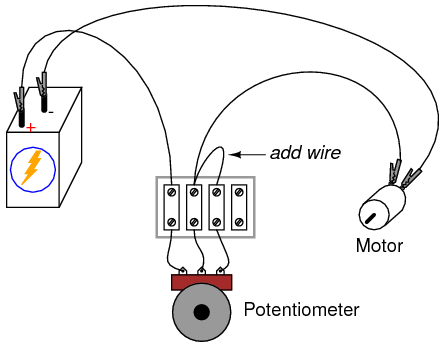
http://sub.allaboutcircuits.com/images/05150.png

you have to think the battery as the keyboard CV and the motor as the
capacitor. That is how the portamento potentiometer is wired.
The picture
http://sub.allaboutcircuits.com/images/05152.png
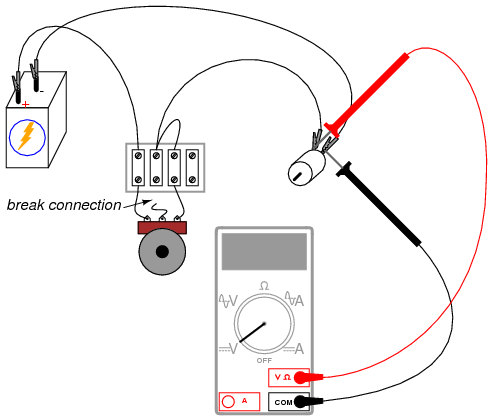
describes, what might be broken in your portamento potentiometer.
If you connect both the outer connectors of the potentiometer with each
other, then it is like the potentiometers resistance would not be set to
zero.
> Does it contain graphite like the sliders on JX3pYes. All potentiometers work like that, but you can't repair it with an
> ?
graphite spray!
Btw: it does not have to be the potentiometer itself. It could be that
the corresponding solder joint is corrupted.
Florian