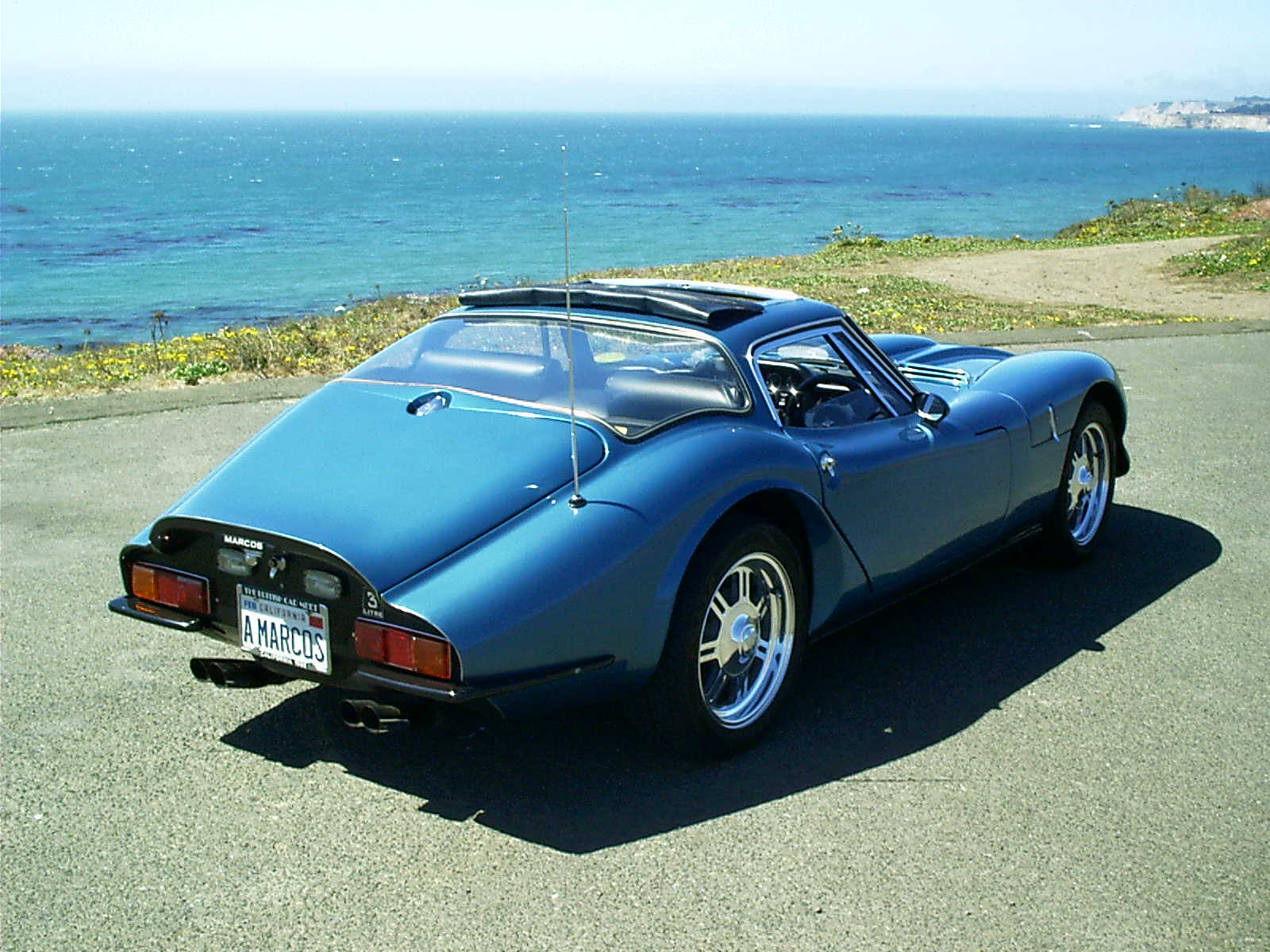
Marcos Maniacs group photo

Yahoo Groups archive

Marcos Maniacs

Index last updated: 2026-04-28 23:07 UTC

Thread

Inveter-of-darkness question

Inveter-of-darkness question

2015-03-15 by larry meadows

I have been chasing an electrical problem for the past 45 years on my Marcos.I have re-wired the car completely, added relays checked and reconditioned all of the chassis earth points and replaced all bullet and sleeve connectors with new stainless steel B and S connectors and applied dielectric grease to all fuses and connector.  My AMMETER is always indicating a 10 to 15 amp charge while driving, DAY OR NIGHT. I have a built in regulator in the alternator which was installed at the time of rebuild.The alt is a MOTOROLA SEV.Anyone have any ideas? 
 
Regards,
Larry3v5536

RE: [MarcosManiacs] Inveter-of-darkness question

2015-03-15 by Stephen Spalding

Larry

I’ve be fighting a version of your problem.  I replaced my alternator (5wire set up) with a Moss Motors (3 wire set up) and been trying to find a very small power leak.  I currently think it is in the voltage regulator that is built into the alternator, my next move to replace the alternator.

I would check your ammeter gage then check your alternator output.

Good luck, we might be dealing with the same problem.

Thanks

Stephen
Show quoted textHide quoted text
From: MarcosManiacs@yahoogroups.com [mailto:MarcosManiacs@...m] 
Sent: Sunday, March 15, 2015 8:00 AM
To: marcosmaniacs@yahoogroups.com
Subject: [MarcosManiacs] Inveter-of-darkness question


I have been chasing an electrical problem for the past 45 years on my Marcos.

I have re-wired the car completely, added relays checked and reconditioned all of the chassis earth points and replaced all bullet and sleeve connectors with new stainless steel B and S connectors and applied dielectric grease to all fuses and connector.  

My AMMETER is always indicating a 10 to 15 amp charge while driving, DAY OR NIGHT. I have a built in regulator in the alternator which was installed at the time of rebuild.

The alt is a MOTOROLA SEV.

Anyone have any ideas? 


Regards,

Larry

3v5536

Re: [MarcosManiacs] Inveter-of-darkness question

2015-03-16 by Denman Mike

Ok, the basics…Make sure that the battery is fully charged before doing the following tests. Does the amp meter read  zero when the power is turned on without starting the motor? Now, turn on the headlights (motor still off), does the amp gage read negative… add the radio, heater fan, and the brake lights (motor still off) does the amp age read even more negative? If your gage doesn’t read progressively more negative as you turn on more electrical devices then your gage is bad/out of calibration. Assuming your gage does read more negative as you turn things on with the motor off, then does your battery show any signs of being overcharged on long trips (battery feeling slight more than warm to the touch). If your alternator has a “sense” wire, where is it connected (alternator on one end and the other end is connected where? By the way, some/most/all alternators no longer have the “sense circuit” in the alternator although they have a connection on the alternator plug to connect a sense wire. Measured at the amp meter, what is the voltage with the key on and everything else, including the motor, off? Now measure the voltage at the battery…. does it read the same. Now do the same test with the motor running. How do the readings compare with motor on and motor off. You should have a higher reading with the motor running… how high?… with a fully charged battery with the motor off a voltage meter/multimeter should read at least 11.5 volts to 12 volts. With the motor running the voltage meter should read 13.5 to 14.5 volts. In the first case, you are just reading Battery voltage which is nominally 12 Volts. The second set of readings are the “charging voltage” and the voltage has to be above 12 volts in order to charge the 12 volt battery. If the voltage is too high (16 volts or so) you will eventually damage the battery. At any rate, tell me the results of the test I have suggested and I will tell you what I think you should do next.
	Now, a more important question. Why do you still have an amp meter? If you are trying to keep the Marcos absolutely original then that is a good answer. If you don’t mind a minor up grade (to go along with your modern alternator which isn’t original), change the amp gage for a voltage gage. You can buy a voltage gage that fits and looks exactly like your other gages (bezels, face, needles etc.) Why am I suggesting switching to a voltage gage? The biggest reason is an amp gage is measuring a lot of amps and sitting inside your car where it can, if it malfunctions, create a fire… think small arc welder. Plus the wires running to the amp gage need to be big enough to handle the maximum output from your generator. This means, if you still have your original wiring, wires that are at least 10 gage in size (the original generators don’t put out a lot of amps and 10 gage is good for 30 amps). Oh, by the way, if you have upgraded to a alternator, did you increase the wire size going to the amp meter? That is a big “whoops” if you didn’t. If you new alternator puts out more amps than your old generator (very likely), then you need to increase the wire size proportionally. Put a big honking American alternator producing a 100 amps under the bonnet and you should be using some seriously big wire to use you amp meter. Overloading the amp meter wires with too many amps can melt the insulation around the wires causing a small fire that can ruin your day if not your car.Now if you have a volt meter instead, then you don’t need to increase your wire size. In fact, you can use the original amp meter wiring or downsize to 16 gage wire since a volt meter doesn’t draw more than one amp if even that much.
	One more suggestion…. If you have the original ammeter and you want to keep it but want an alternator to replace your generator you have one additional problem… If memory serves, the original ammeter read plus or minus 30 amps. But you new alternator produces 60 amp (for example). The new alternator will produce more amps than the ammeter is capable of reading. So, it is real easy to “peg” the ammeter on the plus side when the alternator is putting out more than 30 amps You can buy a ammeter that reads plus or minus 60 amps that matches your other gages. Or, you could run a “shunt” to lower the amperage that your small ammeter is seeing. Please email me if you are interested in doing a “shunt”.
Mike Denman
Marcos 4079
Show quoted textHide quoted text
> On Mar 15, 2015, at 10:20 AM, 'Stephen Spalding' stephen.spalding@... [MarcosManiacs] <MarcosManiacs@yahoogroups.com> wrote:
> 
> 
> Larry
> 
> I’ve be fighting a version of your problem.  I replaced my alternator (5wire set up) with a Moss Motors (3 wire set up) and been trying to find a very small power leak.  I currently think it is in the voltage regulator that is built into the alternator, my next move to replace the alternator.
> 
> I would check your ammeter gage then check your alternator output.
> 
> Good luck, we might be dealing with the same problem.
> 
> Thanks
> 
> Stephen
> 
>  
> 
> From: MarcosManiacs@yahoogroups.com <mailto:MarcosManiacs@yahoogroups.com> [mailto:MarcosManiacs@yahoogroups.com <mailto:MarcosManiacs@yahoogroups.com>] 
> Sent: Sunday, March 15, 2015 8:00 AM
> To: marcosmaniacs@yahoogroups.com <mailto:marcosmaniacs@yahoogroups.com>
> Subject: [MarcosManiacs] Inveter-of-darkness question
> 
>  
> 
>   
> 
> I have been chasing an electrical problem for the past 45 years on my Marcos.
> 
> I have re-wired the car completely, added relays checked and reconditioned all of the chassis earth points and replaced all bullet and sleeve connectors with new stainless steel B and S connectors and applied dielectric grease to all fuses and connector.  
> 
> My AMMETER is always indicating a 10 to 15 amp charge while driving, DAY OR NIGHT. I have a built in regulator in the alternator which was installed at the time of rebuild.
> 
> The alt is a MOTOROLA SEV.
> 
> Anyone have any ideas? 
> 
>  
> 
> 
> Regards,
> 
> Larry
> 
> 3v5536
> 
> 
> 
>

Re: [MarcosManiacs] Inveter-of-darkness question

2015-03-16 by larry meadows

Thanks, Mike,I will work on this this week and let you know. By the way, I still have the original alternator that has been be-built with an internal V.R. added, rather than the old regulator, and the main feed wire is no. 10. It is a Volvo powered car.I would be interested in using a shunt. 
 
Regards,
Larry
Show quoted textHide quoted text
      From: "Denman Mike mikedenman@... [MarcosManiacs]" <MarcosManiacs@yahoogroups.com>
 To: MarcosManiacs@yahoogroups.com 
 Sent: Sunday, March 15, 2015 8:38 PM
 Subject: Re: [MarcosManiacs] Inveter-of-darkness question
   
    Ok, the basics…Make sure that the battery is fully charged before doing the following tests. Does the amp meter read  zero when the power is turned on without starting the motor? Now, turn on the headlights (motor still off), does the amp gage read negative… add the radio, heater fan, and the brake lights (motor still off) does the amp age read even more negative? If your gage doesn’t read progressively more negative as you turn on more electrical devices then your gage is bad/out of calibration. Assuming your gage does read more negative as you turn things on with the motor off, then does your battery show any signs of being overcharged on long trips (battery feeling slight more than warm to the touch). If your alternator has a “sense” wire, where is it connected (alternator on one end and the other end is connected where? By the way, some/most/all alternators no longer have the “sense circuit” in the alternator although they have a connection on the alternator plug to connect a sense wire. Measured at the amp meter, what is the voltage with the key on and everything else, including the motor, off? Now measure the voltage at the battery…. does it read the same. Now do the same test with the motor running. How do the readings compare with motor on and motor off. You should have a higher reading with the motor running… how high?… with a fully charged battery with the motor off a voltage meter/multimeter should read at least 11.5 volts to 12 volts. With the motor running the voltage meter should read 13.5 to 14.5 volts. In the first case, you are just reading Battery voltage which is nominally 12 Volts. The second set of readings are the “charging voltage” and the voltage has to be above 12 volts in order to charge the 12 volt battery. If the voltage is too high (16 volts or so) you will eventually damage the battery. At any rate, tell me the results of the test I have suggested and I will tell you what I think you should do next. Now, a more important question. Why do you still have an amp meter? If you are trying to keep the Marcos absolutely original then that is a good answer. If you don’t mind a minor up grade (to go along with your modern alternator which isn’t original), change the amp gage for a voltage gage. You can buy a voltage gage that fits and looks exactly like your other gages (bezels, face, needles etc.) Why am I suggesting switching to a voltage gage? The biggest reason is an amp gage is measuring a lot of amps and sitting inside your car where it can, if it malfunctions, create a fire… think small arc welder. Plus the wires running to the amp gage need to be big enough to handle the maximum output from your generator. This means, if you still have your original wiring, wires that are at least 10 gage in size (the original generators don’t put out a lot of amps and 10 gage is good for 30 amps). Oh, by the way, if you have upgraded to a alternator, did you increase the wire size going to the amp meter? That is a big “whoops” if you didn’t. If you new alternator puts out more amps than your old generator (very likely), then you need to increase the wire size proportionally. Put a big honking American alternator producing a 100 amps under the bonnet and you should be using some seriously big wire to use you amp meter. Overloading the amp meter wires with too many amps can melt the insulation around the wires causing a small fire that can ruin your day if not your car.Now if you have a volt meter instead, then you don’t need to increase your wire size. In fact, you can use the original amp meter wiring or downsize to 16 gage wire since a volt meter doesn’t draw more than one amp if even that much. One more suggestion…. If you have the original ammeter and you want to keep it but want an alternator to replace your generator you have one additional problem… If memory serves, the original ammeter read plus or minus 30 amps. But you new alternator produces 60 amp (for example). The new alternator will produce more amps than the ammeter is capable of reading. So, it is real easy to “peg” the ammeter on the plus side when the alternator is putting out more than 30 amps You can buy a ammeter that reads plus or minus 60 amps that matches your other gages. Or, you could run a “shunt” to lower the amperage that your small ammeter is seeing. Please email me if you are interested in doing a “shunt”.Mike DenmanMarcos 4079


On Mar 15, 2015, at 10:20 AM, 'Stephen Spalding' stephen.spalding@... [MarcosManiacs] <MarcosManiacs@yahoogroups.com> wrote:

LarryI’ve be fighting a version of your problem.  I replaced my alternator (5wire set up) with a Moss Motors (3 wire set up) and been trying to find a very small power leak.  I currently think it is in the voltage regulator that is built into the alternator, my next move to replace the alternator.I would check your ammeter gage then check your alternator output.Good luck, we might be dealing with the same problem.ThanksStephen  From: MarcosManiacs@yahoogroups.com [mailto:MarcosManiacs@yahoogroups.com] 
Sent: Sunday, March 15, 2015 8:00 AM
To: marcosmaniacs@yahoogroups.com
Subject: [MarcosManiacs] Inveter-of-darkness question    I have been chasing an electrical problem for the past 45 years on my Marcos.I have re-wired the car completely, added relays checked and reconditioned all of the chassis earth points and replaced all bullet and sleeve connectors with new stainless steel B and S connectors and applied dielectric grease to all fuses and connector.  My AMMETER is always indicating a 10 to 15 amp charge while driving, DAY OR NIGHT. I have a built in regulator in the alternator which was installed at the time of rebuild.The alt is a MOTOROLA SEV.Anyone have any ideas?  
Regards,Larry3v5536

Re: [MarcosManiacs] Inveter-of-darkness question

2015-03-16 by Denman Mike

Larry…. I forgot that not everyone has a 1800 GT… of course you have an alternator because it is a later year car. If you have the original alternator or an alternator with the same output, you don’t need a shunt unless Marcos screwed up matching components when the car was built. Possible but unlikely in this particular case since it is not a very complicated question. The shunt doesn’t lower the amperage going to the gage so the only benefit of having a shunt is in the event that the output of the alternator exceeds the capacity of the gage. Putting in a shunt allows you to save/use a smaller capacity gage.The shunt gives the amperage an alternate path so the amp gage only “see” a portion of the true amperage. If you had a 60 amp alternator and a 30 amp gage, for example, with a shunt installed, the gage would read “lower”(but proportionally lower) that the true amperage. In my example, 60 amp alternator and 30 amp gage I would start by installing an additional 10 gage wire bridging the two terminals on the amp gage while leaving the rest of the wiring alone. Electricity will seek the path of least resistance so with the 10 gage wire (the shunt) installed across the amp gage terminals, part of the electricity/amps will go through the gage and some of the electricity/amps will go through the new 10 gage wire. How much goes on which path is determined by which path offers the least resistance. In this example, approximately half go the amperage will go through the gage and half will go through the shunt (new 10 gage wire). Thus, if the gage was reading 20 amps at 2000 rpms it will now read around 10 amps at 2000 rpms. If we change the size of the wire/shunt it will have an effect on the reading. A bigger wire (less resistance) will cause the gage to read even lower. The 20 amps at 2000 rpms  might read 8 amps depending on how much bigger the wire is. Conversely, a smaller wire(more resistance) will force more of the amperage through the gage so the gage will read higher like 12 amps (but reading 12 amps is still lower than the actual 20 amps that are actually present at the gage). So, unless I amusing something, you don’t need a shunt.
Show quoted textHide quoted text
> On Mar 15, 2015, at 6:33 PM, larry meadows lmeadowsw@... [MarcosManiacs] <MarcosManiacs@yahoogroups.com> wrote:
> 
> 
> Thanks, Mike,
> I will work on this this week and let you know. By the way, I still have the original alternator that has been be-built with an internal V.R. added, rather than the old regulator, and the main feed wire is no. 10. It is a Volvo powered car.
> I would be interested in using a shunt. 
>  
> 
> Regards,
> Larry
> 
> From: "Denman Mike mikedenman@... <mailto:mikedenman@sbcglobal.net> [MarcosManiacs]" <MarcosManiacs@yahoogroups.com <mailto:MarcosManiacs@yahoogroups.com>>
> To: MarcosManiacs@yahoogroups.com <mailto:MarcosManiacs@yahoogroups.com> 
> Sent: Sunday, March 15, 2015 8:38 PM
> Subject: Re: [MarcosManiacs] Inveter-of-darkness question
> 
>  
> Ok, the basics…Make sure that the battery is fully charged before doing the following tests. Does the amp meter read  zero when the power is turned on without starting the motor? Now, turn on the headlights (motor still off), does the amp gage read negative… add the radio, heater fan, and the brake lights (motor still off) does the amp age read even more negative? If your gage doesn’t read progressively more negative as you turn on more electrical devices then your gage is bad/out of calibration. Assuming your gage does read more negative as you turn things on with the motor off, then does your battery show any signs of being overcharged on long trips (battery feeling slight more than warm to the touch). If your alternator has a “sense” wire, where is it connected (alternator on one end and the other end is connected where? By the way, some/most/all alternators no longer have the “sense circuit” in the alternator although they have a connection on the alternator plug to connect a sense wire. Measured at the amp meter, what is the voltage with the key on and everything else, including the motor, off? Now measure the voltage at the battery…. does it read the same. Now do the same test with the motor running. How do the readings compare with motor on and motor off. You should have a higher reading with the motor running… how high?… with a fully charged battery with the motor off a voltage meter/multimeter should read at least 11.5 volts to 12 volts. With the motor running the voltage meter should read 13.5 to 14.5 volts. In the first case, you are just reading Battery voltage which is nominally 12 Volts. The second set of readings are the “charging voltage” and the voltage has to be above 12 volts in order to charge the 12 volt battery. If the voltage is too high (16 volts or so) you will eventually damage the battery. At any rate, tell me the results of the test I have suggested and I will tell you what I think you should do next.
> 	Now, a more important question. Why do you still have an amp meter? If you are trying to keep the Marcos absolutely original then that is a good answer. If you don’t mind a minor up grade (to go along with your modern alternator which isn’t original), change the amp gage for a voltage gage. You can buy a voltage gage that fits and looks exactly like your other gages (bezels, face, needles etc.) Why am I suggesting switching to a voltage gage? The biggest reason is an amp gage is measuring a lot of amps and sitting inside your car where it can, if it malfunctions, create a fire… think small arc welder. Plus the wires running to the amp gage need to be big enough to handle the maximum output from your generator. This means, if you still have your original wiring, wires that are at least 10 gage in size (the original generators don’t put out a lot of amps and 10 gage is good for 30 amps). Oh, by the way, if you have upgraded to a alternator, did you increase the wire size going to the amp meter? That is a big “whoops” if you didn’t. If you new alternator puts out more amps than your old generator (very likely), then you need to increase the wire size proportionally. Put a big honking American alternator producing a 100 amps under the bonnet and you should be using some seriously big wire to use you amp meter. Overloading the amp meter wires with too many amps can melt the insulation around the wires causing a small fire that can ruin your day if not your car.Now if you have a volt meter instead, then you don’t need to increase your wire size. In fact, you can use the original amp meter wiring or downsize to 16 gage wire since a volt meter doesn’t draw more than one amp if even that much.
> 	One more suggestion…. If you have the original ammeter and you want to keep it but want an alternator to replace your generator you have one additional problem… If memory serves, the original ammeter read plus or minus 30 amps. But you new alternator produces 60 amp (for example). The new alternator will produce more amps than the ammeter is capable of reading. So, it is real easy to “peg” the ammeter on the plus side when the alternator is putting out more than 30 amps You can buy a ammeter that reads plus or minus 60 amps that matches your other gages. Or, you could run a “shunt” to lower the amperage that your small ammeter is seeing. Please email me if you are interested in doing a “shunt”.
> Mike Denman
> Marcos 4079
> 
> 
> 
> 
> 
> 
>> On Mar 15, 2015, at 10:20 AM, 'Stephen Spalding' stephen.spalding@... <mailto:stephen.spalding@...> [MarcosManiacs] <MarcosManiacs@yahoogroups.com <mailto:MarcosManiacs@yahoogroups.com>> wrote:
>> 
>> 
>> Larry
>> I’ve be fighting a version of your problem.  I replaced my alternator (5wire set up) with a Moss Motors (3 wire set up) and been trying to find a very small power leak.  I currently think it is in the voltage regulator that is built into the alternator, my next move to replace the alternator.
>> I would check your ammeter gage then check your alternator output.
>> Good luck, we might be dealing with the same problem.
>> Thanks
>> Stephen
>>  
>> From: MarcosManiacs@yahoogroups.com <mailto:MarcosManiacs@yahoogroups.com> [mailto:MarcosManiacs@yahoogroups.com <mailto:MarcosManiacs@yahoogroups.com>] 
>> Sent: Sunday, March 15, 2015 8:00 AM
>> To: marcosmaniacs@yahoogroups.com <mailto:marcosmaniacs@yahoogroups.com>
>> Subject: [MarcosManiacs] Inveter-of-darkness question
>>  
>>   
>> I have been chasing an electrical problem for the past 45 years on my Marcos.
>> I have re-wired the car completely, added relays checked and reconditioned all of the chassis earth points and replaced all bullet and sleeve connectors with new stainless steel B and S connectors and applied dielectric grease to all fuses and connector.  
>> My AMMETER is always indicating a 10 to 15 amp charge while driving, DAY OR NIGHT. I have a built in regulator in the alternator which was installed at the time of rebuild.
>> The alt is a MOTOROLA SEV.
>> Anyone have any ideas? 
>>  
>> 
>> Regards,
>> Larry
>> 3v5536
>> 
> 
> 
> 
> 
>

Re: [MarcosManiacs] Inventer-of-darkness question

2015-03-16 by larry meadows

Thanks, Mike,I have never had that explained to me before. Now I understand that the ammeter is probably the fault. It is a 30 amp and the alt is a 65 amp.  I will try to find a new ammeter. 
 
Regards,
Larry
Show quoted textHide quoted text
      From: "Denman Mike mikedenman@... [MarcosManiacs]" <MarcosManiacs@yahoogroups.com>
 To: MarcosManiacs@yahoogroups.com 
 Sent: Monday, March 16, 2015 2:05 AM
 Subject: Re: [MarcosManiacs] Inveter-of-darkness question
   
    Larry…. I forgot that not everyone has a 1800 GT… of course you have an alternator because it is a later year car. If you have the original alternator or an alternator with the same output, you don’t need a shunt unless Marcos screwed up matching components when the car was built. Possible but unlikely in this particular case since it is not a very complicated question. The shunt doesn’t lower the amperage going to the gage so the only benefit of having a shunt is in the event that the output of the alternator exceeds the capacity of the gage. Putting in a shunt allows you to save/use a smaller capacity gage.The shunt gives the amperage an alternate path so the amp gage only “see” a portion of the true amperage. If you had a 60 amp alternator and a 30 amp gage, for example, with a shunt installed, the gage would read “lower”(but proportionally lower) that the true amperage. In my example, 60 amp alternator and 30 amp gage I would start by installing an additional 10 gage wire bridging the two terminals on the amp gage while leaving the rest of the wiring alone. Electricity will seek the path of least resistance so with the 10 gage wire (the shunt) installed across the amp gage terminals, part of the electricity/amps will go through the gage and some of the electricity/amps will go through the new 10 gage wire. How much goes on which path is determined by which path offers the least resistance. In this example, approximately half go the amperage will go through the gage and half will go through the shunt (new 10 gage wire). Thus, if the gage was reading 20 amps at 2000 rpms it will now read around 10 amps at 2000 rpms. If we change the size of the wire/shunt it will have an effect on the reading. A bigger wire (less resistance) will cause the gage to read even lower. The 20 amps at 2000 rpms  might read 8 amps depending on how much bigger the wire is. Conversely, a smaller wire(more resistance) will force more of the amperage through the gage so the gage will read higher like 12 amps (but reading 12 amps is still lower than the actual 20 amps that are actually present at the gage). So, unless I amusing something, you don’t need a shunt.


On Mar 15, 2015, at 6:33 PM, larry meadows lmeadowsw@yahoo.com [MarcosManiacs] <MarcosManiacs@yahoogroups.com> wrote:

Thanks, Mike,I will work on this this week and let you know. By the way, I still have the original alternator that has been be-built with an internal V.R. added, rather than the old regulator, and the main feed wire is no. 10. It is a Volvo powered car.I would be interested in using a shunt. 
 
Regards,
Larry
From: "Denman Mike mikedenman@... [MarcosManiacs]" <MarcosManiacs@yahoogroups.com>
To: MarcosManiacs@yahoogroups.com 
Sent: Sunday, March 15, 2015 8:38 PM
Subject: Re: [MarcosManiacs] Inveter-of-darkness question

 Ok, the basics…Make sure that the battery is fully charged before doing the following tests. Does the amp meter read  zero when the power is turned on without starting the motor? Now, turn on the headlights (motor still off), does the amp gage read negative… add the radio, heater fan, and the brake lights (motor still off) does the amp age read even more negative? If your gage doesn’t read progressively more negative as you turn on more electrical devices then your gage is bad/out of calibration. Assuming your gage does read more negative as you turn things on with the motor off, then does your battery show any signs of being overcharged on long trips (battery feeling slight more than warm to the touch). If your alternator has a “sense” wire, where is it connected (alternator on one end and the other end is connected where? By the way, some/most/all alternators no longer have the “sense circuit” in the alternator although they have a connection on the alternator plug to connect a sense wire. Measured at the amp meter, what is the voltage with the key on and everything else, including the motor, off? Now measure the voltage at the battery…. does it read the same. Now do the same test with the motor running. How do the readings compare with motor on and motor off. You should have a higher reading with the motor running… how high?… with a fully charged battery with the motor off a voltage meter/multimeter should read at least 11.5 volts to 12 volts. With the motor running the voltage meter should read 13.5 to 14.5 volts. In the first case, you are just reading Battery voltage which is nominally 12 Volts. The second set of readings are the “charging voltage” and the voltage has to be above 12 volts in order to charge the 12 volt battery. If the voltage is too high (16 volts or so) you will eventually damage the battery. At any rate, tell me the results of the test I have suggested and I will tell you what I think you should do next. Now, a more important question. Why do you still have an amp meter? If you are trying to keep the Marcos absolutely original then that is a good answer. If you don’t mind a minor up grade (to go along with your modern alternator which isn’t original), change the amp gage for a voltage gage. You can buy a voltage gage that fits and looks exactly like your other gages (bezels, face, needles etc.) Why am I suggesting switching to a voltage gage? The biggest reason is an amp gage is measuring a lot of amps and sitting inside your car where it can, if it malfunctions, create a fire… think small arc welder. Plus the wires running to the amp gage need to be big enough to handle the maximum output from your generator. This means, if you still have your original wiring, wires that are at least 10 gage in size (the original generators don’t put out a lot of amps and 10 gage is good for 30 amps). Oh, by the way, if you have upgraded to a alternator, did you increase the wire size going to the amp meter? That is a big “whoops” if you didn’t. If you new alternator puts out more amps than your old generator (very likely), then you need to increase the wire size proportionally. Put a big honking American alternator producing a 100 amps under the bonnet and you should be using some seriously big wire to use you amp meter. Overloading the amp meter wires with too many amps can melt the insulation around the wires causing a small fire that can ruin your day if not your car.Now if you have a volt meter instead, then you don’t need to increase your wire size. In fact, you can use the original amp meter wiring or downsize to 16 gage wire since a volt meter doesn’t draw more than one amp if even that much. One more suggestion…. If you have the original ammeter and you want to keep it but want an alternator to replace your generator you have one additional problem… If memory serves, the original ammeter read plus or minus 30 amps. But you new alternator produces 60 amp (for example). The new alternator will produce more amps than the ammeter is capable of reading. So, it is real easy to “peg” the ammeter on the plus side when the alternator is putting out more than 30 amps You can buy a ammeter that reads plus or minus 60 amps that matches your other gages. Or, you could run a “shunt” to lower the amperage that your small ammeter is seeing. Please email me if you are interested in doing a “shunt”.Mike DenmanMarcos 4079


On Mar 15, 2015, at 10:20 AM, 'Stephen Spalding' stephen.spalding@... [MarcosManiacs] <MarcosManiacs@yahoogroups.com> wrote:

LarryI’ve be fighting a version of your problem.  I replaced my alternator (5wire set up) with a Moss Motors (3 wire set up) and been trying to find a very small power leak.  I currently think it is in the voltage regulator that is built into the alternator, my next move to replace the alternator.I would check your ammeter gage then check your alternator output.Good luck, we might be dealing with the same problem.ThanksStephen From: MarcosManiacs@yahoogroups.com [mailto:MarcosManiacs@yahoogroups.com] 
Sent: Sunday, March 15, 2015 8:00 AM
To: marcosmaniacs@yahoogroups.com
Subject: [MarcosManiacs] Inveter-of-darkness question   I have been chasing an electrical problem for the past 45 years on my Marcos.I have re-wired the car completely, added relays checked and reconditioned all of the chassis earth points and replaced all bullet and sleeve connectors with new stainless steel B and S connectors and applied dielectric grease to all fuses and connector.  My AMMETER is always indicating a 10 to 15 amp charge while driving, DAY OR NIGHT. I have a built in regulator in the alternator which was installed at the time of rebuild.The alt is a MOTOROLA SEV.Anyone have any ideas?  
Regards,Larry3v5536

Re: [MarcosManiacs] Inventer-of-darkness question

2015-03-16 by Denman Mike

O.K., if your alternator is 65 amp and your gage is 30 amp then a shunt will keep you gage from “pegging” when the alternator puts out more than 30 amps. The “pegging” (needle at full scale on the gage) would probably happen when the battery charge was at least partially depleted or during engine starts or if you have a large electrical load (stereo with large amp, driving lights, electric radiator fan etc). If you installed a shunt across the amp gage terminals then your present gage wouldn’t hit the peg. The gage, with the shunt, would act and read as it normally would… but at a reduced value. So, if you saw the gage with the shunt installed read 20 amps you would know that the actual amp load was 40 amps and if the gage read 15 amps you would know that the actual amp load was 30 amps and so forth. The nice thing is that the gage, with the shunt installed, works exactly as a gage without the shunt. If you didn’t know that the shunt was installed you wouldn’t suspect that the gage had been “shunted”. In my examples and in my experience, I try to size the shunt so the gage reads 50% of what the actual amp load is to make it easy to make the mental calculations as to the real amp load. With the shunt in place the gage reads proportionally across the full scale of the gage. Shunts are fairly common on small single engine and dual engine airplanes so the concept isn’t something that is “flakey” or a "shade tree mechanic” idea. The shunts on airplanes are usually made, but not always, out of a piece of stamped/die cut tin plated copper. Copied below is an external aircraft instrument shunt. A shunt would be appropriate for your 30 amp gage.
Mike
Show quoted textHide quoted text
> On Mar 16, 2015, at 7:49 AM, larry meadows lmeadowsw@... [MarcosManiacs] <MarcosManiacs@yahoogroups.com> wrote:
> 
> 
> Thanks, Mike,
> I have never had that explained to me before. Now I understand that the ammeter is probably the fault. It is a 30 amp and the alt is a 65 amp.  I will try to find a new ammeter. 
>  
> 
> Regards,
> Larry
> 
> From: "Denman Mike mikedenman@... <mailto:mikedenman@...> [MarcosManiacs]" <MarcosManiacs@yahoogroups.com <mailto:MarcosManiacs@yahoogroups.com>>
> To: MarcosManiacs@yahoogroups.com <mailto:MarcosManiacs@yahoogroups.com> 
> Sent: Monday, March 16, 2015 2:05 AM
> Subject: Re: [MarcosManiacs] Inveter-of-darkness question
> 
>  
> Larry…. I forgot that not everyone has a 1800 GT… of course you have an alternator because it is a later year car. If you have the original alternator or an alternator with the same output, you don’t need a shunt unless Marcos screwed up matching components when the car was built. Possible but unlikely in this particular case since it is not a very complicated question. The shunt doesn’t lower the amperage going to the gage so the only benefit of having a shunt is in the event that the output of the alternator exceeds the capacity of the gage. Putting in a shunt allows you to save/use a smaller capacity gage.The shunt gives the amperage an alternate path so the amp gage only “see” a portion of the true amperage. If you had a 60 amp alternator and a 30 amp gage, for example, with a shunt installed, the gage would read “lower”(but proportionally lower) that the true amperage. In my example, 60 amp alternator and 30 amp gage I would start by installing an additional 10 gage wire bridging the two terminals on the amp gage while leaving the rest of the wiring alone. Electricity will seek the path of least resistance so with the 10 gage wire (the shunt) installed across the amp gage terminals, part of the electricity/amps will go through the gage and some of the electricity/amps will go through the new 10 gage wire. How much goes on which path is determined by which path offers the least resistance. In this example, approximately half go the amperage will go through the gage and half will go through the shunt (new 10 gage wire). Thus, if the gage was reading 20 amps at 2000 rpms it will now read around 10 amps at 2000 rpms. If we change the size of the wire/shunt it will have an effect on the reading. A bigger wire (less resistance) will cause the gage to read even lower. The 20 amps at 2000 rpms  might read 8 amps depending on how much bigger the wire is. Conversely, a smaller wire(more resistance) will force more of the amperage through the gage so the gage will read higher like 12 amps (but reading 12 amps is still lower than the actual 20 amps that are actually present at the gage). So, unless I amusing something, you don’t need a shunt.
> 
> 
>> On Mar 15, 2015, at 6:33 PM, larry meadows lmeadowsw@... <mailto:lmeadowsw@...> [MarcosManiacs] <MarcosManiacs@yahoogroups.com <mailto:MarcosManiacs@yahoogroups.com>> wrote:
>> 
>> 
>> Thanks, Mike,
>> I will work on this this week and let you know. By the way, I still have the original alternator that has been be-built with an internal V.R. added, rather than the old regulator, and the main feed wire is no. 10. It is a Volvo powered car.
>> I would be interested in using a shunt. 
>>  
>> 
>> Regards,
>> Larry
>> 
>> From: "Denman Mike mikedenman@sbcglobal.net <mailto:mikedenman@...> [MarcosManiacs]" <MarcosManiacs@yahoogroups.com <mailto:MarcosManiacs@yahoogroups.com>>
>> To: MarcosManiacs@yahoogroups.com <mailto:MarcosManiacs@yahoogroups.com> 
>> Sent: Sunday, March 15, 2015 8:38 PM
>> Subject: Re: [MarcosManiacs] Inveter-of-darkness question
>> 
>>  
>> Ok, the basics…Make sure that the battery is fully charged before doing the following tests. Does the amp meter read  zero when the power is turned on without starting the motor? Now, turn on the headlights (motor still off), does the amp gage read negative… add the radio, heater fan, and the brake lights (motor still off) does the amp age read even more negative? If your gage doesn’t read progressively more negative as you turn on more electrical devices then your gage is bad/out of calibration. Assuming your gage does read more negative as you turn things on with the motor off, then does your battery show any signs of being overcharged on long trips (battery feeling slight more than warm to the touch). If your alternator has a “sense” wire, where is it connected (alternator on one end and the other end is connected where? By the way, some/most/all alternators no longer have the “sense circuit” in the alternator although they have a connection on the alternator plug to connect a sense wire. Measured at the amp meter, what is the voltage with the key on and everything else, including the motor, off? Now measure the voltage at the battery…. does it read the same. Now do the same test with the motor running. How do the readings compare with motor on and motor off. You should have a higher reading with the motor running… how high?… with a fully charged battery with the motor off a voltage meter/multimeter should read at least 11.5 volts to 12 volts. With the motor running the voltage meter should read 13.5 to 14.5 volts. In the first case, you are just reading Battery voltage which is nominally 12 Volts. The second set of readings are the “charging voltage” and the voltage has to be above 12 volts in order to charge the 12 volt battery. If the voltage is too high (16 volts or so) you will eventually damage the battery. At any rate, tell me the results of the test I have suggested and I will tell you what I think you should do next.
>> 	Now, a more important question. Why do you still have an amp meter? If you are trying to keep the Marcos absolutely original then that is a good answer. If you don’t mind a minor up grade (to go along with your modern alternator which isn’t original), change the amp gage for a voltage gage. You can buy a voltage gage that fits and looks exactly like your other gages (bezels, face, needles etc.) Why am I suggesting switching to a voltage gage? The biggest reason is an amp gage is measuring a lot of amps and sitting inside your car where it can, if it malfunctions, create a fire… think small arc welder. Plus the wires running to the amp gage need to be big enough to handle the maximum output from your generator. This means, if you still have your original wiring, wires that are at least 10 gage in size (the original generators don’t put out a lot of amps and 10 gage is good for 30 amps). Oh, by the way, if you have upgraded to a alternator, did you increase the wire size going to the amp meter? That is a big “whoops” if you didn’t. If you new alternator puts out more amps than your old generator (very likely), then you need to increase the wire size proportionally. Put a big honking American alternator producing a 100 amps under the bonnet and you should be using some seriously big wire to use you amp meter. Overloading the amp meter wires with too many amps can melt the insulation around the wires causing a small fire that can ruin your day if not your car.Now if you have a volt meter instead, then you don’t need to increase your wire size. In fact, you can use the original amp meter wiring or downsize to 16 gage wire since a volt meter doesn’t draw more than one amp if even that much.
>> 	One more suggestion…. If you have the original ammeter and you want to keep it but want an alternator to replace your generator you have one additional problem… If memory serves, the original ammeter read plus or minus 30 amps. But you new alternator produces 60 amp (for example). The new alternator will produce more amps than the ammeter is capable of reading. So, it is real easy to “peg” the ammeter on the plus side when the alternator is putting out more than 30 amps You can buy a ammeter that reads plus or minus 60 amps that matches your other gages. Or, you could run a “shunt” to lower the amperage that your small ammeter is seeing. Please email me if you are interested in doing a “shunt”.
>> Mike Denman
>> Marcos 4079
>> 
>> 
>> 
>> 
>> 
>> 
>>> On Mar 15, 2015, at 10:20 AM, 'Stephen Spalding' stephen.spalding@... <mailto:stephen.spalding@...> [MarcosManiacs] <MarcosManiacs@yahoogroups.com <mailto:MarcosManiacs@yahoogroups.com>> wrote:
>>> 
>>> 
>>> Larry
>>> I’ve be fighting a version of your problem.  I replaced my alternator (5wire set up) with a Moss Motors (3 wire set up) and been trying to find a very small power leak.  I currently think it is in the voltage regulator that is built into the alternator, my next move to replace the alternator.
>>> I would check your ammeter gage then check your alternator output.
>>> Good luck, we might be dealing with the same problem.
>>> Thanks
>>> Stephen
>>>  
>>> From: MarcosManiacs@yahoogroups.com <mailto:MarcosManiacs@yahoogroups.com> [mailto:MarcosManiacs@yahoogroups.com <mailto:MarcosManiacs@yahoogroups.com>] 
>>> Sent: Sunday, March 15, 2015 8:00 AM
>>> To: marcosmaniacs@yahoogroups.com <mailto:marcosmaniacs@yahoogroups.com>
>>> Subject: [MarcosManiacs] Inveter-of-darkness question
>>>  
>>>   
>>> I have been chasing an electrical problem for the past 45 years on my Marcos.
>>> I have re-wired the car completely, added relays checked and reconditioned all of the chassis earth points and replaced all bullet and sleeve connectors with new stainless steel B and S connectors and applied dielectric grease to all fuses and connector.  
>>> My AMMETER is always indicating a 10 to 15 amp charge while driving, DAY OR NIGHT. I have a built in regulator in the alternator which was installed at the time of rebuild.
>>> The alt is a MOTOROLA SEV.
>>> Anyone have any ideas? 
>>>  
>>> 
>>> Regards,
>>> Larry
>>> 3v5536
>>> 
>> 
>> 
>> 
>> 
> 
> 
> 
> 
>
Attachments

Move to quarantaine

This moves the raw source file on disk only. The archive index is not changed automatically, so you still need to run a manual refresh afterward.