ComputerVoltageSources group photo

Yahoo Groups archive

ComputerVoltageSources

Archive for ComputerVoltageSources.

Index last updated: 2026-03-30 01:00 UTC

Thread

USB vs. RS-232

USB vs. RS-232

2006-04-15 by (i think you can figure that out)

Hello everyone.

Although due to the architecture of the BasicStamp I understand
why RS-232 was used on the PSIM initially, but it's not a huge
task to incorporate a USB port . I did a post search and noticed
that it's come up here. Has there been any further thoughts on
this? Did the idea go anywhere? I would think a USB to be
preferred , as it interfaces more readily with a larger number of
systems - i,e, Macintosh. I've tried using RS232 plotter on a PC
cad program while running Virtual PC on a Mac via a USB/232
adapter cable and the results were pretty dismal.

-P

RE: [ComputerVoltageSources] USB vs. RS-232

2006-04-15 by John Loffink

As the Renesas 3664 does not have a USB interface, how do propose to add it?

John Loffink
The Microtonal Synthesis Web Site
http://www.microtonal-synthesis.com
The Wavemakers Synthesizer Web Site
http://www.wavemakers-synth.com


> -----Original Message-----
> From: ComputerVoltageSources@yahoogroups.com
> [mailto:ComputerVoltageSources@yahoogroups.com] On Behalf Of (i think you
> can figure that out)
>
> Although due to the architecture of the BasicStamp I understand
> why RS-232 was used on the PSIM initially, but it's not a huge
> task to incorporate a USB port . I did a post search and noticed
> that it's come up here. Has there been any further thoughts on
> this? Did the idea go anywhere? I would think a USB to be
> preferred , as it interfaces more readily with a larger number of
> systems - i,e, Macintosh. I've tried using RS232 plotter on a PC
> cad program while running Virtual PC on a Mac via a USB/232
> adapter cable and the results were pretty dismal.
>
> -P
>

Re: [ComputerVoltageSources] USB vs. RS-232

2006-04-15 by Ryan Williams

usb to uart bridge? it is going to be SMT unless you buy one
pre-soldered on an adapter board. check www.silabs.com or
www.ftdichip.com .

I'm really just here to listen, but I'm doing a bit of USB stuff right
now for a sort of similar project (dsp module, with a microcontroller
for CV inputs, USB bootload programmer, display, and possible USB MIDI).
Just got my USB HID firmware going for a Silicon labs 8051, and have
done some with the PIC USB controllers. I would say add a USB
microcontroller (atmel/PIC/Silabs) that converts USB to whatever, but it
looks like your hardware is already complicated enough.

Ryan Williams

John Loffink wrote:
> As the Renesas 3664 does not have a USB interface, how do propose to add it?
>
> John Loffink
> The Microtonal Synthesis Web Site
> http://www.microtonal-synthesis.com
> The Wavemakers Synthesizer Web Site
> http://www.wavemakers-synth.com

Re: USB vs. RS-232

2006-04-15 by (i think you can figure that out)

I guess i have to do more reading - i was (possibly incorrectly)
assuming you were still usig the basicatom pro - is this an
incorrect sassumption?


>
> John Loffink
> The Microtonal Synthesis Web Site
> http://www.microtonal-synthesis.com
> The Wavemakers Synthesizer Web Site
> http://www.wavemakers-synth.com
>
>
> > -----Original Message-----
> > From: ComputerVoltageSources@yahoogroups.com
> > [mailto:ComputerVoltageSources@yahoogroups.com] On
Behalf Of (i think you
> > can figure that out)
> >
> > Although due to the architecture of the BasicStamp I
understand
> > why RS-232 was used on the PSIM initially, but it's not a huge
> > task to incorporate a USB port . I did a post search and
noticed
> > that it's come up here. Has there been any further thoughts
on
> > this? Did the idea go anywhere? I would think a USB to be
> > preferred , as it interfaces more readily with a larger number
of
> > systems - i,e, Macintosh. I've tried using RS232 plotter on a
PC
> > cad program while running Virtual PC on a Mac via a
USB/232
> > adapter cable and the results were pretty dismal.
> >
> > -P
> >
>

RE: [ComputerVoltageSources] Re: USB vs. RS-232

2006-04-15 by John Loffink

The Basic Atom Pro is based upon the Renesas 3664 processor. Basic Micro
wraps the 3664 processor with standard hardware port assignments, a BASIC
library and programming tools to provide the solution.

Without hardware or BASIC library support for USB, adding USB is not so
easy. It requires adding a device like a Cypress CY7C68001 USB Interface,
which only comes in surface mount packages. It requires an added parallel
interface from the BASIC ATOM PRO, pins that we don't have, so a bridging
solution is needed, such as I2C to Parallel I/O. The other option is an
integrated RS-232 to USB bridge, but why build something in that is
available off the shelf?

Clearly we should keep the RS-232 interface and keep any USB bridges or
interfaces external to the CVS.

For those without RS-232 ports, buying a 1999-2000 era Intel based laptop is
an inexpensive option. These will run Windows 98 and have an RS-232 port.
I have one around just for that purpose, purchased for $75 from the local
school surplus store.

John Loffink
The Microtonal Synthesis Web Site
http://www.microtonal-synthesis.com
The Wavemakers Synthesizer Web Site
http://www.wavemakers-synth.com


> -----Original Message-----
> From: ComputerVoltageSources@yahoogroups.com
> [mailto:ComputerVoltageSources@yahoogroups.com] On Behalf Of (i think you
> can figure that out)
> Sent: Saturday, April 15, 2006 3:23 AM
> To: ComputerVoltageSources@yahoogroups.com
> Subject: [ComputerVoltageSources] Re: USB vs. RS-232
>
> I guess i have to do more reading - i was (possibly incorrectly)
> assuming you were still usig the basicatom pro - is this an
> incorrect sassumption?
>
>
> >

Re: USB vs. RS-232

2006-04-15 by Michael A. Firman

As mentioned here before, I've had really good results with a cheap USB-Serial connector
and VirtualPC running on OSX (my iMac). A USB interface would be nice but it sounds
like much too much work for this package. I am looking for a nice (inexpensive) USB
connected EPROM programming solution since I've had much less success with a
USB-Parallel connector and my current burner/software (a Needham EMP-10 and their
very old DOS software. Although I must add that the DOS software works fine in
VirtualPC but it just can't see the USB-Parallel port).

--- In ComputerVoltageSources@yahoogroups.com, "John Loffink" <jloffink@...> wrote:
>
> The Basic Atom Pro is based upon the Renesas 3664 processor. Basic Micro
> wraps the 3664 processor with standard hardware port assignments, a BASIC
> library and programming tools to provide the solution.
>
> Without hardware or BASIC library support for USB, adding USB is not so
> easy. It requires adding a device like a Cypress CY7C68001 USB Interface,
> which only comes in surface mount packages. It requires an added parallel
> interface from the BASIC ATOM PRO, pins that we don't have, so a bridging
> solution is needed, such as I2C to Parallel I/O. The other option is an
> integrated RS-232 to USB bridge, but why build something in that is
> available off the shelf?
>
> Clearly we should keep the RS-232 interface and keep any USB bridges or
> interfaces external to the CVS.
>
> For those without RS-232 ports, buying a 1999-2000 era Intel based laptop is
> an inexpensive option. These will run Windows 98 and have an RS-232 port.
> I have one around just for that purpose, purchased for $75 from the local
> school surplus store.
>
> John Loffink
> The Microtonal Synthesis Web Site
> http://www.microtonal-synthesis.com
> The Wavemakers Synthesizer Web Site
> http://www.wavemakers-synth.com
>
>
> > -----Original Message-----
> > From: ComputerVoltageSources@yahoogroups.com
> > [mailto:ComputerVoltageSources@yahoogroups.com] On Behalf Of (i think you
> > can figure that out)
> > Sent: Saturday, April 15, 2006 3:23 AM
> > To: ComputerVoltageSources@yahoogroups.com
> > Subject: [ComputerVoltageSources] Re: USB vs. RS-232
> >
> > I guess i have to do more reading - i was (possibly incorrectly)
> > assuming you were still usig the basicatom pro - is this an
> > incorrect sassumption?
> >
> >
> > >
>

Re: [ComputerVoltageSources] Re: USB vs. RS-232

2006-04-15 by John Blacet

My $.02 on this.....

I decided not to take on the PSIM as a product due to the RS232 issue.
It does not make business sense to make a music product that does not
have USB and Mac compatibility. The Atom Pro is also very expensive.

It does make sense for dedicated hobbyist use.

I suspect someone will eventually put together a Basic solution that
makes sense in today's market.

Michael A. Firman wrote:

>
> As mentioned here before, I've had really good results with a cheap
> USB-Serial connector
> and VirtualPC running on OSX (my iMac). A USB interface would be nice
> but it sounds
> like much too much work for this package. I am looking for a nice
> (inexpensive) USB
> connected EPROM programming solution since I've had much less success
> with a
> USB-Parallel connector and my current burner/software (a Needham
> EMP-10 and their
> very old DOS software. Although I must add that the DOS software works
> fine in
> VirtualPC but it just can't see the USB-Parallel port).
>
> --- In ComputerVoltageSources@yahoogroups.com, "John Loffink"
> <jloffink@...> wrote:
> >
> > The Basic Atom Pro is based upon the Renesas 3664 processor. Basic
> Micro
> > wraps the 3664 processor with standard hardware port assignments, a
> BASIC
> > library and programming tools to provide the solution.
> >
> > Without hardware or BASIC library support for USB, adding USB is not so
> > easy. It requires adding a device like a Cypress CY7C68001 USB
> Interface,
> > which only comes in surface mount packages. It requires an added
> parallel
> > interface from the BASIC ATOM PRO, pins that we don't have, so a
> bridging
> > solution is needed, such as I2C to Parallel I/O. The other option is an
> > integrated RS-232 to USB bridge, but why build something in that is
> > available off the shelf?
> >
> > Clearly we should keep the RS-232 interface and keep any USB bridges or
> > interfaces external to the CVS.
> >
> > For those without RS-232 ports, buying a 1999-2000 era Intel based
> laptop is
> > an inexpensive option. These will run Windows 98 and have an RS-232
> port.
> > I have one around just for that purpose, purchased for $75 from the
> local
> > school surplus store.
> >
> > John Loffink
> > The Microtonal Synthesis Web Site
> > http://www.microtonal-synthesis.com
> > The Wavemakers Synthesizer Web Site
> > http://www.wavemakers-synth.com
> >
> >
> > > -----Original Message-----
> > > From: ComputerVoltageSources@yahoogroups.com
> > > [mailto:ComputerVoltageSources@yahoogroups.com] On Behalf Of (i
> think you
> > > can figure that out)
> > > Sent: Saturday, April 15, 2006 3:23 AM
> > > To: ComputerVoltageSources@yahoogroups.com
> > > Subject: [ComputerVoltageSources] Re: USB vs. RS-232
> > >
> > > I guess i have to do more reading - i was (possibly incorrectly)
> > > assuming you were still usig the basicatom pro - is this an
> > > incorrect sassumption?
> > >
> > >
> > > >
> >
>
>
>
>
> ------------------------------------------------------------------------
> YAHOO! GROUPS LINKS
>
> * Visit your group "ComputerVoltageSources
> <http://groups.yahoo.com/group/ComputerVoltageSources>" on the web.
>
> * To unsubscribe from this group, send an email to:
> ComputerVoltageSources-unsubscribe@yahoogroups.com
> <mailto:ComputerVoltageSources-unsubscribe@yahoogroups.com?subject=Unsubscribe>
>
> * Your use of Yahoo! Groups is subject to the Yahoo! Terms of
> Service <http://docs.yahoo.com/info/terms/>.
>
>
> ------------------------------------------------------------------------
>

--
Regards,
John Blacet

Blacet Research
http://www.blacet.com


[Non-text portions of this message have been removed]

Re: USB vs. RS-232

2006-04-15 by drmabuce

Hi all

a very helpful and erudite discussion, this-
my $.02:

--- In ComputerVoltageSources@yahoogroups.com, John Blacet
<blacet@...> wrote:

> I decided not to take on the PSIM as a product due to the RS232 issue.

and thus confirmation--
(from, IMHO, the most eminent and efficient production designer in
the analog field...kudos! John)
--that the current chosen platform is the BAsicAtomPro and, for good
or ill, this gen-I gadget's idiosyncracies must , of necessity, set
the gropund rules for the first CVS...
and that means RS232.
i would also add, based on my experience with the PSIM, that the RS232
interface supported by the BasicAtomPro is VERY robust.
If you prefer USB there are plenty of external ways to skin that cat.
Mind you, this is not an endorsement of RS232 over USB; merely a
compromise made to get a gen-I CVS designed and built.....soon.
This is an experimenters/hobbyists DIY device not an attempt at a
commercial product as John so succinctly explains...

> It does not make business sense to make a music product that does not
> have USB and Mac compatibility. The Atom Pro is also very expensive.
>
> It does make sense for dedicated hobbyist use.
>

-snip

> I suspect someone will eventually put together a Basic solution that
> makes sense in today's market.
>

and the folks who do so will benefit greatly from the coalesence of
expertise and inspitration available in the discussions of this project

as ever thanx to all who are contributing to this effort.
-doc


> Michael A. Firman wrote:
>
> >
> > As mentioned here before, I've had really good results with a cheap
> > USB-Serial connector
> > and VirtualPC running on OSX (my iMac). A USB interface would be nice
> > but it sounds
> > like much too much work for this package. I am looking for a nice
> > (inexpensive) USB
> > connected EPROM programming solution since I've had much less success
> > with a
> > USB-Parallel connector and my current burner/software (a Needham
> > EMP-10 and their
> > very old DOS software. Although I must add that the DOS software
works
> > fine in
> > VirtualPC but it just can't see the USB-Parallel port).
> >
> > --- In ComputerVoltageSources@yahoogroups.com, "John Loffink"
> > <jloffink@> wrote:
> > >
> > > The Basic Atom Pro is based upon the Renesas 3664 processor. Basic
> > Micro
> > > wraps the 3664 processor with standard hardware port assignments, a
> > BASIC
> > > library and programming tools to provide the solution.
> > >
> > > Without hardware or BASIC library support for USB, adding USB is
not so
> > > easy. It requires adding a device like a Cypress CY7C68001 USB
> > Interface,
> > > which only comes in surface mount packages. It requires an added
> > parallel
> > > interface from the BASIC ATOM PRO, pins that we don't have, so a
> > bridging
> > > solution is needed, such as I2C to Parallel I/O. The other
option is an
> > > integrated RS-232 to USB bridge, but why build something in that is
> > > available off the shelf?
> > >
> > > Clearly we should keep the RS-232 interface and keep any USB
bridges or
> > > interfaces external to the CVS.
> > >
> > > For those without RS-232 ports, buying a 1999-2000 era Intel based
> > laptop is
> > > an inexpensive option. These will run Windows 98 and have an
RS-232
> > port.
> > > I have one around just for that purpose, purchased for $75 from the
> > local
> > > school surplus store.
> > >
> > > John Loffink
> > > The Microtonal Synthesis Web Site
> > > http://www.microtonal-synthesis.com
> > > The Wavemakers Synthesizer Web Site
> > > http://www.wavemakers-synth.com
> > >
> > >
> > > > -----Original Message-----
> > > > From: ComputerVoltageSources@yahoogroups.com
> > > > [mailto:ComputerVoltageSources@yahoogroups.com] On Behalf Of (i
> > think you
> > > > can figure that out)
> > > > Sent: Saturday, April 15, 2006 3:23 AM
> > > > To: ComputerVoltageSources@yahoogroups.com
> > > > Subject: [ComputerVoltageSources] Re: USB vs. RS-232
> > > >
> > > > I guess i have to do more reading - i was (possibly incorrectly)
> > > > assuming you were still usig the basicatom pro - is this an
> > > > incorrect sassumption?
> > > >
> > > >
> > > > >
> > >
> >
> >
> >
> >
> >
------------------------------------------------------------------------
> > YAHOO! GROUPS LINKS
> >
> > * Visit your group "ComputerVoltageSources
> > <http://groups.yahoo.com/group/ComputerVoltageSources>" on
the web.
> >
> > * To unsubscribe from this group, send an email to:
> > ComputerVoltageSources-unsubscribe@yahoogroups.com
> >
<mailto:ComputerVoltageSources-unsubscribe@yahoogroups.com?subject=Unsubscribe>
> >
> > * Your use of Yahoo! Groups is subject to the Yahoo! Terms of
> > Service <http://docs.yahoo.com/info/terms/>.
> >
> >
> >
------------------------------------------------------------------------
> >
>
> --
> Regards,
> John Blacet
>
> Blacet Research
> http://www.blacet.com
>
>
>
> [Non-text portions of this message have been removed]
>
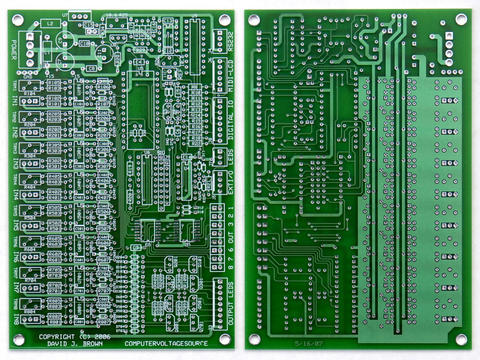
Re: USB vs. RS-232

2006-04-18 by Grant Richter

I am pretty sure the Renasas part just sets up a standard "tickle me" for Flash config. During
power up sequencing it probably blits something out a port pin and IF it gets a response,
then switches to a Flash load mode. It was probably designed for JTAG and they just tacked
RS-232 level translators on the JTAG pins, and set up the handshake across RS-232, because
it was cheaper than a JTAG dongle.

USB is laughably overkill for loading 32K of Flash. But info tech is SO bloated nowadays they
need all that bandwidth for the 4 megabytes of handshaking needed to pass a 32K packet...

Re: USB vs. RS-232

2006-04-18 by Michael A. Firman

I think that John's point was that RS232 Serial connectors
are outmoded and generally less and less available as standard
i/o devices on computers (even PCs), despite the fact that USB
may be overkill for this application. This is (or will be when
it is realized), however, a hobbyist project, so RS232 is perfectly
applicable here (and adding the USB logic would be way too
complicated).

I do agree with John on the point that RS232 shouldn't be considered
for a production (read commercial) device.

BTW all USB->RS232 adapters are not equal they fall into several
categories based upon the controller devices they use. Even those
that use the same controller devices can have slightly different
Configuration Descriptors/Device Decriptors/Interface Descriptors/
Endpoint Descriptors causing the software that drives them on the
host to do all sorts of different (and sometimes wacky) things.

--- In ComputerVoltageSources@yahoogroups.com, "Grant Richter"
<grichter@...> wrote:
>
> I am pretty sure the Renasas part just sets up a standard "tickle
me" for Flash config. During
> power up sequencing it probably blits something out a port pin and
IF it gets a response,
> then switches to a Flash load mode. It was probably designed for
JTAG and they just tacked
> RS-232 level translators on the JTAG pins, and set up the handshake
across RS-232, because
> it was cheaper than a JTAG dongle.
>
> USB is laughably overkill for loading 32K of Flash. But info tech is
SO bloated nowadays they
> need all that bandwidth for the 4 megabytes of handshaking needed to
pass a 32K packet...
>

Re: USB vs. RS-232

2006-04-19 by Grant Richter

You can probably buy a dedicated Pentium 1 laptop with RS-232 for the same price as the
RS-232 to USB cable. Unless you can find one for free, or kept your old systems.

<humor>
I even have a Sinclair ZX-81 with an external RS-232 adapter, but it doesn't do Windoze. It
was the first "glass teletype" I owned though.
</humor>

--- In ComputerVoltageSources@yahoogroups.com, "Michael A. Firman" <maf@...> wrote:
>
>
> I think that John's point was that RS232 Serial connectors
> are outmoded and generally less and less available as standard
> i/o devices on computers (even PCs), despite the fact that USB
> may be overkill for this application. This is (or will be when
> it is realized), however, a hobbyist project, so RS232 is perfectly
> applicable here (and adding the USB logic would be way too
> complicated).
>
> I do agree with John on the point that RS232 shouldn't be considered
> for a production (read commercial) device.
>
> BTW all USB->RS232 adapters are not equal they fall into several
> categories based upon the controller devices they use. Even those
> that use the same controller devices can have slightly different
> Configuration Descriptors/Device Decriptors/Interface Descriptors/
> Endpoint Descriptors causing the software that drives them on the
> host to do all sorts of different (and sometimes wacky) things.
>
> --- In ComputerVoltageSources@yahoogroups.com, "Grant Richter"
> <grichter@> wrote:
> >
> > I am pretty sure the Renasas part just sets up a standard "tickle
> me" for Flash config. During
> > power up sequencing it probably blits something out a port pin and
> IF it gets a response,
> > then switches to a Flash load mode. It was probably designed for
> JTAG and they just tacked
> > RS-232 level translators on the JTAG pins, and set up the handshake
> across RS-232, because
> > it was cheaper than a JTAG dongle.
> >
> > USB is laughably overkill for loading 32K of Flash. But info tech is
> SO bloated nowadays they
> > need all that bandwidth for the 4 megabytes of handshaking needed to
> pass a 32K packet...
> >
>

Re: USB vs. RS-232

2006-04-19 by Grant Richter

After all, if you are going to add USB, why not just make a USB to 8 x 0 to 10 volt inputs and
outputs. Get or steal a driver, and scr*w the Basic Atom Pro?

Actually, they probably make LabView interfaces just like that, possibly with interface drivers
already written for C-Sound.

All of which makes this WHOLE thing silly, unless we can get a board for $50 that a high
school student could build as a science fair project (or Dad).

A "modern" implementation is several quantum steps from a PSIM like device.

Re: USB vs. RS-232

2006-04-19 by Larry T.

Ahh, but now we have diverged from a stand alone device that will work
witout a computer to a computer interface. Sorry, no slippery slope
allowed here! We want a device that we can program, use for a few
months, then completly change, just like the patchs on our modulars!

Nice try though Grant.

Larry T.

--- In ComputerVoltageSources@yahoogroups.com, "Grant Richter"
<grichter@...> wrote:
>
> After all, if you are going to add USB, why not just make a USB to 8
x 0 to 10 volt inputs and
> outputs. Get or steal a driver, and scr*w the Basic Atom Pro?
>
> Actually, they probably make LabView interfaces just like that,
possibly with interface drivers
> already written for C-Sound.
>
> All of which makes this WHOLE thing silly, unless we can get a board
for $50 that a high
> school student could build as a science fair project (or Dad).
>
> A "modern" implementation is several quantum steps from a PSIM like
device.
>

Re: [ComputerVoltageSources] Re: USB vs. RS-232

2006-04-19 by Eric Brombaugh

Along those lines, here's something I recently came
across:

http://www.sparkfun.com/commerce/product_info.php?products_id=666

This appears to be a USB-based board with on-board
MPU, digital and analog I/O and an open-source IDE
that's hosted on Win/Mac/Linux. The programming
language was specifically designed for artistic
applications and although the device can be
stand-alone, there are also drivers to allow it to
interact with more traditional media apps
(Flash/MaxMSP/etc).

Cost and practicality-wise it can be bought
ready-made, as a kit, or assembled from parts from a
variety of sources. And it's not too expensive (~$30
assembled).

Certainly not an alternative to the this group's
current project, but perhaps worth thinking about for
future directions.

Eric

--- Grant Richter <grichter@...> wrote:

> After all, if you are going to add USB, why not just
> make a USB to 8 x 0 to 10 volt inputs and
> outputs. Get or steal a driver, and scr*w the Basic
> Atom Pro?
>
> Actually, they probably make LabView interfaces just
> like that, possibly with interface drivers
> already written for C-Sound.
>
> All of which makes this WHOLE thing silly, unless we
> can get a board for $50 that a high
> school student could build as a science fair project
> (or Dad).
>
> A "modern" implementation is several quantum steps
> from a PSIM like device.
>
>
>
>
>


__________________________________________________
Do You Yahoo!?
Tired of spam? Yahoo! Mail has the best spam protection around
http://mail.yahoo.com

Re: USB vs. RS-232

2006-04-21 by Grant Richter

For the science project/hobbiest thing we were trying to keep everything on the new PC
board to through hole components. I doubt you can find a through hole USB interface chip.
So that would be an additional problem for USB interface, surface mount soldering.

--- In ComputerVoltageSources@yahoogroups.com, "Larry T." <larry@...> wrote:
>
> Ahh, but now we have diverged from a stand alone device that will work
> witout a computer to a computer interface. Sorry, no slippery slope
> allowed here! We want a device that we can program, use for a few
> months, then completly change, just like the patchs on our modulars!
>
> Nice try though Grant.
>
> Larry T.
>
> --- In ComputerVoltageSources@yahoogroups.com, "Grant Richter"
> <grichter@> wrote:
> >
> > After all, if you are going to add USB, why not just make a USB to 8
> x 0 to 10 volt inputs and
> > outputs. Get or steal a driver, and scr*w the Basic Atom Pro?
> >
> > Actually, they probably make LabView interfaces just like that,
> possibly with interface drivers
> > already written for C-Sound.
> >
> > All of which makes this WHOLE thing silly, unless we can get a board
> for $50 that a high
> > school student could build as a science fair project (or Dad).
> >
> > A "modern" implementation is several quantum steps from a PSIM like
> device.
> >
>

Re: [ComputerVoltageSources] Re: USB vs. RS-232

2006-04-21 by David Cornutt

My take: USB would be nice to have, but if it's going to be that much
trouble,
I can live with RS-232. The key is to not make the RS-232 interface too
complex (don't use the old modem control likes like ring indicator),
since
USB adaptors probably won't support these.

Re: [ComputerVoltageSources] Re: USB vs. RS-232

2006-05-12 by Brice D. Hornback

You could always use a USB module like this one:
http://www.dontronics-shop.com/product.php?productid=16141

All the work has already been done and it's a through hole component.

Just a thought...
- Brice

----- Original Message -----
From: "Grant Richter" <grichter@...>
To: <ComputerVoltageSources@yahoogroups.com>
Sent: Thursday, April 20, 2006 9:30 PM
Subject: [ComputerVoltageSources] Re: USB vs. RS-232


> For the science project/hobbiest thing we were trying to keep everything
> on the new PC
> board to through hole components. I doubt you can find a through hole USB
> interface chip.
> So that would be an additional problem for USB interface, surface mount
> soldering.
>