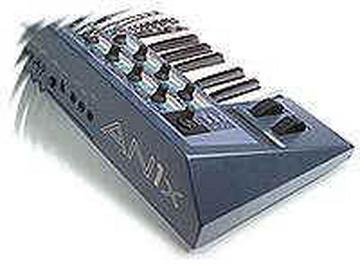
> >> When  (make that IF ) Yamaha produces an AN2X or some such
successor -

I think they will produce a child to the AN1X but a strangely cloned
hybrid. They are too big to make analog modelling a marketing
objective, but they will likely continue to explore alternative
synthesis technology. Why? Because synth behemoth Roland has.
Roland's V-synth takes the oscillator modelling from the VG88, not
the JP8000. (If you've explored the VG, you will know what I mean,
tonally.) Slap it together with the other intellectual property (IP)
assets to define yet another alternative to romplers. Yamaha will do
the same with their IP I believe. It looks like they found a way to
use the filter algorithm from the An1X on the DX200. And they have
FM, FSIR (formant) and VL technologies to put together. It should
make for a nice mix. I can't believe the PLG modular system was the
end. It was just the end of the beginning. A technological resting
place to grab some cash, while their designers went back to the
drawing board, with a broader, more ambitious view.

> Kind of funny how it all works out; on the cover of the November
1997
> RECORDING Magazine, we had a shot of the Korg Z1, the Kawai K5000S,
> the Roland JP-8000, and the Yamaha AN1x floating in space (a real
> photo, not Photoshop, and an amazing setup job it was too!). I
> reviewed all four keyboards for the magazine. The Roland was the
> famous one that everyone was yakking about at the time, but I now
> find myself owning a K5000S and an AN1x and have access to two Z1s
in
> my neighborhood when I need them, which isn't often thanks to my
> Prophecy. I never missed the JP again after it left the studio.

Funnily enough, all of those synths are still attractive to me but
particularly the An1X, the Z1 and the K5000. The only thing I would
want a JP8000 for is the feedback oscillator. Everything else about
smacked of trying to recreate the past. By contrast all of these
other synths, brought some digital goodies to the table.

Soapbox on: The AN1X really shines when you explore that space where
the edge parameters are less than 64, the oscillators aren't tuned to
the same pitch, and the filter isn't necessarily low pass. It's not
exactly subtractive synthesis, but not exactly additive either. It's
very AN1X. Soapbox off. :)

Cheers,

Jerry
Message
Re: [AN1x] matrix 12
2003-05-01 by Jerry Aiyathurai
Attachments
- No local attachments were found for this message.