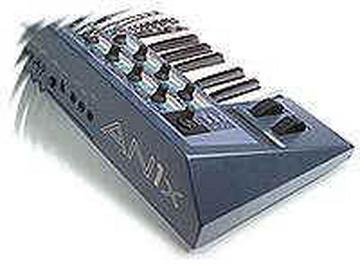
> Dear Mr. Bing Beng Bong,owns the
>
> Congratulations for stepping into the mysterious, unexplored world of FM
> systhesis hereby barely touched on this list.
>
> We all should admit that there's been very little discussion about this
> powerful parameter that Yamahaha has provided. After all, Yamahaha
> patent on "FM synthesis" they were kind and foresighted enough toenclude
> it with the AN series but they committed the sin that so manymanufacturers
> make: They didn't explain it very well.This is not the problem. I have understood the basics. But I haven't
>
understood the specific AN1x terms like "source" and also not
completely understood what the "syncronization" does.
>That's right. These pages - and the following - after page 60 - I have
> Pages 58 and 59 of the manual are where the parameters are provided.
> However, they didn't provide an overview of how FM synths work, their
> implementation, the "operators" the "algorithms", etc.
>
read again and again and experimented a lot with the settings.
>and I
> the manual. Over the years I've collected many patches for my AN1x
> must say that some of the strangest ones involve the FM section andI've
> never been able to figure out what's going on at all.I went and had lessons with a German professional who has synthesized
>
a lot, including for the film industry - the most strange sounds.
Whenever I spoke any sound to him like "whaoung" for example, he was
able to explain what the components were and how it was to program. As
he heard the "bong" he said this is one of the most basic sounds in FM
at all since this sound needs only two operators.
He then showed me on an oscillator how he was able to make almost any
wave form through additive synthesis (no FM) - and FM - alone and in
combination. Then at last he played me sounds so strange that I would
never have imagined such sounds possible.
My question was a simple one: what do the specific AN1x terms mean?