Sorry, this was the email I wanted to send yesterday - but it was still in the outbox...
----------------
Hi!
Regarding the encoder problem.
Simple connecting the encoder in parallel to the value keys normally doesn't make sense as the grey code (or in other words a quadrature signal) output by the encoder doesn't fit. You might get some reaction but not as needed.
That’s why my datadial
http://go.to/datadial adds a little microcontroller that converts the pulses to plus and minus keypresses.
I first used a discrete circuit with monoflop and so - it is also working but:
- the time a key has to be pressed so that the synthesizer can read it perfectly has to be set for but output signals (resistor, potentiometer or capacitor change) - keep in mind that you have to test some time to find a perfect value.
- You need more ICs and so more pcb space that leads to a bigger module that has to be built into the synth.
So these disadvantages of my first version lead me to the microcontroller solution:
- The microcontroller reads the encoder.
- Plus(minus keypress simulations are controlled by the microcontroller - analog switches are switched in parallel to the plus/minus buttons.
- The pulse and pause time can be programmed via the encoder - you first have to enter a special combination of left/right combinations (safe locking) and then the timeout can be set with the encoder in nearly millisecond steps ad these value is stored in the EEPROM in the microcontroller. So you only have to set this time once you found the perfect timeout - it is stored nonvolatile.
- You can even change this setting if the datadial is already built in as no potentiometer is needed.
As my design is not patented I can't stop anybody from building a similar thing on his own.
If you have all parts at home you might get it cheaper. I can't sell it cheaper as I have to cover my costs (parts, development and handmade production time, test time, programming and testing adapter costs).
All I can say is: the principle works very fine, is flexible and synthesizer editing with it makes more fun than
Playing around with those ugly plus/minus keypresses. I like intuitive synth programming...
Of course I can't switch a digital programmed synth into an analog one but the programming feeling by turning a knob is much nicer.
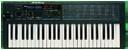
I for myself have installed it in my Kawai K3m and Casio CZ101. Other synth like the Poly61 and Poly800 will follow.
Ciao
Peter
http://www.ullrich.at.ttThe information contained in this e-mail message is privileged and
confidential and is for the exclusive use of the addressee. The person
who receives this message and who is not the addressee, one of his
employees or an agent entitled to hand it over to the addressee, is
informed that he may not use, disclose or reproduce the contents
thereof, and is kindly asked to notify the sender and delete the e-mail
immediately.