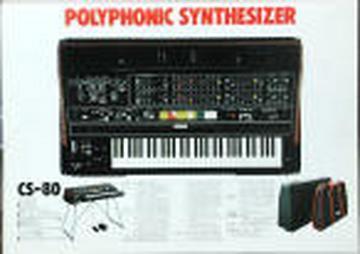
Yamaha CS80 group photo

Yahoo Groups archive

Yamaha CS80

Index last updated: 2026-03-31 01:50 UTC

Thread

New Poly-aftertouch keyboard

New Poly-aftertouch keyboard

2005-12-21 by David Rogoff

Hi all.

Crow is doing great work to build new CS-80 voice cards with
off-the-shelf parts. But, as we all know, the sound engine is only
half the point of the CS-80. It doesn't look like anyone (Roland,
Fatar, M-audio, CME) is going to release a poly-aftertouch MIDI
keyboard anytime soon. Therefore, we have to come up with one.

I'm hoping that someone can tell me any details about the
channel-aftertouch sensors used in current controllers. I'm hoping
there's a way to modify the existing sensor (with lots of added
circuitry) to turn it into poly-aftertouch. Anybody know? Any
pointers? Does anyone have specs on the raw Fatar keyboards that the
other companies use? Who else makes the raw/OEM keyboards that have
channel aftertouch?

David

Re: [yamahacs80] New Poly-aftertouch keyboard

2005-12-22 by Max Fazio

David
The wonder of CS-80 , what I consider the sum of its magic consists in a deep relationship between the mechanical hardware and the sound engine.
You're right thinking about how useful the user interface of the CSs are...they were designed to be handy and easy , for example the choice of sliders and levers instead of knobs is absolutely genius to me: as all of you have experienced with your instruments , to use sliders and levers during performance is way more comfortable because you can move more sliders with one hand ( one for all_ you can move down the MOD and DEPTH of ringmodulator with two different fingers while playing ), while you *have* to use your inch and index closing your hand therefore preventing yourself to use the rest of it...
About the keyboard it is another fundament of the CS magic: the 45cm long key levers ( descending directly from the piano mechanics ) combined with good and sensitive sensors contribute to a superior sensitivity and the control is right under your hands, sorry but no A80 in the world can compete with the CS80 keyboard. It should be useful to know what material the key levers are made of in order to be able to produce them again. It could have be useful to have some blueprints of the keyboard's embedding, being then able to build that kind of mechanics again.
About the channel AT I don't think that a mod can be done , once I had an idea about it or, better, a dream: if anyone could be able to build a sensor around a sensitive strip which could be virtually "splitted" with help of a processor by the number of keys in the keyboard, being then able to recognize the velocity and aftertouch variations, and to code them as separate values, we could reach an important decrease with the production costs ( one sensor instead of 61 ) and at the same time being able to manage the velocity and poly aftertouch with the controllers at a much more affordable price!
Cheerz
M
----- Original Message -----
From: David Rogoff
To: yamahacs80@yahoogroups.com
Sent: Wednesday, December 21, 2005 7:20 PM
Subject: [yamahacs80] New Poly-aftertouch keyboard


Hi all.

Crow is doing great work to build new CS-80 voice cards with
off-the-shelf parts. But, as we all know, the sound engine is only
half the point of the CS-80. It doesn't look like anyone (Roland,
Fatar, M-audio, CME) is going to release a poly-aftertouch MIDI
keyboard anytime soon. Therefore, we have to come up with one.

I'm hoping that someone can tell me any details about the
channel-aftertouch sensors used in current controllers. I'm hoping
there's a way to modify the existing sensor (with lots of added
circuitry) to turn it into poly-aftertouch. Anybody know? Any
pointers? Does anyone have specs on the raw Fatar keyboards that the
other companies use? Who else makes the raw/OEM keyboards that have
channel aftertouch?

David


SPONSORED LINKS Music sampler Unit Synthesizer
Sampler


------------------------------------------------------------------------------
YAHOO! GROUPS LINKS

a.. Visit your group "yamahacs80" on the web.

b.. To unsubscribe from this group, send an email to:
yamahacs80-unsubscribe@yahoogroups.com

c.. Your use of Yahoo! Groups is subject to the Yahoo! Terms of Service.


------------------------------------------------------------------------------


[Non-text portions of this message have been removed]

Re: [yamahacs80] New Poly-aftertouch keyboard

2005-12-22 by james devero

I honestly feel that this is something that I wash
this with what the business
world does.I would think that if this was designed,
completed and one was built
that functions both prefectly physically and
aesthetically is a winner...what to do
then would be to put it up for sale with an advanced
date of delivery.
I would think for it to work I'd go with something
along those lines.
You could market online with Harmony Central, Sonic
State...and be as
creative as you want...Simple goal really - "orders "
(and lots of em )
Then say with 1000 orders in place ...Alesis or more
of a "new thought" company
could be very interested in a co-op or a "buy out".
The later
I find that most appealing.You build "one"...and
proceed to get paid for
"every one" thereafter! ( Note...I'd be in Monte Carlo
on my cell phone conducting
business at that point...)
So...I think having the skill and the resourcefulness
to build "one"
may in fact roll the tide back here...and allow itself
to have many more built.

So outside of looking to get on a Reality TV series
myself...
I've had quite enough with this "actually having to
work for a living stuff"
So somebody build it one fast so I can lay on a beach
and get paid! (Smiles!)
Merry Christmas Everybody~J D


--- Max Fazio <faxiomas@...> wrote:

> David
> The wonder of CS-80 , what I consider the sum of its
> magic consists in a deep relationship between the
> mechanical hardware and the sound engine.
> You're right thinking about how useful the user
> interface of the CSs are...they were designed to be
> handy and easy , for example the choice of sliders
> and levers instead of knobs is absolutely genius to
> me: as all of you have experienced with your
> instruments , to use sliders and levers during
> performance is way more comfortable because you can
> move more sliders with one hand ( one for all_ you
> can move down the MOD and DEPTH of ringmodulator
> with two different fingers while playing ), while
> you *have* to use your inch and index closing your
> hand therefore preventing yourself to use the rest
> of it...
> About the keyboard it is another fundament of the CS
> magic: the 45cm long key levers ( descending
> directly from the piano mechanics ) combined with
> good and sensitive sensors contribute to a superior
> sensitivity and the control is right under your
> hands, sorry but no A80 in the world can compete
> with the CS80 keyboard. It should be useful to know
> what material the key levers are made of in order to
> be able to produce them again. It could have be
> useful to have some blueprints of the keyboard's
> embedding, being then able to build that kind of
> mechanics again.
> About the channel AT I don't think that a mod can be
> done , once I had an idea about it or, better, a
> dream: if anyone could be able to build a sensor
> around a sensitive strip which could be virtually
> "splitted" with help of a processor by the number of
> keys in the keyboard, being then able to recognize
> the velocity and aftertouch variations, and to code
> them as separate values, we could reach an important
> decrease with the production costs ( one sensor
> instead of 61 ) and at the same time being able to
> manage the velocity and poly aftertouch with the
> controllers at a much more affordable price!
> Cheerz
> M
> ----- Original Message -----
> From: David Rogoff
> To: yamahacs80@yahoogroups.com
> Sent: Wednesday, December 21, 2005 7:20 PM
> Subject: [yamahacs80] New Poly-aftertouch keyboard
>
>
> Hi all.
>
> Crow is doing great work to build new CS-80 voice
> cards with
> off-the-shelf parts. But, as we all know, the
> sound engine is only
> half the point of the CS-80. It doesn't look like
> anyone (Roland,
> Fatar, M-audio, CME) is going to release a
> poly-aftertouch MIDI
> keyboard anytime soon. Therefore, we have to come
> up with one.
>
> I'm hoping that someone can tell me any details
> about the
> channel-aftertouch sensors used in current
> controllers. I'm hoping
> there's a way to modify the existing sensor (with
> lots of added
> circuitry) to turn it into poly-aftertouch.
> Anybody know? Any
> pointers? Does anyone have specs on the raw Fatar
> keyboards that the
> other companies use? Who else makes the raw/OEM
> keyboards that have
> channel aftertouch?
>
> David
>
>
>
>
>
> SPONSORED LINKS Music sampler Unit Synthesizer
> Sampler
>
>
>
------------------------------------------------------------------------------
> YAHOO! GROUPS LINKS
>
> a.. Visit your group "yamahacs80" on the web.
>
> b.. To unsubscribe from this group, send an
> email to:
> yamahacs80-unsubscribe@yahoogroups.com
>
> c.. Your use of Yahoo! Groups is subject to the
> Yahoo! Terms of Service.
>
>
>
------------------------------------------------------------------------------
>
>
>
> [Non-text portions of this message have been
> removed]
>
>
>
> ------------------------ Yahoo! Groups Sponsor
> --------------------~-->
> Know an art & music fan? Make a donation in their
> honor this holiday season!
>
http://us.click.yahoo.com/VwqHaC/.VHMAA/n1hLAA/QnLolB/TM
>
--------------------------------------------------------------------~->
>
>
>
> Yahoo! Groups Links
>
>
> yamahacs80-unsubscribe@yahoogroups.com
>
>
>
>
>
Re: [yamahacs80] New Poly-aftertouch keyboard

2005-12-22 by laurie

poly aftertouch is a small arched piece of dense rubber with carbon on
the bottom (concave)side....it sits under the key on top of a pc
board(if you have ever taken apart a calculator or computer keyboard you
have seen this with wimpy rubber.....
the firmer the pressure on each note flattens the carbon across more
contacts on the pc board .... at maximum pressure all contacts are
touching the carbon, lessen off on the pressure and the rubber reverts
to the arched state thus reducing the number of contacts...add resistor
values to the base of this in parallel and you have a variable resistor
.... keep the value of the variable resistor assigned to the key number
it sits under and you can make a polyphonic aftertouch keyboard....
Max Fazio wrote:

> David
> The wonder of CS-80 , what I consider the sum of its magic consists in
> a deep relationship between the mechanical hardware and the sound
> engine.
> You're right thinking about how useful the user interface of the CSs
> are...they were designed to be handy and easy , for example the choice
> of sliders and levers instead of knobs is absolutely genius to me: as
> all of you have experienced with your instruments , to use sliders and
> levers during performance is way more comfortable because you can move
> more sliders with one hand ( one for all_ you can move down the MOD
> and DEPTH of ringmodulator with two different fingers while playing
> ), while you *have* to use your inch and index closing your hand
> therefore preventing yourself to use the rest of it...
> About the keyboard it is another fundament of the CS magic: the 45cm
> long key levers ( descending directly from the piano mechanics )
> combined with good and sensitive sensors contribute to a superior
> sensitivity and the control is right under your hands, sorry but no
> A80 in the world can compete with the CS80 keyboard. It should be
> useful to know what material the key levers are made of in order to be
> able to produce them again. It could have be useful to have some
> blueprints of the keyboard's embedding, being then able to build that
> kind of mechanics again.
> About the channel AT I don't think that a mod can be done , once I had
> an idea about it or, better, a dream: if anyone could be able to build
> a sensor around a sensitive strip which could be virtually "splitted"
> with help of a processor by the number of keys in the keyboard, being
> then able to recognize the velocity and aftertouch variations, and to
> code them as separate values, we could reach an important decrease
> with the production costs ( one sensor instead of 61 ) and at the same
> time being able to manage the velocity and poly aftertouch with the
> controllers at a much more affordable price!
> Cheerz
> M
> ----- Original Message -----
> From: David Rogoff
> To: yamahacs80@yahoogroups.com
> Sent: Wednesday, December 21, 2005 7:20 PM
> Subject: [yamahacs80] New Poly-aftertouch keyboard
>
>
> Hi all.
>
> Crow is doing great work to build new CS-80 voice cards with
> off-the-shelf parts. But, as we all know, the sound engine is only
> half the point of the CS-80. It doesn't look like anyone (Roland,
> Fatar, M-audio, CME) is going to release a poly-aftertouch MIDI
> keyboard anytime soon. Therefore, we have to come up with one.
>
> I'm hoping that someone can tell me any details about the
> channel-aftertouch sensors used in current controllers. I'm hoping
> there's a way to modify the existing sensor (with lots of added
> circuitry) to turn it into poly-aftertouch. Anybody know? Any
> pointers? Does anyone have specs on the raw Fatar keyboards that
> the
> other companies use? Who else makes the raw/OEM keyboards that have
>
> channel aftertouch?
>
> David
>
>
>
>
>
> SPONSORED LINKS Music sampler Unit Synthesizer
> Sampler
>
>
> -
> ----------------------------------------------------------------------------
>
> YAHOO! GROUPS LINKS
>
> a.. Visit your group "yamahacs80" on the web.
>
> b.. To unsubscribe from this group, send an email to:
> yamahacs80-unsubscribe@yahoogroups.com
>
> c.. Your use of Yahoo! Groups is subject to the Yahoo! Terms of
> Service.
>
>
> -
> ----------------------------------------------------------------------------
>
>
>
>
> [Non-text portions of this message have been removed]
>
> -----------------------------------------------------------------------
> YAHOO! GROUPS LINKS
>
> + Visit your group "yamahacs80" on the web.
>
> + To unsubscribe from this group, send an email to:
> yamahacs80-unsubscribe@yahoogroups.com
>
> + Your use of Yahoo! Groups is subject to the Yahoo! Terms of
> Service.
>
> -----------------------------------------------------------------------
>


[Non-text portions of this message have been removed]