Korg Poly800/EX800 Users group photo

Yahoo Groups archive

Korg Poly800/EX800 Users

Archive for korgpolyex.

Index last updated: 2026-03-30 01:10 UTC

Thread

Tapping into the Key On state.

Tapping into the Key On state.

2011-08-02 by 7yash
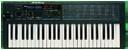
I would need to tap into the Korg's Key ON state and have a circuit to do this:

Send an ON signal on every Key ON, maintain that state for a very short time and switch to OFF without waiting for Key OFF.

How would I do this?

Re: [korgpolyex] Tapping into the Key On state.

2011-08-02 by billmeirelles@uol.com.br

Try to use the keyboard midi out with NI Reaktor or maybe Logic Environment,
then use Silent Way to send the signal back as a CV. Now the easier way
just use Silent Way's ENV GEN and set the Attach Level to 1.000, set the
Attack Time to 0.100 or so and set everything else to 0 then use the
generated CV to control what ever you want.


Em 02/08/2011 17:39, 7yash < josh.nursing@... > escreveu:

I would need to tap into the Korg's Key ON state and have a circuit to do this:

Send an ON signal on every Key ON, maintain that state for a very short time and switch to OFF without waiting for Key OFF.

How would I do this?


Re: Tapping into the Key On state.

2011-08-02 by 7yash

Hi Bill, I still need to work some more on my Silent Way setup: I made a small mistake on my cable, but I'm sure I'd get it to work.

However, for this mod, I'm looking to have something portable and self-contained within the Korg Poly-800, i.e. even if I have to add a circuit to it, it would be a very small one.

Thanks,

Josh

Re: [korgpolyex] Tapping into the Key On state.

2011-08-03 by Michael Hawkins

The only signal that is available on the Poly is the noise gate.

You could tap into the noise gate signal. This signal comes on as soon as any note is held and remains on until all notes EG releases and EG3 release finishes.

Not quite what you're after but worth mentioning.

If you had the HAWK kit I could provide you with exactly what you want! :-)

Mike

From: 7yash <josh.nursing@...>
To: korgpolyex@yahoogroups.com
Sent: Tuesday, August 2, 2011 4:39 PM
Subject: [korgpolyex] Tapping into the Key On state.

 
I would need to tap into the Korg's Key ON state and have a circuit to do this:

Send an ON signal on every Key ON, maintain that state for a very short time and switch to OFF without waiting for Key OFF.

How would I do this?


Re: Tapping into the Key On state.

2011-08-03 by 7yash

Hi Mike,

Not sure the noise gate can play the part here as the mod needs to be On briefly at every note ON event.

Maybe some timer/trigger circuit should do the trick?

--- In korgpolyex@yahoogroups.com, Michael Hawkins <korgpolyex800@...> wrote:
>
> The only signal that is available on the Poly is the noise gate.
>
> You could tap into the noise gate
> signal. This signal comes on as soon as any note is held and remains on
> until all notes EG releases and EG3 release finishes.
>
>
> Not quite what you're after but worth mentioning.
>
> If you had the HAWK kit I could provide you with exactly what you want! :-)
>
> Mike

Re: Tapping into the Key On state.

2011-08-03 by zoinky420

--- In korgpolyex@yahoogroups.com, "7yash" <josh.nursing@...> wrote:
>
> Hi Mike,
>
> Not sure the noise gate can play the part here as the mod needs to be On briefly at every note ON event.
>

How is that not exactly what Mike's description of the noise gate would do?

> Maybe some timer/trigger circuit should do the trick?
>
> --- In korgpolyex@yahoogroups.com, Michael Hawkins <korgpolyex800@> wrote:
> >
> > The only signal that is available on the Poly is the noise gate.
> >
> > You could tap into the noise gate
> > signal. This signal comes on as soon as any note is held and remains on
> > until all notes EG releases and EG3 release finishes.
> >
> >
> > Not quite what you're after but worth mentioning.
> >
> > If you had the HAWK kit I could provide you with exactly what you want! :-)
> >
> > Mike
>

Re: Tapping into the Key On state.

2011-08-03 by 7yash

Hey Zoinky,

From what I gather, if you are playing several notes with a long release, then the noise gate would be on once and stay on thill the last note's release is completed, then it will go off (somebody please correct it if I'm wrong).

This is not going to help: what I would need is a brief ON/OFF envelope/signal on *each* Note ON event.

So, Bill's solution with Silent Way seems to be closest, but I couldn't get SW to work even though I did my cable correctly and I also don't want to go outboard for this one.

Besides, I have a new issues with my Korg, see the new post... :(

Josh

--- In korgpolyex@yahoogroups.com, "zoinky420" <zoinky420@...> wrote:
> --- In korgpolyex@yahoogroups.com, "7yash" <josh.nursing@> wrote:
> > Hi Mike,
> > Not sure the noise gate can play the part here as the mod needs to be On briefly at every note ON event.
>
> How is that not exactly what Mike's description of the noise gate would do?

Re: [korgpolyex] Re: Tapping into the Key On state.

2011-08-03 by Michael Hawkins

ANother way would be to intercept the EG3 envelope output. And you could use a simple schottky (74C14) to provide the high low signal. Two diodes to protect the input.

Then you can set EG3 timing to what ever you want. Set multi trigger and you're done.

Mike

From: 7yash <josh.nursing@...>
To: korgpolyex@yahoogroups.com
Sent: Wednesday, August 3, 2011 3:56 PM
Subject: [korgpolyex] Re: Tapping into the Key On state.

 
Hey Zoinky,

From what I gather, if you are playing several notes with a long release, then the noise gate would be on once and stay on thill the last note's release is completed, then it will go off (somebody please correct it if I'm wrong).

This is not going to help: what I would need is a brief ON/OFF envelope/signal on *each* Note ON event.

So, Bill's solution with Silent Way seems to be closest, but I couldn't get SW to work even though I did my cable correctly and I also don't want to go outboard for this one.

Besides, I have a new issues with my Korg, see the new post... :(

Josh

--- In korgpolyex@yahoogroups.com, "zoinky420" <zoinky420@...> wrote:
> --- In korgpolyex@yahoogroups.com, "7yash" <josh.nursing@> wrote:
> > Hi Mike,
> > Not sure the noise gate can play the part here as the mod needs to be On briefly at every note ON event.
>
> How is that not exactly what Mike's description of the noise gate would do?


Re: Tapping into the Key On state.

2011-08-03 by 7yash

Hi Mike, thanks for that, maybe this works too.

Since my own Poly-800 is mostly malfunctioning right now, would you want to try the mod yourself?

If so, here is what should be done:

First, get short sequence running with a few different single notes.

Then, take a wire and connect one piece to Pin 7 of the left most chip of the Chorus board. Keep that one connected.

Touch the other end of the wire to Pin 14 of the same chip, and let go. Try to do the ON/OFF contact on Pin 14 more or less in sync with the sequence notes.

You should hear some form of simple Karplus-Strong synthesis, i.e. Physical Modeling by waveguide, which provides for rather realistic string sounds.

And best of all, it's pitched correctly!

Yash

--- In korgpolyex@yahoogroups.com, Michael Hawkins <korgpolyex800@...> wrote:
> ANother way would be to intercept the EG3 envelope output. And you could use a simple schottky (74C14) to provide the high low signal. Two diodes to protect the input.
>
> Then you can set EG3 timing to what ever you want. Set multi trigger and you're done.

Re: Tapping into the Key On state.

2011-08-03 by 7yash

Mike, you meant a Schmitt Trigger rather than a Shottky diode?

--- In korgpolyex@yahoogroups.com, Michael Hawkins <korgpolyex800@...> wrote:
>
> ANother way would be to intercept the EG3 envelope output. And you could use a simple schottky (74C14) to provide the high low signal. Two diodes to protect the input.
>
> Then you can set EG3 timing to what ever you want. Set multi trigger and you're done.
>
> Mike

Re: Tapping into the Key On state.

2011-08-04 by 7yash

Mike, on which IC and pin can I get the EG3 output?

--- In korgpolyex@yahoogroups.com, Michael Hawkins <korgpolyex800@...> wrote:
>
> ANother way would be to intercept the EG3 envelope output. And you could use a simple schottky (74C14) to provide the high low signal. Two diodes to protect the input.
>
> Then you can set EG3 timing to what ever you want. Set multi trigger and you're done.
>

Re: Tapping into the Key On state.

2011-08-04 by 7yash

IC 8 - P 1?

--- In korgpolyex@yahoogroups.com, "7yash" <josh.nursing@...> wrote:
>
> Mike, on which IC and pin can I get the EG3 output?
>
> --- In korgpolyex@yahoogroups.com, Michael Hawkins <korgpolyex800@> wrote:
> >
> > ANother way would be to intercept the EG3 envelope output. And you could use a simple schottky (74C14) to provide the high low signal. Two diodes to protect the input.
> >
> > Then you can set EG3 timing to what ever you want. Set multi trigger and you're done.
> >
>

Re: [korgpolyex] Re: Tapping into the Key On state.

2011-08-04 by Michael Hawkins

Touche'! Yes, I mean "schmitt" trigger. Thanks for the correction so I will continue to put up with your modification ramblings!

Mike
From: 7yash <josh.nursing@...>
To: korgpolyex@yahoogroups.com
Sent: Wednesday, August 3, 2011 7:43 PM
Subject: [korgpolyex] Re: Tapping into the Key On state.

 
Mike, you meant a Schmitt Trigger rather than a Shottky diode?

--- In korgpolyex@yahoogroups.com, Michael Hawkins <korgpolyex800@...> wrote:
>
> ANother way would be to intercept the EG3 envelope output. And you could use a simple schottky (74C14) to provide the high low signal. Two diodes to protect the input.
>
> Then you can set EG3 timing to what ever you want. Set multi trigger and you're done.
>
> Mike


Re: [korgpolyex] Re: Tapping into the Key On state.

2011-08-04 by Michael Hawkins

Hmmm, I think I went off a little half set up on this.

The EG3 signal is software inserted into VCF cutoff. So you would have to accept setting EG3_INT to something above 0 (such as 1-15) and then picking up the AC signal on pin 1 of IC7 (NJM2902). You would best do this by decoupling the signal using a small value cap (<100pF) and using protection diodes of course. That would pick up the spike from the EG3 signal while ignoring the DC VCF level.

Mike

From: 7yash <josh.nursing@...>
To: korgpolyex@yahoogroups.com
Sent: Wednesday, August 3, 2011 8:53 PM
Subject: [korgpolyex] Re: Tapping into the Key On state.

 
Mike, on which IC and pin can I get the EG3 output?

--- In korgpolyex@yahoogroups.com, Michael Hawkins <korgpolyex800@...> wrote:
>
> ANother way would be to intercept the EG3 envelope output. And you could use a simple schottky (74C14) to provide the high low signal. Two diodes to protect the input.
>
> Then you can set EG3 timing to what ever you want. Set multi trigger and you're done.
>


Re: [korgpolyex] Re: Tapping into the Key On state.

2011-08-04 by Michael Hawkins

IC8 signal is not buffered. So it would be better to take Pin 1 of IC7 - which is the buffered signal. You should probably use your own op amp buffer too which would also avoid the need for a schmitt trigger.

From: 7yash <josh.nursing@...>
To: korgpolyex@yahoogroups.com
Sent: Wednesday, August 3, 2011 9:17 PM
Subject: [korgpolyex] Re: Tapping into the Key On state.

 
IC 8 - P 1?

--- In korgpolyex@yahoogroups.com, "7yash" <josh.nursing@...> wrote:
>
> Mike, on which IC and pin can I get the EG3 output?
>
> --- In korgpolyex@yahoogroups.com, Michael Hawkins <korgpolyex800@> wrote:
> >
> > ANother way would be to intercept the EG3 envelope output. And you could use a simple schottky (74C14) to provide the high low signal. Two diodes to protect the input.
> >
> > Then you can set EG3 timing to what ever you want. Set multi trigger and you're done.
> >
>


Re: Tapping into the Key On state.

2011-08-04 by 7yash

Haha!

It so happens I do have a Schmitt Trigger handy.

--- In korgpolyex@yahoogroups.com, Michael Hawkins <korgpolyex800@...> wrote:
> Touche'! Yes, I mean "schmitt" trigger. Thanks for the correction so I will continue to put up with your modification ramblings!
> Mike

Re: Tapping into the Key On state.

2011-08-04 by 7yash

Would I also need an analogue switch here?

--- In korgpolyex@yahoogroups.com, Michael Hawkins <korgpolyex800@...> wrote:
> Hmmm, I think I went off a little half set up on this.
> The EG3 signal is software inserted into VCF cutoff. So you would have to accept setting EG3_INT to something above 0 (such as 1-15) and then picking up the AC signal on pin 1 of IC7 (NJM2902). You would best do this by decoupling the signal using a small value cap (<100pF) and using protection diodes of course. That would pick up the spike from the EG3 signal while ignoring the DC VCF level.

Re: Tapping into the Key On state.

2011-08-04 by korgpolyex800

I think you could do this with:

1 x 100pf ceramic cap
1 x 100K 1/4W resistor
1 x 1N914
1 x 74HC14

Take the signal from IC7 pin 1 and pass it through the 100pf cap the other side of which is connected to the input of one of the schmitt trigger gates. Also connected to that is the 100K resistor and the 1N914. Both of which have their other side connected to ground (0 volts). The 74HC14 is connected to +5V and 0V rails.

This assumes that the signal coming out of IC7 pin 1 is a positive ramp representation of VCF + EG3 Int.

The output of the schmitt trigger gate will be high to low transition. So you may wish to place a second gate in series in order to invert the signal so that it is low to high.

The length of the pulse can be decreased or increased with different value cap and different value resistor to ground. The pulse is going to be quite short with a 100K resistor and 100pf cap. It all depends on how long you want the pulse to be.

If you need much longer pulses then it would be best to use a op amp to buffer the signal before it goes into the cap. That way, you can change the resistor/cap values without affecting the VCF signal going to the NJM filter itself.

Now what were you planning on doing with this pulse? Because I didn't quite read your posts on it earlier.

Mike


--- In korgpolyex@yahoogroups.com, "7yash" <josh.nursing@...> wrote:
>
> Would I also need an analogue switch here?
>
> --- In korgpolyex@yahoogroups.com, Michael Hawkins <korgpolyex800@> wrote:
> > Hmmm, I think I went off a little half set up on this.
> > The EG3 signal is software inserted into VCF cutoff. So you would have to accept setting EG3_INT to something above 0 (such as 1-15) and then picking up the AC signal on pin 1 of IC7 (NJM2902). You would best do this by decoupling the signal using a small value cap (<100pF) and using protection diodes of course. That would pick up the spike from the EG3 signal while ignoring the DC VCF level.
>

Re: [korgpolyex] Re: Tapping into the Key On state.

2011-08-04 by Michael Hawkins

Forgot to mention that the steering diode has to have its cathode (-) connected to the signal while the anode (+) is connected to ground.

That's so that the negative swing of the signal doesn't take the signal below ground.

From: korgpolyex800 <korgpolyex800@...>
To: korgpolyex@yahoogroups.com
Sent: Thursday, August 4, 2011 1:01 PM
Subject: [korgpolyex] Re: Tapping into the Key On state.

 
I think you could do this with:

1 x 100pf ceramic cap
1 x 100K 1/4W resistor
1 x 1N914
1 x 74HC14

Take the signal from IC7 pin 1 and pass it through the 100pf cap the other side of which is connected to the input of one of the schmitt trigger gates. Also connected to that is the 100K resistor and the 1N914. Both of which have their other side connected to ground (0 volts). The 74HC14 is connected to +5V and 0V rails.

This assumes that the signal coming out of IC7 pin 1 is a positive ramp representation of VCF + EG3 Int.

The output of the schmitt trigger gate will be high to low transition. So you may wish to place a second gate in series in order to invert the signal so that it is low to high.

The length of the pulse can be decreased or increased with different value cap and different value resistor to ground. The pulse is going to be quite short with a 100K resistor and 100pf cap. It all depends on how long you want the pulse to be.

If you need much longer pulses then it would be best to use a op amp to buffer the signal before it goes into the cap. That way, you can change the resistor/cap values without affecting the VCF signal going to the NJM filter itself.

Now what were you planning on doing with this pulse? Because I didn't quite read your posts on it earlier.

Mike

--- In korgpolyex@yahoogroups.com, "7yash" <josh.nursing@...> wrote:
>
> Would I also need an analogue switch here?
>
> --- In korgpolyex@yahoogroups.com, Michael Hawkins <korgpolyex800@> wrote:
> > Hmmm, I think I went off a little half set up on this.
> > The EG3 signal is software inserted into VCF cutoff. So you would have to accept setting EG3_INT to something above 0 (such as 1-15) and then picking up the AC signal on pin 1 of IC7 (NJM2902). You would best do this by decoupling the signal using a small value cap (<100pF) and using protection diodes of course. That would pick up the spike from the EG3 signal while ignoring the DC VCF level.
>


Re: Tapping into the Key On state.

2011-08-04 by 7yash

Many thanks for that, Mike, I think I've got the components.

Hey, why aren't you reading my posts carefully, you're missing out! :P

Expand the thread, there are step-by-step instructions. The short brief: run a sequence and simultaneously touch and let go IC 3 - P 7 & P 14 (P14 is where you touch and let go) on the Chorus board in sync with the attack of the playing notes.

Many other pins than 7 on other chips also do the trick. It's just that one that I found first.

Check the newly uploaded MSM5232 datasheet too (although some text seem to be missing)

:)

--- In korgpolyex@yahoogroups.com, "korgpolyex800" <korgpolyex800@...> wrote:
> Now what were you planning on doing with this pulse? Because I didn't quite read your posts on it earlier.
>
> Mike

Re: Tapping into the Key On state.

2011-08-05 by zoinky420

--- In korgpolyex@yahoogroups.com, "7yash" <josh.nursing@...> wrote:
>
> Hey Zoinky,
>
> From what I gather, if you are playing several notes with a long release, then the noise gate would be on once and stay on thill the last note's release is completed, then it will go off (somebody please correct it if I'm wrong).
>

ahh, right, I guess if I was more of a 'musician' I would've immediately realized that notes often overlap or are stacked for chords...