> Hi Mike,
>
> Many years ago I spent quite a bit of time programming embedded systems
> using the 8085. <SNIP>
>
> control over the various parameters<G>!
>
> Bill
>
> Audio Enterprise
> www.audioenterprise.com
> Providing Technical Services to Audio Professionals
> and Creative Music and Audio Services to everyone
> KB3KJF
> --
> I need to find something clever to put here!
> ==
>

Bill,

that's great news! Now I have someone else that can help me do the
disassembly. :-) Are you trying to keep the 80's alive too? I cut my
teeth on 8 bit assembly with the SCMP-II, then the 6502, the CDP1802
and then finally the Z80 before making the jump into C. I still think
CP/M was better! LOL

I am currently looking for the data sheets on the RAM/PIC chip. The
Internet makes this too easy.

My approach is going to be fairly straightforward.

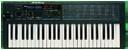
We need a way to add another 8K ROM and hopefully another 8K RAM.

Physically, we'll need to develop a retrofit card that supports two
2764 EPROM's and a 74138 3 to 8 decoder and a 7474 flip flop. It
appears that the address decoding used the upper three bits (A13-15)
to select both the ROM, RAM and peripherals (not sure if it's all
considered memory or IO yet). So I think that not all of the high end
is decoded fully. So we will need to hack into the existing 74138 and
grab one of the gate lines and feed it to the new 74138 then take the
CS we stole and connect it to the first out on the new 74138. I'll be
looking at the physical difficulty of doing that over the weekend.
Then, we will need to work out which peripheral chip select is best
intercepted before being fed by the new 74138 which will be decoding
A10-12. So the end result will be that we end up with A15-A10 decoded.

If we can't actually find the full required address space to fit the
new ROM and RAM in then we should be able to add a ROM bank switch
flip flop up high in the address space somewhere. Then, I'll find a
safe entry point in the code whereby we can call that address and
execute the flip. The flip will deselect the existing ROM and enable
the new. The question is then how the user will trigger the flip. I'm
hoping that I can find the keyboard decoding code fairly quickly. And
I am going to steal one of the keys to use as "enter the new ROM
functions". Probably the write key. The write key is never used except
in edit mode. So if you're not in edit mode, you can push the write
key and it will cause the CPU to call the ROM bank flip code section.

So I am currently carefully examining the use of the address space.
And I'm also trying to see if IO ports are used for the peripherals or
if the Korg engineers were lazy and went with memory for peripheral
use. Hopefully, they were not lazy. Otherwise it might be rather
tricky fitting another 8K or RAM and 8K of ROM in.

Here's my little web site I put together to track the project. Not
much there right now but there are a few links to the disassembler and
another 8085 interest site with some doco -
http://patrioticduo.tripod.com/index.html

I should get a little more time to work on this over the next few
weeks. But this is definitely going to take a while.

Mike H.
Message
Re: Disassembly update
2006-05-18 by patrioticduo
Attachments
- No local attachments were found for this message.