Rhodes Chroma Polaris group photo

Yahoo Groups archive

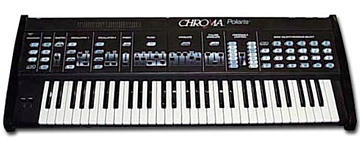
Rhodes Chroma Polaris

Archive for chromapolaris.

Index last updated: 2026-03-30 01:08 UTC

Thread

Tuning Issues

Tuning Issues

2019-04-22 by sonicalliance@...

Hello, my friend and I are working on my Chroma Polaris. We have been experiencing tuning issues. We replaced all the capacitors on the power supply. 


We also adjusted the master tuning referred to in the previous tuning post. We are able to get middle C in tune, but when you go up one octave it begins to go sharp. When you go down one octave, the notes get flat. Hitting three octaves above middle C and the note registers as C#. :( 


My friend is visiting to help today and tomorrow. Please let us know if you have any ideas to try. I think replacing the caps on the voice chips is our next thought. 


Thanks for all your help and support, we are so close! Can't wait to just enjoy it!


Best,

Fetz & Brian

Re: [chromapolaris] Tuning Issues

2019-04-22 by Gregory Cox

Try cleaning all the connectors from the voiceboard.  Worked for me as per Paul DeRocco’s advice.

And then the obvious, perform an autotune.  I wouldn’t continue replacing all the capacitors... not always a good approach as you may end up with more problems
Greg

Sent from my iPhone

On Apr 21, 2019, at 9:33 PM, sonicalliance@... [chromapolaris] <chromapolaris@yahoogroups.com> wrote:


Hello, my friend and I are working on my Chroma Polaris. We have been experiencing tuning issues. We replaced all the capacitors on the power supply. 


We also adjusted the master tuning referred to in the previous tuning post. We are able to get middle C in tune, but when you go up one octave it begins to go sharp. When you go down one octave, the notes get flat. Hitting three octaves above middle C and the note registers as C#. :( 


My friend is visiting to help today and tomorrow. Please let us know if you have any ideas to try. I think replacing the caps on the voice chips is our next thought. 


Thanks for all your help and support, we are so close! Can't wait to just enjoy it!


Best,

Fetz & Brian

Re: [chromapolaris] Tuning Issues

2019-04-22 by Bob Grieb

The frequency determining caps for each voice are often low drift types, such as polystyrene or silver mica. If you replace them with "std" mylar (polyester) caps, or worse yet ceramic ones, you will be degrading the stability of the circuit. If the tuning issue is common to all of the voices, you may want to look elsewhere, like in the circuit that measures the pitch during tuning. A stuck bit in that circuit would cause mis-tuning, I would think. It seems unlikely that all of the voices would have tuning problems at the same time. If the main crystal is off frequency, that would throw off the tuning, but that seems unlikely. Something to check for, of course. if you have an oscilloscope that can measure frequency.

Bob

Re: [chromapolaris] Tuning Issues

2019-04-22 by sonicalliance@...

Hello Bob,
Thank you for your reply.

We attempted to tune the channels independently of each other. Tuning them one at a time does a lot better job, but Channel 6 tunes very poorly. The lows are flat and the highs are sharp. Channel 6 is about 9 semitones off at both ends.

Channel 1 is the second worst with slightly better tuning.

Channels 2 through 5 are decent after calibration and if we shut off channels 1 and 6 they sound pretty decent.

When calibrated with "tune all" the calibration is much worse and when all channels are enabled, playing notes spread across all the channels sounds bad, especially the high notes. If you play the notes sequentially, overlapping them, Ableton shows that calibration varies a lot, especially on the high notes.

There is one more observation: Channel 1 and 6 are slow to change frequency. When we play a high note and then a low note with only one of those channels enabled, we can hear it sweeping down to the correct note, where as that is not as prevalent on the other channels.

Does this sound like the oscillator caps are the problem?

We have poly styrene replacement caps that we purchased just in case. We were thinking of replacing the caps on channel 6, since it's the worst to see if it gets better...

Does that seem like a good approach? Is there something else we should check? We have a meter and a o-scope.

Re: [chromapolaris] Tuning Issues

2019-04-22 by Bob Grieb

What you are describing sounds like it could be issues with the CD4051B's used to demux the DAC
for the sample and hold circuits. That would be Z101,102, 201,202, etc. There are two of these for each voice.
4051's from that era do fail, and are readily available and cheap.

Another possibility would be the TL084/LF347 quad op amps in the S&H circuits. Also available and cheap.
You could try swapping them between voice 6 and a "good" voice to see if the problem
moves. I think these chips would be in sockets in the Polaris, right?

I really doubt it's issues with polystyrene caps as they rarely fail,
unlike some other types. I would look elsewhere.

Bob

Re: [chromapolaris] Tuning Issues

2019-04-22 by btmckee9@...

Thanks for replying.

I found the possible bad components on the schematics. I do believe all these components are socketed.

One problem we had with dip sockets with old coin op video games (all digital) was that the sockets would build up an oxide between the pins and socket causing connection issues. The solution was to remove them and reinsert them which scrapes off the oxide.

I think for an experiment today, we'll try reseating the parts to see if that helps channel 6, if not then swapping them from channel 5 is a great idea. The other channels aren't perfect either, but they are much better than channel 1 and 3 so if the problem moves to channel 5 we know the culprit and I can buy new ones and install them.

Have you or anyone else watching this thread checked the tuning of their own functional Polaris to see how linear it actually is? I'm curious to know if the other channels going flat on low C is typical or atypical.

Thanks again. I'll post results after we test.

Re: [chromapolaris] Tuning Issues

2019-04-22 by btmckee9@...

Here is some more information.

First off, I quoted semitones in the previous post, those were actually cents. Learning all the time.

The behavior changes between channels. Channel 5 is more consistent than channel 6, but it also tends to go sharp on the high notes and flat on the low notes (although that didn't seem to be the case before we swapped the oscillators with channel 6, see below, but again things are ... confusing since we don't know what the proper behavior is. Channel six is off by as much as 21 cent on the low end, where as channel 5 is typically only 8 or so.

We swapped the switches and it didn't seem to make a difference. We swapped the op amps, and it didn't seem to make a difference. We swapped the oscillators and there was a change, even after calibration, but the behavior is still pretty much the same although channel 5 may have gotten worse... It's hard to tell...

I'm tempted to try putting in new caps on the op-amp feed circuit since I have the right kind, but there are eight and pulling the board for no reason seems at best reckless.

While I'm still here, is there anything else we can try?

I'm going to read the previous posts and look at the ADC circuit.

Thanks again for the help.

RE: [chromapolaris] Tuning Issues

2019-04-23 by Paul D. DeRocco

> From: btmckee9@...
>
> The behavior changes between channels. Channel 5 is more
> consistent than channel 6, but it also tends to go sharp on
> the high notes and flat on the low notes (although that
> didn't seem to be the case before we swapped the oscillators
> with channel 6, see below, but again things are ... confusing
> since we don't know what the proper behavior is. Channel six
> is off by as much as 21 cent on the low end, where as channel
> 5 is typically only 8 or so.
>
> We swapped the switches and it didn't seem to make a
> difference. We swapped the op amps, and it didn't seem to
> make a difference. We swapped the oscillators and there was a
> change, even after calibration, but the behavior is still
> pretty much the same although channel 5 may have gotten
> worse... It's hard to tell...
>
> I'm tempted to try putting in new caps on the op-amp feed
> circuit since I have the right kind, but there are eight and
> pulling the board for no reason seems at best reckless.
>
> While I'm still here, is there anything else we can try?
>
> I'm going to read the previous posts and look at the ADC circuit.

21 cents is definitely bad. Even 8 sounds like there's something slightly wrong.

You don't have to replace all the caps in the sample-and-hold circuits, only the four oscillator ones are relevant.

Another thing you might try is thoroughly cleaning the board in the sample-and-hold area. Remove the chips, douse the area with alcohol, and brush it off with a soft bristle brush, or blow it off with compressed air if you've got it. Those circuits are susceptible to contamination.

Another thing to check: start with a raw sound, like you get from an empty program position, and move the master tuning very slowly and listen carefully. Make sure the pitch changes smoothly, and doesn't have any sudden jumps in it. That can expose bad low-order DAC bits. And you should also put a meter between the DAC test points and adjust the null if you haven't already done that.

I don't think the ADC has anything to do with this. It's just for reading slider positions and performance controls.

--

Ciao, Paul D. DeRocco
Paul mailto:pderocco@...

RE: [chromapolaris] Tuning Issues

2019-04-23 by btmckee9@...

Thanks Paul.

I didn't think of contamination. It's interesting that the channels that are the worst are the ones on the ends, where contamination might be more significant. Contamination makes sense because of the fact that they channels are a bit flaky in their behavior. To be honest, I didn't see anything on the PCB. There was some dust on the keyboard and under the keyboard, but I didn't see much on the PCB... I'll definitely take a can of air the next time.

I'm back home now, but we'll schedule another visit in the future and we'll try again.

I bought a full set of replacement caps for the oscillators, but I didn't know how physically small they were and the ones I bought (in order to get polystyrene) were rated at 100 and 400 volts so they are kinda large. I'm not sure they will fit well or even at all. I'm going to have to go back to the drawing board on those and see if I can find a better source. Robert suggested Silver Mica, do you agree they will work as well, or should I stick with polystyrene?

Thanks for confirming that the non-linearity we are seeing is not normal. We did mess with the sliders for PCM adjust, and to be honest, in retrospect, they might not have been working very well. We'll definitely do the slow slide ADC test next time.

We spent a great deal of time learning how to test various oscillator features. Including turning off one or the other (or both) oscillators which was very strange. The best way to disable them was to load A1 (which contained the test sawtooth) and then set them both to pulse with the sliders set to the middle. That's not what the manual said, it said you had to slide the sliders to the edges to disable the channels. I thought it was odd at the time. Do you know if that's the expected behavior?

It will be some time before we get back to it. We'll be sure to post updates after we come up with a plan and get together again to try to get it to behave itself.

We played with some of the features and even though it was out of tune on the low and high ends, it was really cool to see what it could do.
RE: [chromapolaris] Tuning Issues

2019-04-23 by Paul D. DeRocco

> From: btmckee9@...
>
> I didn't think of contamination. It's interesting that the
> channels that are the worst are the ones on the ends, where
> contamination might be more significant. Contamination makes
> sense because of the fact that they channels are a bit flaky
> in their behavior. To be honest, I didn't see anything on the
> PCB. There was some dust on the keyboard and under the
> keyboard, but I didn't see much on the PCB... I'll definitely
> take a can of air the next time.

I think airborn contaminants like vaporized cooking oils can cause problems, and you can't really see them, except that they may also attract dust. Alcohol will dissolve that. The air just blows the alcohol and dirt off.

> I bought a full set of replacement caps for the oscillators,
> but I didn't know how physically small they were and the ones
> I bought (in order to get polystyrene) were rated at 100 and
> 400 volts so they are kinda large. I'm not sure they will fit
> well or even at all. I'm going to have to go back to the
> drawing board on those and see if I can find a better source.
> Robert suggested Silver Mica, do you agree they will work as
> well, or should I stick with polystyrene?

Mica caps have nice low ESR, and don't leak, but they're usually pretty large too.

> We spent a great deal of time learning how to test various
> oscillator features. Including turning off one or the other
> (or both) oscillators which was very strange. The best way to
> disable them was to load A1 (which contained the test
> sawtooth) and then set them both to pulse with the sliders
> set to the middle. That's not what the manual said, it said
> you had to slide the sliders to the edges to disable the
> channels. I thought it was odd at the time. Do you know if
> that's the expected behavior?

No, that's not normal. So you're saying that you don't hear anything with the pulse width sliders in the middle? Do you only hear something on one side, but the other side of the range is completely dead? That could be a problem in the sliders, the ADC that measures them, or the auto-tune miscalibrating the pulse width.

--

Ciao, Paul D. DeRocco
Paul mailto:pderocco@...

Re: Tuning Issues

2019-04-24 by btmckee9@...

No, that's not normal. So you're saying that you don't hear anything with the pulse width sliders in the middle? Do you only hear something on one side, but the other side of the range is completely dead That could be a problem in the sliders, the ADC that measures them, or the auto-tune miscalibrating the pulse width.


Exactly. After you press A-1 (which is the saw tooth test sample) with the sliders already set to the middle, then press the Pulse buttons on both OSC A and OSC B the sound goes away.  I think they make sound at the edges, but I'm not positive about that. The behavior was different from the manual, but we didn't know for sure we were doing things correctly.


RE: [chromapolaris] Re: Tuning Issues

2019-04-24 by Paul D. DeRocco

> From: btmckee9@...
>
> Exactly. After you press A-1 (which is the saw tooth test
> sample) with the sliders already set to the middle, then
> press the Pulse buttons on both OSC A and OSC B the sound
> goes away. I think they make sound at the edges, but I'm not
> positive about that. The behavior was different from the
> manual, but we didn't know for sure we were doing things correctly.

When you select a sound, the parameter sliders (and switches) are temporarily overridden until you move or press them. If you don't hear the sound, that's because A-1 gave you a saws shape with the width set to zero, and you change that to a zero-width pulse. So that's normal.

If you turn on the pulse shape, and then move the width slider, the slider should capture control of the parameter. At the bottom, the pulse should go away; in the middle, you should hear a square wave; at the top, you may hear a thin smidge of a pulse, because I think it only goes to about 99%. If you hear anything else, then there's either a misreading of the sliders, or a miscalibration of the pulse width by the auto-tune.

--

Ciao, Paul D. DeRocco
Paul mailto:pderocco@...