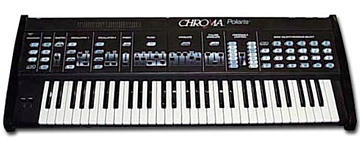
Rhodes Chroma Polaris group photo

Yahoo Groups archive

Rhodes Chroma Polaris

Archive for chromapolaris.

Index last updated: 2026-03-30 01:08 UTC

Thread

losing my voice..

losing my voice..

2013-06-17 by Harvey Peekar

Hello Chroma Group!

in the past few months i've been noticing that my chroma wont sound as many keys as it used too. Im pretty sure that some of the voices are out, but im at a loss as to how i can find out which ones. when i use the tune all function, the light only blinks four times, and im under the impression that it should blink once for each voice which is 6. that being said, i dont know how to find out which voices are broken, or what im even supposed to look for. i have basic knowledge when it comes to synth repair, and im hoping that this is something i can diagnose myself unless i need special tools. any help from this group would be greatly appreciated!

thanks all.

RE: [chromapolaris] losing my voice..

2013-06-17 by Paul D. DeRocco

> From: Harvey Peekar
>
> in the past few months i've been noticing that my chroma
> wont sound as many keys as it used too. Im pretty sure that
> some of the voices are out, but im at a loss as to how i can
> find out which ones. when i use the tune all function, the
> light only blinks four times, and im under the impression
> that it should blink once for each voice which is 6. that
> being said, i dont know how to find out which voices are
> broken, or what im even supposed to look for. i have basic
> knowledge when it comes to synth repair, and im hoping that
> this is something i can diagnose myself unless i need special
> tools. any help from this group would be greatly appreciated!

This function is covered in the Polaris Owner's Manual, but you have to read
through the list of switch functions in the back in order to find it, since
it's not an everyday sort of function. On page 119, it mentions LOWER
FUNCTION, CHANNEL CK, which shows which channels are functioning by lighting
up LEDs 1-6. You will undoubtedly see a couple that are missing. Step one in
diagnosing the problem is to press the switches for the channels that are
enabled to disable them, and press one of the switches for the
malfunctioning channels to enable it. Then, you can play on that channel to
see if its sound gives you a clue as to what's wrong. And then you can
disable that channel and enable the other bad channel to figure that one
out.

If both oscillators in a channel are out of tune, or you can't get the A
oscillator to sound at all, then you have a failure in the A oscillator
circuit. If the A oscillator sounds in tune but B is out of tune or not
making any sound, then B is failing. If both oscillators sound right, then
there's a problem in the filter.

But those are just clues, and not always correct. If both oscillators are
out of tune, it could also be something downstream preventing the sound from
going into the auto-tune input. There's no magic way to get the hardware to
tell you exactly what's wrong with itself, but sometimes you can figure
something out which steers you to the right general area. But then you have
to go into the circuitry and narrow it down, which may not be possible
without a scope. But one good thing about the Polaris is that most of them
have socketed ICs. This means that you can at least try swapping certain ICs
with the ones in working channels to see if that changes anything. (Do the
swapping with the power off.) You might get lucky that way.

--

Ciao, Paul D. DeRocco
Paul mailto:pderocco@...

RE: [chromapolaris] losing my voice..

2013-06-19 by Harvey Peekar

Much appreciated! i found that the first channel is in fact out, so know im going to try to whittle it down to see if i can pinpoint which oscillator it is. Thank You, Paul!

--- On Mon, 6/17/13, Paul D. DeRocco wrote:

> From: Paul D. DeRocco
> Subject: RE: [chromapolaris] losing my voice..
> To: chromapolaris@yahoogroups.com
> Date: Monday, June 17, 2013, 2:48 PM
>
>
>
>
>
>
>
>
>
>
>
>
>
>
>
>  
>
>
>
>
>
>
>
>
>
> > From: Harvey Peekar
>
> >
>
> > in the past few months i've been noticing that my
> chroma
>
> > wont sound as many keys as it used too. Im pretty sure
> that
>
> > some of the voices are out, but im at a loss as to how
> i can
>
> > find out which ones. when i use the tune all function,
> the
>
> > light only blinks four times, and im under the
> impression
>
> > that it should blink once for each voice which is 6.
> that
>
> > being said, i dont know how to find out which voices
> are
>
> > broken, or what im even supposed to look for. i have
> basic
>
> > knowledge when it comes to synth repair, and im hoping
> that
>
> > this is something i can diagnose myself unless i need
> special
>
> > tools. any help from this group would be greatly
> appreciated!
>
>
>
> This function is covered in the Polaris Owner's Manual,
> but you have to read
>
> through the list of switch functions in the back in order to
> find it, since
>
> it's not an everyday sort of function. On page 119, it
> mentions LOWER
>
> FUNCTION, CHANNEL CK, which shows which channels are
> functioning by lighting
>
> up LEDs 1-6. You will undoubtedly see a couple that are
> missing. Step one in
>
> diagnosing the problem is to press the switches for the
> channels that are
>
> enabled to disable them, and press one of the switches for
> the
>
> malfunctioning channels to enable it. Then, you can play on
> that channel to
>
> see if its sound gives you a clue as to what's wrong.
> And then you can
>
> disable that channel and enable the other bad channel to
> figure that one
>
> out.
>
>
>
> If both oscillators in a channel are out of tune, or you
> can't get the A
>
> oscillator to sound at all, then you have a failure in the A
> oscillator
>
> circuit. If the A oscillator sounds in tune but B is out of
> tune or not
>
> making any sound, then B is failing. If both oscillators
> sound right, then
>
> there's a problem in the filter.
>
>
>
> But those are just clues, and not always correct. If both
> oscillators are
>
> out of tune, it could also be something downstream
> preventing the sound from
>
> going into the auto-tune input. There's no magic way to
> get the hardware to
>
> tell you exactly what's wrong with itself, but sometimes
> you can figure
>
> something out which steers you to the right general area.
> But then you have
>
> to go into the circuitry and narrow it down, which may not
> be possible
>
> without a scope. But one good thing about the Polaris is
> that most of them
>
> have socketed ICs. This means that you can at least try
> swapping certain ICs
>
> with the ones in working channels to see if that changes
> anything. (Do the
>
> swapping with the power off.) You might get lucky that way.
>
>
>
> --
>
>
>
> Ciao, Paul D. DeRocco
>
> Paul mailto:pderocco@...
>
>
>
>
>
>
>
>
>
>
>
>
>
>
>
>
>
>
>
>
>
>
>
>
>
>
>

Re: [chromapolaris] losing my voice..

2013-06-29 by Jim Paghidas

Hello there, i'm having a similar problem with my polaris, that also
needs a front panel replacement. However i was able to control it via
midiquest editor. Some days ago it lost voice from some keys and when
i opened soundquest to get to the channel check it couldn't complete
the data exchange through midi -only a small amount of bytes.

So should i replace the control panels first of all?

2013/6/19, Harvey Peekar <audaciouspen@...>:
> Much appreciated! i found that the first channel is in fact out, so know im
> going to try to whittle it down to see if i can pinpoint which oscillator it
> is. Thank You, Paul!
>
> --- On Mon, 6/17/13, Paul D. DeRocco wrote:
>
> > From: Paul D. DeRocco
> > Subject: RE: [chromapolaris] losing my voice..
> > To: chromapolaris@yahoogroups.com
> > Date: Monday, June 17, 2013, 2:48 PM
> >
> >
> >
> >
> >
> >
> >
> >
> >
> >
> >
> >
> >
> >
> >
> >
> >
> >
> >
> >
> >
> >
> >
> >
> >
> > > From: Harvey Peekar
> >
> > >
> >
> > > in the past few months i've been noticing that my
> > chroma
> >
> > > wont sound as many keys as it used too. Im pretty sure
> > that
> >
> > > some of the voices are out, but im at a loss as to how
> > i can
> >
> > > find out which ones. when i use the tune all function,
> > the
> >
> > > light only blinks four times, and im under the
> > impression
> >
> > > that it should blink once for each voice which is 6.
> > that
> >
> > > being said, i dont know how to find out which voices
> > are
> >
> > > broken, or what im even supposed to look for. i have
> > basic
> >
> > > knowledge when it comes to synth repair, and im hoping
> > that
> >
> > > this is something i can diagnose myself unless i need
> > special
> >
> > > tools. any help from this group would be greatly
> > appreciated!
> >
> >
> >
> > This function is covered in the Polaris Owner's Manual,
> > but you have to read
> >
> > through the list of switch functions in the back in order to
> > find it, since
> >
> > it's not an everyday sort of function. On page 119, it
> > mentions LOWER
> >
> > FUNCTION, CHANNEL CK, which shows which channels are
> > functioning by lighting
> >
> > up LEDs 1-6. You will undoubtedly see a couple that are
> > missing. Step one in
> >
> > diagnosing the problem is to press the switches for the
> > channels that are
> >
> > enabled to disable them, and press one of the switches for
> > the
> >
> > malfunctioning channels to enable it. Then, you can play on
> > that channel to
> >
> > see if its sound gives you a clue as to what's wrong.
> > And then you can
> >
> > disable that channel and enable the other bad channel to
> > figure that one
> >
> > out.
> >
> >
> >
> > If both oscillators in a channel are out of tune, or you
> > can't get the A
> >
> > oscillator to sound at all, then you have a failure in the A
> > oscillator
> >
> > circuit. If the A oscillator sounds in tune but B is out of
> > tune or not
> >
> > making any sound, then B is failing. If both oscillators
> > sound right, then
> >
> > there's a problem in the filter.
> >
> >
> >
> > But those are just clues, and not always correct. If both
> > oscillators are
> >
> > out of tune, it could also be something downstream
> > preventing the sound from
> >
> > going into the auto-tune input. There's no magic way to
> > get the hardware to
> >
> > tell you exactly what's wrong with itself, but sometimes
> > you can figure
> >
> > something out which steers you to the right general area.
> > But then you have
> >
> > to go into the circuitry and narrow it down, which may not
> > be possible
> >
> > without a scope. But one good thing about the Polaris is
> > that most of them
> >
> > have socketed ICs. This means that you can at least try
> > swapping certain ICs
> >
> > with the ones in working channels to see if that changes
> > anything. (Do the
> >
> > swapping with the power off.) You might get lucky that way.
> >
> >
> >
> > --
> >
> >
> >
> > Ciao, Paul D. DeRocco
> >
> > Paul mailto:pderocco@...
> >
> >
> >
> >
> >
> >
> >
> >
> >
> >
> >
> >
> >
> >
> >
> >
> >
> >
> >
> >
> >
> >
> >
> >
> >
> >
> >
>