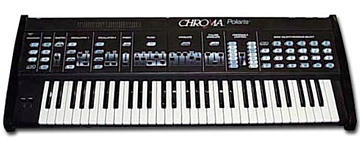
Rhodes Chroma Polaris group photo

Yahoo Groups archive

Rhodes Chroma Polaris

Archive for chromapolaris.

Index last updated: 2026-03-30 01:08 UTC

Thread

Resurrected Polaris will not hold memory

Resurrected Polaris will not hold memory

2013-02-03 by stanleykenton59

I recently resurrected my long non-functioning Polaris thanks to the new membrane panels from Paul DeRocco and a DAC obtained from John Leimseider (thank you gentlemen).

I have cleaned everything and changed all the capacitors. I followed the steps in the service manual to restore the settings. Loading the factory patches was done via MidiOx. Everything works great. Sounds great. But my Polaris will not hold anything in memory beyond 20 seconds.

I have new D-cell batteries in and I check with a voltmeter that indeed 3.1V is getting to the main board when the power is off. I even bought new memory RAM chips (the 6264 size) and replaced the 6116 original chips. I switched the jumpers, had the battery disconnected from the mainboard when the RAM was changed and took static precautions when I handled the RAM chips. I can load patches and everything works but once the Polaris powers down, nothing is retained in memory - patches, tuning, settings all wiped.

So I am stuck. What else can I check? What am I missing? I'm so close to getting the Polaris working again.

Thanks

Brett

Re: [chromapolaris] Resurrected Polaris will not hold memory

2013-02-03 by David Clarke

> ... I can load patches and everything works but once the Polaris
> powers down, nothing is retained in memory - patches, tuning,
> settings all wiped.

Brett - the batteries are going to be used to power the RAM, but only
when the unit is shut off.

When main power is applied to the unit, the RAM will be powered by the
on-board power supply.

If the Polaris is fully functional when it is powered up (e.g., if
you're able to save patches, recall patches, etc.) then you can be
reasonably confident that the RAM itself is fine.

When power goes away, (and when it comes up) there is a circuit on-board
that switches the CMOS RAM power to/from the battery. This is shown in
the "Battery Back Up Power Supply" circuit in the schematics:

http://www.rhodeschroma.com/content/polarisservicemanual/polarisserviceschematics/computermemorydatapanelbuffersbattery.pdf

If the problems only occur across a power-cycle, then the most likely
implication is that there's something not quite right with regard to the
operation of that circuit.

> I have new D-cell batteries in and I check with a
> voltmeter that indeed 3.1V is getting to the main board when
> the power is off.

It's not exactly clear from this note where the voltage was measured -
but you'll want to measure it at the +5V Batt location on the CMOS RAM
chips themselves (e.g., pin 26 or 28 of those devices) to confirm that
it is making it to where it is needed.

If it is there, you'll want to watch that voltage location with an
'scope to confirm that during the power on/power off the voltage doesn't
glitch low.

If it isn't there, then it's just a matter of tracing back to find where
where the battery volage is 'lost' from the batteries (e.g., CR1 bad).

Good luck, and let us know how you make out,

David Clarke

RE: [chromapolaris] Resurrected Polaris will not hold memory

2013-02-03 by Paul D. DeRocco

> From: David Clarke
>
> Brett - the batteries are going to be used to power the RAM, but only
> when the unit is shut off.
>
> When main power is applied to the unit, the RAM will be
> powered by the
> on-board power supply.
>
> If the Polaris is fully functional when it is powered up (e.g., if
> you're able to save patches, recall patches, etc.) then you can be
> reasonably confident that the RAM itself is fine.
>
> When power goes away, (and when it comes up) there is a
> circuit on-board
> that switches the CMOS RAM power to/from the battery. This
> is shown in
> the "Battery Back Up Power Supply" circuit in the schematics:
>
> http://www.rhodeschroma.com/content/polarisservicemanual/polar
> isserviceschematics/computermemorydatapanelbuffersbattery.pdf
>
> If the problems only occur across a power-cycle, then the most likely
> implication is that there's something not quite right with
> regard to the
> operation of that circuit.
>
> > I have new D-cell batteries in and I check with a
> > voltmeter that indeed 3.1V is getting to the main board when
> > the power is off.
>
> It's not exactly clear from this note where the voltage was
> measured -
> but you'll want to measure it at the +5V Batt location on the
> CMOS RAM
> chips themselves (e.g., pin 26 or 28 of those devices) to
> confirm that
> it is making it to where it is needed.
>
> If it is there, you'll want to watch that voltage location with an
> 'scope to confirm that during the power on/power off the
> voltage doesn't
> glitch low.
>
> If it isn't there, then it's just a matter of tracing back to
> find where
> where the battery volage is 'lost' from the batteries (e.g., CR1 bad).
>
> Good luck, and let us know how you make out,

CR1 is the most likely culprit. If anything even momentarily shorts the
memory power line to ground, that will blow out. That could be diagnosed
easily enough with a meter. If it's bad, it should be replaced with either
an equivalent germanium diode, or perhaps a Schottky diode. A regular
silicon diode can be used in a pinch, but will not tolerate as low a battery
voltage before the RAMs lose their data.

--

Ciao, Paul D. DeRocco
Paul mailto:pderocco@...

Re: Resurrected Polaris will not hold memory

2013-02-05 by stanleykenton59

Dear Dave and Paul,

Yes, my Polaris will hold all patches and settings while the main power is on. Where I checked the battery voltage was simply at the connector to the main board. I was not sure which pin on the RAM chips would be the best to check the voltage when the main power is off. I can check that now that I know which pins are used.
I looked online and the IN34A germanium diode is easy to find. So I will get one and replace it.
Thank you both for the advice.
Once I change out the diode, I report back.Hope that is all it is!

Sincerely,

Brett


--- In chromapolaris@yahoogroups.com, "Paul D. DeRocco" wrote:
>
> > From: David Clarke
> >
> > Brett - the batteries are going to be used to power the RAM, but only
> > when the unit is shut off.
> >
> > When main power is applied to the unit, the RAM will be
> > powered by the
> > on-board power supply.
> >
> > If the Polaris is fully functional when it is powered up (e.g., if
> > you're able to save patches, recall patches, etc.) then you can be
> > reasonably confident that the RAM itself is fine.
> >
> > When power goes away, (and when it comes up) there is a
> > circuit on-board
> > that switches the CMOS RAM power to/from the battery. This
> > is shown in
> > the "Battery Back Up Power Supply" circuit in the schematics:
> >
> > http://www.rhodeschroma.com/content/polarisservicemanual/polar
> > isserviceschematics/computermemorydatapanelbuffersbattery.pdf
> >
> > If the problems only occur across a power-cycle, then the most likely
> > implication is that there's something not quite right with
> > regard to the
> > operation of that circuit.
> >
> > > I have new D-cell batteries in and I check with a
> > > voltmeter that indeed 3.1V is getting to the main board when
> > > the power is off.
> >
> > It's not exactly clear from this note where the voltage was
> > measured -
> > but you'll want to measure it at the +5V Batt location on the
> > CMOS RAM
> > chips themselves (e.g., pin 26 or 28 of those devices) to
> > confirm that
> > it is making it to where it is needed.
> >
> > If it is there, you'll want to watch that voltage location with an
> > 'scope to confirm that during the power on/power off the
> > voltage doesn't
> > glitch low.
> >
> > If it isn't there, then it's just a matter of tracing back to
> > find where
> > where the battery volage is 'lost' from the batteries (e.g., CR1 bad).
> >
> > Good luck, and let us know how you make out,
>
> CR1 is the most likely culprit. If anything even momentarily shorts the
> memory power line to ground, that will blow out. That could be diagnosed
> easily enough with a meter. If it's bad, it should be replaced with either
> an equivalent germanium diode, or perhaps a Schottky diode. A regular
> silicon diode can be used in a pinch, but will not tolerate as low a battery
> voltage before the RAMs lose their data.
>
> --
>
> Ciao, Paul D. DeRocco
> Paul mailto:pderocco@...
>

RE: [chromapolaris] Re: Resurrected Polaris will not hold memory

2013-02-05 by Paul D. DeRocco

> From: stanleykenton59
>
> I looked online and the IN34A germanium diode is easy to
> find. So I will get one and replace it.
> Thank you both for the advice.
> Once I change out the diode, I report back.Hope that is all it is!

You can save yourself the trouble if it's not. With the power off, measure
the voltage on both sides of the diode. If the difference is more than, oh,
a couple hundred millivolts, it's broken. If not, then it's some other
problem, perhaps a transient when you turn the power on or off.

--

Ciao, Paul D. DeRocco
Paul mailto:pderocco@...

Re: Resurrected Polaris will not hold memory

2013-02-07 by stanleykenton59

I measured the current flow both directions and there was no conduction either way. I noticed the glass casing was broken and the diode just basically broke in half. That settled that. I am just waiting for a new one to come.
Thanks everyone.
Brett

--- In chromapolaris@yahoogroups.com, "Paul D. DeRocco" wrote:
>
> > From: stanleykenton59
> >
> > I looked online and the IN34A germanium diode is easy to
> > find. So I will get one and replace it.
> > Thank you both for the advice.
> > Once I change out the diode, I report back.Hope that is all it is!
>
> You can save yourself the trouble if it's not. With the power off, measure
> the voltage on both sides of the diode. If the difference is more than, oh,
> a couple hundred millivolts, it's broken. If not, then it's some other
> problem, perhaps a transient when you turn the power on or off.
>
> --
>
> Ciao, Paul D. DeRocco
> Paul mailto:pderocco@...
>

Re: Resurrected Polaris will not hold memory

2013-02-18 by stanleykenton59

"We have memory Captain!"

The diode was the problem. I put in a new one and everything works great.

I bought the Polaris in 1990 for $100. Eventually it made it's way to the closet until recently I decided to bring it back to life with the new membrane panels from Paul.

I decided to rebuild the power supply and replace all the caps. I found I needed a new DAC, some LED, ribbon connectors and then that pesky diode. Now all's I have left to do is pretty up the wood end pieces but I think I am going to play my Polaris for a while first!

The Polaris has a great rich analog sound and a smooth,quiet keyboard that is wonderful to play. Paul, the team made a great product back in the day.

Thanks to everyone for the help in getting it going. I will reciprocate with a couple of posts stating where I got a few of the replacement parts - perhaps it will save someone else some time.

Brett


--- In chromapolaris@yahoogroups.com, "stanleykenton59" <stanleykenton59@...> wrote:
>
> I measured the current flow both directions and there was no conduction either way. I noticed the glass casing was broken and the diode just basically broke in half. That settled that. I am just waiting for a new one to come.
> Thanks everyone.
> Brett
>
> --- In chromapolaris@yahoogroups.com, "Paul D. DeRocco" wrote:
> >
> > > From: stanleykenton59
> > >
> > > I looked online and the IN34A germanium diode is easy to
> > > find. So I will get one and replace it.
> > > Thank you both for the advice.
> > > Once I change out the diode, I report back.Hope that is all it is!
> >
> > You can save yourself the trouble if it's not. With the power off, measure
> > the voltage on both sides of the diode. If the difference is more than, oh,
> > a couple hundred millivolts, it's broken. If not, then it's some other
> > problem, perhaps a transient when you turn the power on or off.
> >
> > --
> >
> > Ciao, Paul D. DeRocco
> > Paul mailto:pderocco@
> >
>