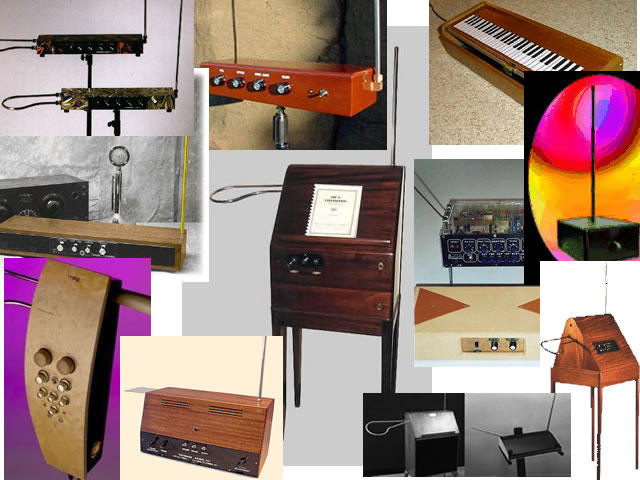
AETHERPHON, global theremin family group photo

Yahoo Groups archive

AETHERPHON, global theremin family

Index last updated: 2026-04-28 23:14 UTC

Thread

Looper pedals for decaying layers

Looper pedals for decaying layers

2007-01-16 by Oscar

Hi people!

AS I am asking everywhere else, I am looking for any pedal/group of pedals 
to achieve the effect of "constant decaying layers" Pamelia uses. I know She 
uses a DL4, but there must be better choices at the market.

TO explain what I am looking for, look this video of the violinist Ed 
Alleyne Johnson:

http://www.youtube.com/watch?v=2fHOwTp0gXs

Anyone here knows any delay/looper unit able to make this effect?
I mean, with enough seconds ver loop to play a melody and harmonize it.

Thanks guys!

\ufffdscar

Re: [SPELLBOUND-L] Looper pedals for decaying layers

2007-01-16 by kkissinger@kevinkissinger.com

Hi!

This topic is a good one and has had me scratching my head for a few  
days since reading about this issue on TW.  I own an RC50 loop station  
and it has two modes of looping, namely "Overdub" and "Replace".

In "Overdub" mode, as the loop repeats one can overdub -- that is add  
the live material to the loop.  The RC50 apparently has a pretty good  
algorithm for keeping the old material from "fading" into the mix --  
my hunch is that the RC50 averages the sound rather than mixes it  
algebraically.  The point is that "Overdub" mode keeps each pass of  
the loop indefinately.

In "Replace" mode, the loop repeats and you are replacing the contents  
of the loop with new material while the old material plays.  Yes, this  
is a little "weird":  You play material on the track, the material  
plays back while you record along with the track, then the new  
material plays back on the next pass -- that is, only the most  
recently recorded track is repeated.

The difficulty is to have a loop that works similar to the old  
echoplex tape loop where a track becomes successively softer on each  
iteration of the loop.  This is accomplished by mixing a portion of  
the looper's output to the looper's input.

Since the RC-50 has a built-in mixer, you could accomplish the "fading  
track" as follows:  (this example for a mono loop)

1) patch the Theremin's output to the looper's instrument input (the  
input has its own input level so you should be able to back it off if  
need be)

2) Assign the loop track's output to both the main and sub output busses.

3) Connect a patch cord from the sub output to the line input.

4) Adjust the line input level -- a the higher the level, the longer  
it takes for the track to fade out.

Note that this method takes you out of the digital domain, so you will  
get analog loop artifacts (noise buildup, etc) which may or may not be  
a problem depending on the effect you want.

Of course, with a small external mixer, one could get into more  
elaborate schemes with ping-pongs and effects in the echo loop.

Even with a simple loop station, the key to a track fading out with  
each pass is feedback -- that is, you take part of the output signal  
and mix it back into the input.

I, too want the option of successively fading loops, and this solution  
should work.  Anyway, I worked out this solution while sitting at my  
desk (day job) and I'm looking forward to running home and playing  
around with this.

-- Kevin


Quoting Oscar <oscar@...>:
Show quoted textHide quoted text
>  Hi people!
>
> AS I am asking everywhere else, I am looking for any pedal/group of pedals
> to achieve the effect of "constant decaying layers" Pamelia uses. I know She
> uses a DL4, but there must be better choices at the market.
>
> TO explain what I am looking for, look this video of the violinist Ed
> Alleyne Johnson:
>
> http://www.youtube.com/watch?v=2fHOwTp0gXs
>
> Anyone here knows any delay/looper unit able to make this effect?
> I mean, with enough seconds ver loop to play a melody and harmonize it.
>
> Thanks guys!
>
> Óscar
>
>
>
> SPELLBOUND-L, the glocal thereminist community
>
> To contact the moderator, e-mail porphyrous@...
>
>
>
> Yahoo! Groups Links
>
>
>
>

Re: [SPELLBOUND-L] Looper pedals for decaying layers

2007-01-16 by kkissinger@kevinkissinger.com

To follow up, I did a little googling and found an interesting post on  
the topic:

http://www.loopers-delight.com/LDarchive/200602/msg00733.html

They are discussing that you can hook a volume pedal into the feedback  
loop to control the amount of feedback in real time.

One way to consider the difference between "Overdub" and "Replace"  
mode is to think back to the design of the old tape delays wherein the  
tape passed by: 1) an erase head, 2) a recording head, and 3) a  
playback head.  (the speed of the loop and/or the distance between the  
recording and playback head determines the delay time.

The "Replace" mode is the "traditional" mode wherein the erase head is  
"on".  "Overdub" mode would be analogous to turning the erase head  
"off", thus rendering a "sound-on-sound" effect.

Of course, the digital overdub results in a clean copy on every pass  
unlike an analog "sound-on-sound".

I forgot to mention that you would use the "Replace" mode along with  
feedback to create the fading loops effect.

Hope this is useful!

-- Kevin


Quoting kkissinger@...:
Show quoted textHide quoted text
> Hi!
>
> This topic is a good one and has had me scratching my head for a few
> days since reading about this issue on TW.  I own an RC50 loop station
> and it has two modes of looping, namely "Overdub" and "Replace".
>
> In "Overdub" mode, as the loop repeats one can overdub -- that is add
> the live material to the loop.  The RC50 apparently has a pretty good
> algorithm for keeping the old material from "fading" into the mix --
> my hunch is that the RC50 averages the sound rather than mixes it
> algebraically.  The point is that "Overdub" mode keeps each pass of
> the loop indefinately.
>
> In "Replace" mode, the loop repeats and you are replacing the contents
> of the loop with new material while the old material plays.  Yes, this
> is a little "weird":  You play material on the track, the material
> plays back while you record along with the track, then the new
> material plays back on the next pass -- that is, only the most
> recently recorded track is repeated.
>
> The difficulty is to have a loop that works similar to the old
> echoplex tape loop where a track becomes successively softer on each
> iteration of the loop.  This is accomplished by mixing a portion of
> the looper's output to the looper's input.
>
> Since the RC-50 has a built-in mixer, you could accomplish the "fading
> track" as follows:  (this example for a mono loop)
>
> 1) patch the Theremin's output to the looper's instrument input (the
> input has its own input level so you should be able to back it off if
> need be)
>
> 2) Assign the loop track's output to both the main and sub output busses.
>
> 3) Connect a patch cord from the sub output to the line input.
>
> 4) Adjust the line input level -- a the higher the level, the longer
> it takes for the track to fade out.
>
> Note that this method takes you out of the digital domain, so you will
> get analog loop artifacts (noise buildup, etc) which may or may not be
> a problem depending on the effect you want.
>
> Of course, with a small external mixer, one could get into more
> elaborate schemes with ping-pongs and effects in the echo loop.
>
> Even with a simple loop station, the key to a track fading out with
> each pass is feedback -- that is, you take part of the output signal
> and mix it back into the input.
>
> I, too want the option of successively fading loops, and this solution
> should work.  Anyway, I worked out this solution while sitting at my
> desk (day job) and I'm looking forward to running home and playing
> around with this.
>
> -- Kevin
>
>
> Quoting Oscar <oscar@thereminhispano.com>:
>
>>  Hi people!
>>
>> AS I am asking everywhere else, I am looking for any pedal/group of pedals
>> to achieve the effect of "constant decaying layers" Pamelia uses. I know She
>> uses a DL4, but there must be better choices at the market.
>>
>> TO explain what I am looking for, look this video of the violinist Ed
>> Alleyne Johnson:
>>
>> http://www.youtube.com/watch?v=2fHOwTp0gXs
>>
>> Anyone here knows any delay/looper unit able to make this effect?
>> I mean, with enough seconds ver loop to play a melody and harmonize it.
>>
>> Thanks guys!
>>
>> Óscar
>>
>>
>>
>> SPELLBOUND-L, the glocal thereminist community
>>
>> To contact the moderator, e-mail porphyrous@...
>>
>>
>>
>> Yahoo! Groups Links
>>
>>
>>
>>
>
>
>
>
> SPELLBOUND-L, the glocal thereminist community
>
> To contact the moderator, e-mail porphyrous@...
>
>
>
> Yahoo! Groups Links
>
>
>
>

Re: [SPELLBOUND-L] Looper pedals for decaying layers

2007-01-16 by Oscar

Well finally a possible answer for what I was looking for!!!

I will try it  at the store this weekend if possible, but please keep me informed about how it works


Saludos,

Óscar
Show quoted textHide quoted text
  ----- Original Message ----- 
  From: kkissinger@... 
  To: spellbound-l@yahoogroups.com 
  Sent: Tuesday, January 16, 2007 10:39 PM
  Subject: Re: [SPELLBOUND-L] Looper pedals for decaying layers


  Hi!

  This topic is a good one and has had me scratching my head for a few 
  days since reading about this issue on TW. I own an RC50 loop station 
  and it has two modes of looping, namely "Overdub" and "Replace".

  In "Overdub" mode, as the loop repeats one can overdub -- that is add 
  the live material to the loop. The RC50 apparently has a pretty good 
  algorithm for keeping the old material from "fading" into the mix -- 
  my hunch is that the RC50 averages the sound rather than mixes it 
  algebraically. The point is that "Overdub" mode keeps each pass of 
  the loop indefinately.

  In "Replace" mode, the loop repeats and you are replacing the contents 
  of the loop with new material while the old material plays. Yes, this 
  is a little "weird": You play material on the track, the material 
  plays back while you record along with the track, then the new 
  material plays back on the next pass -- that is, only the most 
  recently recorded track is repeated.

  The difficulty is to have a loop that works similar to the old 
  echoplex tape loop where a track becomes successively softer on each 
  iteration of the loop. This is accomplished by mixing a portion of 
  the looper's output to the looper's input.

  Since the RC-50 has a built-in mixer, you could accomplish the "fading 
  track" as follows: (this example for a mono loop)

  1) patch the Theremin's output to the looper's instrument input (the 
  input has its own input level so you should be able to back it off if 
  need be)

  2) Assign the loop track's output to both the main and sub output busses.

  3) Connect a patch cord from the sub output to the line input.

  4) Adjust the line input level -- a the higher the level, the longer 
  it takes for the track to fade out.

  Note that this method takes you out of the digital domain, so you will 
  get analog loop artifacts (noise buildup, etc) which may or may not be 
  a problem depending on the effect you want.

  Of course, with a small external mixer, one could get into more 
  elaborate schemes with ping-pongs and effects in the echo loop.

  Even with a simple loop station, the key to a track fading out with 
  each pass is feedback -- that is, you take part of the output signal 
  and mix it back into the input.

  I, too want the option of successively fading loops, and this solution 
  should work. Anyway, I worked out this solution while sitting at my 
  desk (day job) and I'm looking forward to running home and playing 
  around with this.

  -- Kevin

  Quoting Oscar <oscar@...>:

  > Hi people!
  >
  > AS I am asking everywhere else, I am looking for any pedal/group of pedals
  > to achieve the effect of "constant decaying layers" Pamelia uses. I know She
  > uses a DL4, but there must be better choices at the market.
  >
  > TO explain what I am looking for, look this video of the violinist Ed
  > Alleyne Johnson:
  >
  > http://www.youtube.com/watch?v=2fHOwTp0gXs
  >
  > Anyone here knows any delay/looper unit able to make this effect?
  > I mean, with enough seconds ver loop to play a melody and harmonize it.
  >
  > Thanks guys!
  >
  > Óscar
  >
  >
  >
  > SPELLBOUND-L, the glocal thereminist community
  >
  > To contact the moderator, e-mail porphyrous@...
  >
  >
  >
  > Yahoo! Groups Links
  >
  >
  >
  >


[Non-text portions of this message have been removed]
Re: [SPELLBOUND-L] Looper pedals for decaying layers

2007-01-17 by Bret

Yes, I was going to suggest loopers delight.  There is a section on
Tools of the Trade, where you can read about the various looper
hardware.
http://www.loopers-delight.com/tools/tools.html

I have owned the boomerang, Jamman, and the echoplex digital pro.  I
sold all but the echoplex, preferring it's features, sound quality, and
user interface.  I have owned as many as 3 of them at a time.  

http://www.loopers-delight.com/tools/echoplex/echoplex.html

The echoplex digital pro (EDP) has 198 seconds of loop time.  This can
be set to be 1 loop, or divided into sections so that you can have a A
part, B part, C part...., and switch between them.  It has a feedback
knob that determines whether the loop never decays, or decays at the
rate that you set.  This feedback can be controlled with an expression
pedal, so that you can dynamically control the decay.  

The EDP has UNDO, allowing you to peel off layers of the loop, or to
correct a mistake.  EDP has reverse, half speed (or double speed).  The
user interface is critical to live loop creation.  I find the user
interface with the EDP more natural to use than the other devices,
whether you use the EDP footpedal (7 buttons), or a midi pedal.  

EDP can be 'brothersynced' together so that several musician can loop
in sync, with the first one making a loop setting the base time.  The
other 'slave' EDP will sync to the 'master', in integer multiples, so
that the  slave can be the same time as the master, or 2x, 3x, 4x etc.
of the master.  In effect it is live multitracking loops.

The EDP has a 'Multiply' function allowing you to create a root loop,
and overdub multiples of that, so that again you create 2x, 3x etc of
the first loop, with varied overdubs.  

2 EDP can be slaved to get stereo loops.  I love the EDP, and still own
2 of them.  Once a loop is created you can 'Insert' into that loop,
replacing a section.

When making a first loop, it can be ended with 'overdub' allowing a
smooth seam on a sustained sound, rather an abrupt loop end/beginning.

bret


--- kkissinger@... wrote:

> To follow up, I did a little googling and found an interesting post
> on  
> the topic:
> 
> http://www.loopers-delight.com/LDarchive/200602/msg00733.html
> 


____________________________________________________________________________________
Looking for earth-friendly autos? 
Browse Top Cars by "Green Rating" at Yahoo! Autos' Green Center.
http://autos.yahoo.com/green_center/

Re: [SPELLBOUND-L] Looper pedals for decaying layers

2007-01-17 by kkissinger@kevinkissinger.com

OK... finally got a chance to try this.

Arrghh... I shouldn't have written out of my head ... what I called a  
"Line Input" is really called "Aux input" on the RC50...

However, the loop fading with each iteration works as expected -- I  
just have to adjust the AUX level to control the amount of feedback.   
I had to use a 1/4" to 1/8" adapter cord to make this work (cheap 'n  
dirty -- the aux input is actually a 1/8" stereo input -- the mono  
patchcord was ok for this experiment).  One could simply place a  
volume pedal between the "Sub out" and the "Aux In" to control the  
feedback in real time.

The output level can be controlled via MIDI CC messages which allows  
the possibility of control from a computer.

I am surprised that Roland didn't build feedback into the unit --  
however it wasn't too difficult to make it work with a patchcord.

I am a "newbie" in the world of real-time looping... and I don't  
consider myself experienced enough to recommend one loop station over  
another.  However, if you have questions about the RC50, I'll be happy  
to research them for you.

-- Kevin


Quoting Oscar <oscar@...>:
Show quoted textHide quoted text
> Well finally a possible answer for what I was looking for!!!
>
> I will try it  at the store this weekend if possible, but please   
> keep me informed about how it works
>
>
> Saludos,
>
> Óscar
>
>   ----- Original Message -----
>   From: kkissinger@kevinkissinger.com
>   To: spellbound-l@yahoogroups.com
>   Sent: Tuesday, January 16, 2007 10:39 PM
>   Subject: Re: [SPELLBOUND-L] Looper pedals for decaying layers
>
>
>   Hi!
>
>   This topic is a good one and has had me scratching my head for a few
>   days since reading about this issue on TW. I own an RC50 loop station
>   and it has two modes of looping, namely "Overdub" and "Replace".
>
>   In "Overdub" mode, as the loop repeats one can overdub -- that is add
>   the live material to the loop. The RC50 apparently has a pretty good
>   algorithm for keeping the old material from "fading" into the mix --
>   my hunch is that the RC50 averages the sound rather than mixes it
>   algebraically. The point is that "Overdub" mode keeps each pass of
>   the loop indefinately.
>
>   In "Replace" mode, the loop repeats and you are replacing the contents
>   of the loop with new material while the old material plays. Yes, this
>   is a little "weird": You play material on the track, the material
>   plays back while you record along with the track, then the new
>   material plays back on the next pass -- that is, only the most
>   recently recorded track is repeated.
>
>   The difficulty is to have a loop that works similar to the old
>   echoplex tape loop where a track becomes successively softer on each
>   iteration of the loop. This is accomplished by mixing a portion of
>   the looper's output to the looper's input.
>
>   Since the RC-50 has a built-in mixer, you could accomplish the "fading
>   track" as follows: (this example for a mono loop)
>
>   1) patch the Theremin's output to the looper's instrument input (the
>   input has its own input level so you should be able to back it off if
>   need be)
>
>   2) Assign the loop track's output to both the main and sub output busses.
>
>   3) Connect a patch cord from the sub output to the line input.
>
>   4) Adjust the line input level -- a the higher the level, the longer
>   it takes for the track to fade out.
>
>   Note that this method takes you out of the digital domain, so you will
>   get analog loop artifacts (noise buildup, etc) which may or may not be
>   a problem depending on the effect you want.
>
>   Of course, with a small external mixer, one could get into more
>   elaborate schemes with ping-pongs and effects in the echo loop.
>
>   Even with a simple loop station, the key to a track fading out with
>   each pass is feedback -- that is, you take part of the output signal
>   and mix it back into the input.
>
>   I, too want the option of successively fading loops, and this solution
>   should work. Anyway, I worked out this solution while sitting at my
>   desk (day job) and I'm looking forward to running home and playing
>   around with this.
>
>   -- Kevin
>
>   Quoting Oscar <oscar@...>:
>
>   > Hi people!
>   >
>   > AS I am asking everywhere else, I am looking for any pedal/group  
>  of pedals
>   > to achieve the effect of "constant decaying layers" Pamelia   
> uses. I know She
>   > uses a DL4, but there must be better choices at the market.
>   >
>   > TO explain what I am looking for, look this video of the violinist Ed
>   > Alleyne Johnson:
>   >
>   > http://www.youtube.com/watch?v=2fHOwTp0gXs
>   >
>   > Anyone here knows any delay/looper unit able to make this effect?
>   > I mean, with enough seconds ver loop to play a melody and harmonize it.
>   >
>   > Thanks guys!
>   >
>   > Óscar
>   >
>   >
>   >
>   > SPELLBOUND-L, the glocal thereminist community
>   >
>   > To contact the moderator, e-mail porphyrous@...
>   >
>   >
>   >
>   > Yahoo! Groups Links
>   >
>   >
>   >
>   >
>
>
>
>
>
> [Non-text portions of this message have been removed]
>
>
>
> SPELLBOUND-L, the glocal thereminist community
>
> To contact the moderator, e-mail porphyrous@yahoo.com
>
>
>
> Yahoo! Groups Links
>
>
>
>

Re: [SPELLBOUND-L] Looper pedals for decaying layers

2007-01-17 by Oscar

Ok Kevin,

this is very useful info for me . My friend Arturo Cid will let me test his rc50 unit 
this weekend (he will bring it from Granada to Madrid) and I will try this.
Does this setting allows recording a sequence from it to another pedal, and then use it with
100%feedback hile using a 3rd pedal (or even the 1st) ?
This would be just perfect and would do the unit complete for me. 
The 

The echoplex seems  great, but I find it way too expensive. I am not a proffessional player,
so spending 1000 euro in an effect is maybe too much for an amateur.

The RC50 has a downloadable firmware. SO, it means that, with enough pressure from
 customers and future ones to Roland, maybe they could program this useful function to the unit... maybe...

Oscar
Show quoted textHide quoted text
  ----- Original Message ----- 
  From: kkissinger@kevinkissinger.com 
  To: spellbound-l@yahoogroups.com 
  Sent: Wednesday, January 17, 2007 5:40 AM
  Subject: Re: [SPELLBOUND-L] Looper pedals for decaying layers


  OK... finally got a chance to try this.

  Arrghh... I shouldn't have written out of my head ... what I called a 
  "Line Input" is really called "Aux input" on the RC50...

  However, the loop fading with each iteration works as expected -- I 
  just have to adjust the AUX level to control the amount of feedback. 
  I had to use a 1/4" to 1/8" adapter cord to make this work (cheap 'n 
  dirty -- the aux input is actually a 1/8" stereo input -- the mono 
  patchcord was ok for this experiment). One could simply place a 
  volume pedal between the "Sub out" and the "Aux In" to control the 
  feedback in real time.

  The output level can be controlled via MIDI CC messages which allows 
  the possibility of control from a computer.

  I am surprised that Roland didn't build feedback into the unit -- 
  however it wasn't too difficult to make it work with a patchcord.

  I am a "newbie" in the world of real-time looping... and I don't 
  consider myself experienced enough to recommend one loop station over 
  another. However, if you have questions about the RC50, I'll be happy 
  to research them for you.

  -- Kevin

  Quoting Oscar <oscar@...>:

  > Well finally a possible answer for what I was looking for!!!
  >
  > I will try it at the store this weekend if possible, but please 
  > keep me informed about how it works
  >
  >
  > Saludos,
  >
  > Óscar
  >
  > ----- Original Message -----
  > From: kkissinger@...
  > To: spellbound-l@yahoogroups.com
  > Sent: Tuesday, January 16, 2007 10:39 PM
  > Subject: Re: [SPELLBOUND-L] Looper pedals for decaying layers
  >
  >
  > Hi!
  >
  > This topic is a good one and has had me scratching my head for a few
  > days since reading about this issue on TW. I own an RC50 loop station
  > and it has two modes of looping, namely "Overdub" and "Replace".
  >
  > In "Overdub" mode, as the loop repeats one can overdub -- that is add
  > the live material to the loop. The RC50 apparently has a pretty good
  > algorithm for keeping the old material from "fading" into the mix --
  > my hunch is that the RC50 averages the sound rather than mixes it
  > algebraically. The point is that "Overdub" mode keeps each pass of
  > the loop indefinately.
  >
  > In "Replace" mode, the loop repeats and you are replacing the contents
  > of the loop with new material while the old material plays. Yes, this
  > is a little "weird": You play material on the track, the material
  > plays back while you record along with the track, then the new
  > material plays back on the next pass -- that is, only the most
  > recently recorded track is repeated.
  >
  > The difficulty is to have a loop that works similar to the old
  > echoplex tape loop where a track becomes successively softer on each
  > iteration of the loop. This is accomplished by mixing a portion of
  > the looper's output to the looper's input.
  >
  > Since the RC-50 has a built-in mixer, you could accomplish the "fading
  > track" as follows: (this example for a mono loop)
  >
  > 1) patch the Theremin's output to the looper's instrument input (the
  > input has its own input level so you should be able to back it off if
  > need be)
  >
  > 2) Assign the loop track's output to both the main and sub output busses.
  >
  > 3) Connect a patch cord from the sub output to the line input.
  >
  > 4) Adjust the line input level -- a the higher the level, the longer
  > it takes for the track to fade out.
  >
  > Note that this method takes you out of the digital domain, so you will
  > get analog loop artifacts (noise buildup, etc) which may or may not be
  > a problem depending on the effect you want.
  >
  > Of course, with a small external mixer, one could get into more
  > elaborate schemes with ping-pongs and effects in the echo loop.
  >
  > Even with a simple loop station, the key to a track fading out with
  > each pass is feedback -- that is, you take part of the output signal
  > and mix it back into the input.
  >
  > I, too want the option of successively fading loops, and this solution
  > should work. Anyway, I worked out this solution while sitting at my
  > desk (day job) and I'm looking forward to running home and playing
  > around with this.
  >
  > -- Kevin
  >
  > Quoting Oscar <oscar@...>:
  >
  > > Hi people!
  > >
  > > AS I am asking everywhere else, I am looking for any pedal/group 
  > of pedals
  > > to achieve the effect of "constant decaying layers" Pamelia 
  > uses. I know She
  > > uses a DL4, but there must be better choices at the market.
  > >
  > > TO explain what I am looking for, look this video of the violinist Ed
  > > Alleyne Johnson:
  > >
  > > http://www.youtube.com/watch?v=2fHOwTp0gXs
  > >
  > > Anyone here knows any delay/looper unit able to make this effect?
  > > I mean, with enough seconds ver loop to play a melody and harmonize it.
  > >
  > > Thanks guys!
  > >
  > > Óscar
  > >
  > >
  > >
  > > SPELLBOUND-L, the glocal thereminist community
  > >
  > > To contact the moderator, e-mail porphyrous@...
  > >
  > >
  > >
  > > Yahoo! Groups Links
  > >
  > >
  > >
  > >
  >
  >
  >
  >
  >
  > [Non-text portions of this message have been removed]
  >
  >
  >
  > SPELLBOUND-L, the glocal thereminist community
  >
  > To contact the moderator, e-mail porphyrous@...
  >
  >
  >
  > Yahoo! Groups Links
  >
  >
  >
  >


[Non-text portions of this message have been removed]

Move to quarantaine

This moves the raw source file on disk only. The archive index is not changed automatically, so you still need to run a manual refresh afterward.