John,

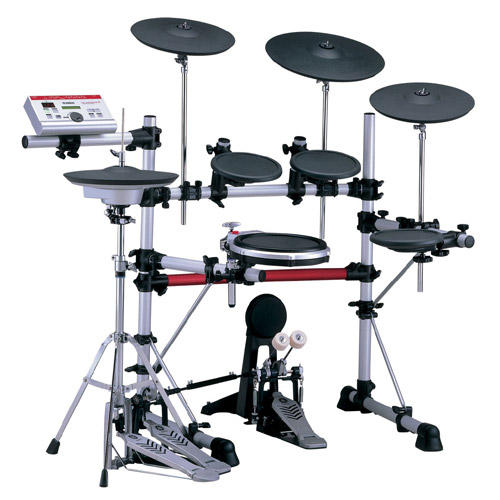
These are good points. Many people regard e-drums as more sui generis
than as substitutes for acoustic drums. Nonetheless, e-drums are
often used as substitutes for acoustic drums, and they have both
advantages and liabilities in that regard. After all, standard e-kits
are configured in the image of acoustic drums, and most of their
samples derive from acoustic drums/cymbals/percussion. The fact that
e-drums often require a different technique from their acoustic
cousins hardly means that they can't substitute for them when need or
convenience so dictate. The extent to which they fulfill this
difficult mission, however, is dependent on how believable the sounds
are, how authentic the response is, and how extensive the dynamic
range is--usually not too good in the case of the typical rubber kits
and their modules.

I agree with you about the quality of the DTXtreme rubber pads. But
not all mesh heads are too forgiving, even if they don't respond
exactly like mylar or calfskin. I mentioned a couple of examples
earlier. But electronic modules also have a range of accuracy in
sound and sensitivity. The ddrum module, made by Clavia, though no
longer young, or terribly efficient in current computing terms, has a
dynamic range that easily approximates what "real" drums can do,
mainly because the trigger section is analog, and its samples are
pure, complex, and undigitized. In fact, its original purpose was to
mimic acoustic drumkits/percussion; it has few pretenses to acting
like a synth. On snares, it permits everthing from well-articulated
soft press rolls, with no machine-gun effect, to mammmoth individual
hits, according to the force exerted. Cymbal rolls and dynamics can
also sound and feel much like those on acoustics. People only
familiar wih the Yamaha and Roland modules, which in many other
respects exceed the capabilities of the ddrum system, are often
amazed at how well the ddrum4 and ddrum3 can approximate acoustic
settings. Ddrum was sold to an American company that promises to
create a more up to date ddrum5 module, but so far dedicated
ddrummers are left with the 4th generation, which suffers from memory
and kit-size limitations.

I won't go into any more detail about the ddrum system, but I offer
it only to make the case for electronics sometimes being able to
occupy the same space as acoustics. Ddrum has always had its pro
supporters--and for good reason.

Ed
Message
Re: Any news on impending DTXPRESS IV launch?-mesh vs. rubber
2006-05-10 by emf
Attachments
- No local attachments were found for this message.