I am not sure, as I do not understand the benefits yet.
This is the 1st email that I have received about the DTXpress since signing on over a year ago. Have there been many emails?
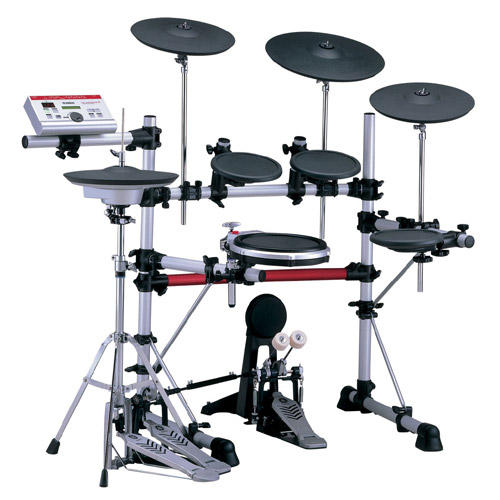
Anyway, I am interested in locating the video that came out with the 1st DTXpress kit. Can anyone hook me up with a copy?
jef wilson
www.malutki.com
-----Original Message-----
From: emf
[mailto:liberatusvirus@...]
Sent: Wednesday, March 16, 2005
1:20 PM
To: DTXpress@yahoogroups.com
Subject: [DTXpress] Special
Notice: Expanding Inputs--Response Requested
This Special Notice to all members is a survey to determine how many
of us might be interested in purchasing Keith Raper's invention for
adding inputs to the DTXpress module. Keith's intention is keep the
price at around $100. Membership turnout on this matter may well
have a lot to do with what ultimately happens to the device. Please
try to respond, even if you aren't sure of your answer yet. A word
to the wise: This is a huge, possibly money-saving opportunity for
those who want to expand their kits in a cost-effective manner. For
a detailed description, read below.
Keith's input device--which we referred to as the "magic box"
before
its actual invention (it will acquire a better name)--allows e-
drummers to expand the basic DTXpress (I, II or III) module by
permitting the FSRs and piezos on stereo inputs to be split.
Normally each stereo input is compatible with only one pad or one
cymbal, even though each stereo input is capable of supporting more
than one sound. Keith's device enables two single-zone (mono) pads to
be connected to each stereo input on a DTXpress module. By
"stereo"
in this context, we exclude all of those that are capable of three
sounds (inputs 2 and 6), which should be reserved for their triple
voices, and input 9/10, which is not compatible with the device.
The limitation in this method of input expansion follows from the
limitation inherent in any pad or cymbal with a rim switch; only one
sound per split input is possible at any one time. In other words,
just as a stereo pad will produce either a piezo-center sound
(head/bow) or switch sound (rim/edge) but not both simultaneously,
the two pads connected to any input split via Keith's device will not
be able to make their sounds together. They must be hit
successively.
This is not a flaw in Keith's design but a characteristic of Yamaha's
stereo electronics. The magic box would therefore be most effective
in circumstances when pads sharing the same input would be unlikely
to be hit simultaneously--for example, a cymbal and a tom rather than
a cymbal and a kick pad.
Keith has planned the device to have 8 inputs and 4 outputs, allowing
4 extra pads to be added to each module. For example, the three tom
inputs and one cymbal input could be used to add four extra pads,
while still leaving 9/10 free for two more.
The box adds gain to each of the channels to compensate for the
DTXpress module's relative lack of sensitivity to rim/edge hits.
Boosting the signals solves this problem completely. The two pads
connected to any one input on the device will have no adjustment for
rejection. Protecting them from each other's reverberations will be
purely a matter of positioning on the rack or otherwise manually
isolating them.
The device may well be compatible with Roland, Pintech, or any other
piezo/FSR switch components, but it has undergone testing only on
Yamaha equipment.
Keith, OGD, and Ed
Community email
addresses:
Post message: DTXpress@yahoogroups.com
Subscribe: DTXpress-subscribe@yahoogroups.com
Unsubscribe: DTXpress-unsubscribe@yahoogroups.com
List owner: DTXpress-owner@yahoogroups.com
Shortcut URL to this page:
http://groups.yahoo.com/group/DTXpress
Alternate DTXpress site:
http://www.dtxpressions.com