Hi Mark,
It is a very good question.
Here are my thoughts,
The mission of today's current virtual-analogues is to re-create a a
perfected model of what the original analogue circuitary was trying to do in
the first place. One may say that the techs fully succeded in producing this
ultimate pure representation of waveform creation and manipulation (using
oscillator waveforms modelled on the original analogue synthesizer concept).
But, it may be that these digital 'analogue-modellers' are TOO good! That
is, whilst they can manipulate waveforms to perfection, they don't
concentrate on other contributing factors within analogue circuitry that
gives the original analogues their unique charm and character.
Virtual analogues don't take into consideration that electrical circuits
take time to charge up and discharge energy, and that the power distribution
throughout the circuits is constantly being altered which subsequently
affects the sound.
For example, if a single note is played, then more notes are held down, the
original note will, although subtley, be affected as the circitury trys to
cope with the demand of reproducing all the other notes. The digital model
on the other hand recreates ALL the notes as perfectly as the first.
Take the components in analogue filter circuits. There are many factors such
as the current level, waveform type and pitch, etc. as well as other
functions such as the performance of the cut-off filter itself, that all
contribute to affect the 'true' specifications of the filter and the
resulting sound. The digital filter model says "You want a '24dB/octave Low
Pass Filter', You've got it - No exceptions!". Even the temperature and
humidity all affect how the components behave within analogue circuitary.
Maybe all Virtual-Analogues should have weather-stations built-in!!!! ;)
So, the digital has gone out to achieve what the analogue tried to do in
theory, BUT what was not considered is that it is these shortfalls in the
nature of analogue-design that give true analogues their individual
character. Take digital 3D graphic animations for example, whilst they look
spectacular when they are trying to recreate real-life moving objects,
they're too smooth, calculated and precise. They just don't look right.
I guess the most obvious example of the 'perfect' qualities with the
'virtual analogue' is the "Unison Mode". In 'true' analogues, "Unison" would
take the all the oscillators within the synth and 'stack' them together to
produce a strong 'fat' sound. Now when the 'virtual analogue' attempts this,
it takes it's original 'perfect' oscillator, then reproduces identical
duplicate clones of it and stacks those together. The result: more volume
due to a slightly boosted waveform as the individual waveforms are combined
BUT no 'fat' sound. This can be likened to pulling a fresh deck of playing
cards out of a pack and then without messing them up, look straight at the
face of the top card - you wouldn't even know if the other 51 cards (or
'ocsillators') were there at all! To get around this, a "Unison - Detune"
feature had to be added to slightly alter each oscillator so that it would
'show its face' and be heard. Definately not ideal analogue-modelling, but
it does go to work at 'fattening' up the sound.
So with regards to the "PLG150-AN" board, I expect that they've gone back to
concentrate on what is 'actually' happening in the analogue circuitry -
rather than what 'should' be happening. I wonder whether or not the
"PLG150-AN" board has any additional user-parameters or features, or just a
re-working at what's going on with the existing ones.
In time, the research into "virtual-analogue modelling" technology is sure
to improve, but as far as I'm concerned, the pros of having the reliability
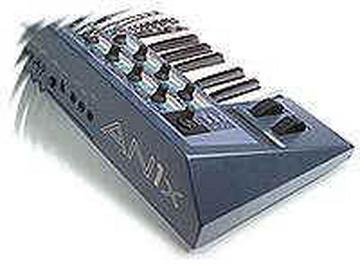
and features in a synth such as the AN1x far outweigh the cons.
It may not be analogue, but I feel the AN1x comes pretty damn close!
Just my thoughts,
Merry Music Making!
Ph;)
Show quoted textHide quoted text
From: mark@...
Reply-To: AN1x-list@egroups.com
Date: Sat, 17 Jun 2000 03:24:04 -0000
To: AN1x-list@egroups.com
Subject: [AN1x-list] AN1x vs. PLG150-AN
Please forgive me if this topic has been discussed previously but I
scanned the archives and found few references.

I was reading about the PLG150-AN at XG Factory and noticed the
following statement:

"There was always something about the Prophet 5 that made it sound
wonderful. Maybe it was the filters, maybe the oscillators, and maybe
the overall design. Whatever it was, it inspired Yamaha to develop
the PLG150ANX, based around our acclaimed AN1x synth technology, but
revoiced and re-tweaked to give you as close as we can get to the
original sound of what many people call the best analogue synth ever
made."

Can someone explain the difference between these two products in
terms of overall sound quality?  Does the PLG150-AN really sound all
that different than the AN1x?

Thanks,

Mark
AN1x owner
------------------------------------------------------------------------
Knowledge is power, but at AllPredict.com it's also cash & prizes!
Test how knowledgeable you are and get rewarded for
making accurate predictions. Let's AllPredict the future at
http://click.egroups.com/1/5642/7/_/663009/_/961212317/
------------------------------------------------------------------------
Community email addresses:
Post message: AN1x-list@onelist.com
Subscribe: AN1x-list-subscribe@onelist.com
Unsubscribe: AN1x-list-unsubscribe@onelist.com
List owner: AN1x-list-owner@onelist.com
Shortcut URL to this page:
http://www.onelist.com/community/AN1x-list