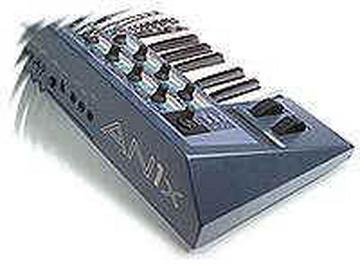
The Yamaha AN1x Synthesizer mailing list group photo

Yahoo Groups archive

The Yamaha AN1x Synthesizer mailing list

Index last updated: 2026-03-31 13:41 UTC

Thread

Yamaha Comments on Seq/Arp timing

Yamaha Comments on Seq/Arp timing

2000-05-06 by jondl

Hello AN1x'ers,
Noticed a user review of the CS6x at Harmony Central yesterday and
emailed the author in regards to his comments on the Arp/Seq
timing/synchronization delay many other have commented on - myself included.

Thought you'd enjoy this reply from Yamaha. I'll post this on my page
as well. BTW - he's returning the CS6x in protest. I don't disagree
with that decision. What do YOU think?

Enjoy.

Jon

Kevan Staples wrote:
>
> jondl@... writes:
> >Read the update to your CS6r review posted at Harmony Central. FYI -
> >the AN1x suffers from the same timing problem with the Arp/Seq. The
> >problem also occurs when triggering an external MIDI sound module.
> >*sigh* Very unmusical.
> >
> >Regards,
> >Jon Levinson
>
> Jon..thanks..you want a good larf. I just received this email from Yamaha explaining the virtues of
> this delay and why it was implemented. He almost makes it sound useful.
>
> Dear Kevan,
> As product manager for Digital Musical Instruments here at Yamaha, I am very concerned with issues
> like you mention. There has been considerable confusion in regard to the arpeggiator synchronizing
> function of our most recent line of synthesizers. I have performed extensive testing of the
> arpeggiators sync capability and can assure you that it does synchronize with external MIDI clock.
> I hope the following information will adequately explain how you can achieve the results you desire.
>
> Because there are several categories (types) of arpeggiator patterns intended for different musical
> purposes (guitar strums, drum patterns etc.), the triggering implementation (both internal and
> through MIDI) is a little different from previous instruments. But it does synchronize perfectly
> with external MIDI clock messages recieved by the MIDI in of the CS6x(R), S80 and S30.
>
> The reason that it doesn't seem to sync properly is that the actual arpeggio pattern is offset
> (delayed) by a 32nd note (independant of tempo as it must be, to be in sync). This is a predictable
> musical value that represents a "window" of opportunity that the arpeggiator gives you in order to
> determine how many and which notes you wish to arpeggiate.
>
> When you are aware of this 32nd note offset, it is possible to trigger manually (by anticipation of
> a 32nd note) to achieve the desired result, and through MIDI by offsetting the arp trigger note[s]
> by a 32nd note.
> When these methods are used it is possible to achieve perfect synchronization with any and all
> arpeggiator patterns in the CS6x(R), S80 and S30.
>
> Thank you for your support of Yamaha synthesizers and if I can be of further assistance feel free
> to contact me.
>
> Regards,
>
> Avery Burdette
> Product Manager
> Digital Musical Instruments
> Yamaha Corporation of America
> aburdette@...
> 714)522-9819 phone
> 714)739-2680 fax

--
http://www.jdlx-musique.com/

Featuring support for the Ensoniq ASR-X Pro Sampler and Yamaha AN1x Synthesizer

Yamaha Comments on Seq/Arp timing

2000-05-08 by lars.l.arnwald@telia.se

Hi Jon!

I haven't been able to follow the earlier comments about the
synchronization delay problem you're mentioning, but since I'm on the
verge of adding a PLG150-AN card to my MU1000R I have to ask you
about
some points out of the answer given by the Yamaha product manager Mr.
Burdette. I suppose he should answer my questions, but I start with
trying to get your opinion.

"....the triggering implementation (both internal and through MIDI)
is
a little different from previous instruments. But it does synchronize
perfectly with external MIDI clock messages recieved by the MIDI in
of
the CS6x®, S80 and S30...."

I really don't know which previous instruments he refers to. What is
different here?

"....The reason that it doesn't seem to sync properly is that the
actual arpeggio pattern is offset (delayed) by a 32nd note
(independant of tempo as it must be, to be in sync). This is a
predictable musical value that represents a "window" of
opportunity
that the arpeggiator gives you in order to determine how many and
which notes you wish to arpeggiate...."

I intend to slave the arpeggiator to an external tap tempo function.
Will I always be a 32nd note late? The last sentence seems a bit
cryptic. What do you get out of it?

"....When you are aware of this 32nd note offset, it is possible to
trigger manually (by anticipation of a 32nd note) to achieve the
desired result, and through MIDI by offsetting the arp trigger
note[s]
by a 32nd note...."

I guess I could learn to tap a 32nd early, but if precise results are
required this may not be possible. What if I slave some other unit to
the tempo tap, will there always be a glitch between them?

Just a few ago I tried a PLG150-AN sitting in a CS1x. Even though I
could only use earphones I could definitely hear the might of the
sounds and I really liked the arpeggiator. My two trusty Cyclones
I've
had for over ten years are great but hard to program. This one seems
so much easier and all the patterns I tried sounded musical. OK I
shouldn't panic, but these news dishearten me a bit.

Best regards,
Lars
lars.l.arnwald@...

RE: [AN1x-list] Yamaha Comments on Seq/Arp timing

2000-05-08 by Gary Gregson

Hmmm... I am not sure where Avery Burdette got this information about 32nd
note offsets! Neither, can I confirm whether he is correct concerning the
CS6x, S80, S30 etc (since I don't own any of these machines).

However what I can say is that this is definitely NOT the case with respect
to AN1x or PLG150AN. Both of these devices provide the arp/seq in a standard
way....and both synchronise correctly to MIDI clock. From my experience,
where problems arise over synchronising devices, they can always be traced
back to the quality of the source MIDI clock!

Basically MIDI clock is transmitted as an F8 MIDI real time message at a
rate of 24 per quarter note (so for example the time between clocks at
100bpm is 25ms). The hardware device uses a phase locked loop (PLL) to
synchronise to these messages and thus stay in tempo with other devices.

However it should be noted that MIDI is a serial transmission protocol,
where most messages take around 1ms to transmit. This means that you cannot
have multiple MIDI events occurring at the same time i.e. they must be
queued serially. Consequently, during the average multi track MIDI sequence,
you will find there is a variable latency (from when events are scheduled to
play...to when they actually play) of around 1ms to 10ms. (If you have a
large volume of sysex or controller data, you can find these latencies
getting quite high....and thus causing quite noticeable instabilities in the
timing).

Obviously such latencies will introduce a high degree of variability into
the MIDI clock timing (i.e. the period could vary widely. In the case of the
example above of 100bpm, a variable latency of 10ms would give a timing
variation of +/-40% or an apparent tempo variation of 71bpm - 166bpm).

However, PLLs average over several periods, so small variations are evened
out. However if the clock is erratic, the PLL will find it difficult to
capture and track....thus the apparent tempo of the slaved device will jump
sporadically. Such faults will be manifest as the playback device stuttering
or dropping notes etc.

Fortunately, the MIDI specification attempts to overcomes this problem by
stating that MIDI clock must be given priority over all other queued MIDI
events (i.e. MIDI clock events go to the top of the queue). If this is
adhered to then the clock is always transmitted at the correct time and the
period should only vary by around 1ms.

Unfortunately, several [well known] software sequencers do not appear to
follow the MIDI specs....or alternatively give timing performance preference
to audio functions .....the result being that their MIDI clocks are
unstable......and thus syncing hardware equipment can be problematic!

Hence if you are having problems, my advice is to use a MIDI monitor (either
hardware or software e.g. MIDIOX) to inspect the sequencers MIDI clock
output, before blaming the hardware!

Of course the best solution when slaving multiple devices and software is to
use a hardware clock source. That way you are sure of a good source. If you
try this with either An1x or PLG150AN, you should find they synchronise in a
rock solid manner!

Regards

Gary
Email:
gary@...
http://www.yme.co.uk/yme

> -----Original Message-----
> From: lars.l.arnwald@... [mailto:lars.l.arnwald@...]
> Sent: 08 May 2000 09:44
> To: AN1x-list@egroups.com
> Subject: [AN1x-list] Yamaha Comments on Seq/Arp timing
>
>
> Hi Jon!
>
> I haven't been able to follow the earlier comments about the
> synchronization delay problem you're mentioning, but since I'm on the
> verge of adding a PLG150-AN card to my MU1000R I have to ask you
> about
> some points out of the answer given by the Yamaha product manager Mr.
> Burdette. I suppose he should answer my questions, but I start with
> trying to get your opinion.
>
> "....the triggering implementation (both internal and through MIDI)
> is
> a little different from previous instruments. But it does synchronize
> perfectly with external MIDI clock messages recieved by the MIDI in
> of
> the CS6x®, S80 and S30...."
>
> I really don't know which previous instruments he refers to. What is
> different here?
>
> "....The reason that it doesn't seem to sync properly is that the
> actual arpeggio pattern is offset (delayed) by a 32nd note
> (independant of tempo as it must be, to be in sync). This is a
> predictable musical value that represents a "window" of
> opportunity
> that the arpeggiator gives you in order to determine how many and
> which notes you wish to arpeggiate...."
>
> I intend to slave the arpeggiator to an external tap tempo function.
> Will I always be a 32nd note late? The last sentence seems a bit
> cryptic. What do you get out of it?
>
> "....When you are aware of this 32nd note offset, it is possible to
> trigger manually (by anticipation of a 32nd note) to achieve the
> desired result, and through MIDI by offsetting the arp trigger
> note[s]
> by a 32nd note...."
>
> I guess I could learn to tap a 32nd early, but if precise results are
> required this may not be possible. What if I slave some other unit to
> the tempo tap, will there always be a glitch between them?
>
> Just a few ago I tried a PLG150-AN sitting in a CS1x. Even though I
> could only use earphones I could definitely hear the might of the
> sounds and I really liked the arpeggiator. My two trusty Cyclones
> I've
> had for over ten years are great but hard to program. This one seems
> so much easier and all the patterns I tried sounded musical. OK I
> shouldn't panic, but these news dishearten me a bit.
>
> Best regards,
> Lars
> lars.l.arnwald@...

Re: [AN1x-list] Yamaha Comments on Seq/Arp timing

2000-05-11 by jondl

Hi Lars,

lars.l.arnwald@... wrote:
>
> Hi Jon!
>
> I haven't been able to follow the earlier comments about the
> synchronization delay problem you're mentioning, but since I'm on the
> verge of adding a PLG150-AN card to my MU1000R I have to ask you
> about
> some points out of the answer given by the Yamaha product manager Mr.
> Burdette. I suppose he should answer my questions, but I start with
> trying to get your opinion.
>

There are actually a couple of issues here.

I've had about four or five emails since I put up my site last year from
AN1x Users complaining of Note Event delays. One was using an Ensoniq EPS16+
Sampler which has an internal sequencer. Another used Cubase and the
others used Logic. I still use VisionDSP but I hope to move off as soon
as I make up my mind which to go with. I've noticed the occasional note
on delay with the AN1x but I found (with help from the old AN1x Mailing
list) that the MIDI Program Change Control message imbedded at the start
of my sequence is usually the culprit. The best solution for me is to
begin recording on the 2nd or 3rd measure - well after the MIDI CC has been
transmitted to the AN1x and it has responded.

The second issue - and the more annoying of the two - is the 32nd note
delay in Note On Events transmitted by the AN1x ARP/SEQ. I've been able
to replicate this problem time and time again either recording it's
output directly into my sequencer or triggering my sampler. If you
layer the two sounds you can hear they are not in sync :-( If you don't
layer the AN1x with a second instrument you *might* not notice - depends
on how good your sense of timing is I suppose. This can easily be
worked around in a sw sequencer by quantizing the note on events to the
same grid. No big deal. For live performers it's very annoying if you
are working on tightly synchronized, layered tracks.

The problem Kevan describes is similar to that of the AN1x but not
identical. In all honesty, I've had few problems with the AN1x Arp/Seq
synchronizing to my sequencer. As I mentioned above, I've developed a
habit of
beginning my recordings on the 2nd or 3rd measure of a sequence. This
usually precludes any problems.

BTW - As an alternative to the above you can to record your SysEx and
Patch Changes into a *seperate*
sequence which is triggered just to pre load your synths prior to
playback of a subordinate sequence. Example: Sequence A contains all
your patch changes and SysEx while Sequence B contains the actual
recording and MIDI CC information. With VisionDSP this usually works
for. Cubase VST is a bit dodge for me. Haven't tried it with Logic yet
- that's on this weeks agenda
;-) BTW - I'm *very* impressed with how fast Logic feels on my Power
Mac. Yahoo!

I'll upload a standard MIDI file with some background text so anyone who
is interested in can see what I mean regarding the Note On Events
transmitted my the AN1x ARP/SEQ.


> "....the triggering implementation (both internal and through MIDI)
> is
> a little different from previous instruments. But it does synchronize
> perfectly with external MIDI clock messages recieved by the MIDI in
> of
> the CS6x®, S80 and S30...."
>
> I really don't know which previous instruments he refers to. What is
> different here?


He's probably referring to the CS1x, CS2x and AN1x - but I don't own
either CS1* instrument so I can't say for certain.

>
> "....The reason that it doesn't seem to sync properly is that the
> actual arpeggio pattern is offset (delayed) by a 32nd note
> (independant of tempo as it must be, to be in sync). This is a
> predictable musical value that represents a "window" of
> opportunity
> that the arpeggiator gives you in order to determine how many and
> which notes you wish to arpeggiate...."
>
> I intend to slave the arpeggiator to an external tap tempo function.
> Will I always be a 32nd note late? The last sentence seems a bit
> cryptic. What do you get out of it?
>

Is the Apr on the PLG150-AN internal or triggered by the host
application - or host hardware? I didn't think the MU1000 had an
Arp/Seq. Maybe I've misunderstood the specifications for the PLG150-AN.
Can anybody clarify this?

> "....When you are aware of this 32nd note offset, it is possible to
> trigger manually (by anticipation of a 32nd note) to achieve the
> desired result, and through MIDI by offsetting the arp trigger
> note[s]
> by a 32nd note...."
>
> I guess I could learn to tap a 32nd early, but if precise results are
> required this may not be possible. What if I slave some other unit to
> the tempo tap, will there always be a glitch between them?
>
> Just a few ago I tried a PLG150-AN sitting in a CS1x. Even though I
> could only use earphones I could definitely hear the might of the
> sounds and I really liked the arpeggiator. My two trusty Cyclones
> I've
> had for over ten years are great but hard to program. This one seems
> so much easier and all the patterns I tried sounded musical. OK I
> shouldn't panic, but these news dishearten me a bit.

I empathize with your concern - these kind of things can really nag at
you during the decision making process - but I don't believe the problem
negates the usefulness of the ARP/SEQ function. Again, the only *real*
sync problems that have crashed my AN1x have been with Cubase but 1) I
was trying some really whacked ideas and 2) I'm novice at Cubase (Vision
has been my tool for some time now.)

Hope this helps. I'll upload that file tonight or tomorrow.

Regards,
Jon

--
http://www.jdlx-musique.com/

Featuring support for the Ensoniq ASR-X Pro Sampler and Yamaha AN1x Synthesizer

RE: [AN1x-list] Yamaha Comments on Seq/Arp timing

2000-05-12 by Edwards, Ed

What is this doubletalk (excellent English expression meaning "sounds good
but means nothing")?
The way I understand him, he's saying that the soft/hardware can't keep up
with the midi clock in. Anyone else?


> > "....The reason that it doesn't seem to sync properly is that the
> > actual arpeggio pattern is offset (delayed) by a 32nd note
> > (independant of tempo as it must be, to be in sync). This is a
> > predictable musical value that represents a "window" of
> > opportunity
> > that the arpeggiator gives you in order to determine how many and
> > which notes you wish to arpeggiate...."
> >
> > I intend to slave the arpeggiator to an external tap tempo function.
> > Will I always be a 32nd note late? The last sentence seems a bit
> > cryptic. What do you get out of it?

Cryptic, yes. Sounds like engineering excuses for bad design. Clock in
means CLOCK, like tic tock, on time.... not delayed.