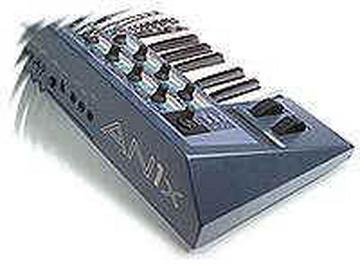
The Yamaha AN1x Synthesizer mailing list group photo

Yahoo Groups archive

The Yamaha AN1x Synthesizer mailing list

Index last updated: 2026-04-03 20:49 UTC

Thread

SV: [AN1x-list] noise...what is it good for..HUH..say it again!

SV: [AN1x-list] noise...what is it good for..HUH..say it again!

2001-03-09 by J Acker

Dank u vel.. :-)

when you mention the others had 4 or 6 operators...does the AN1x have only one?

Jim
                          James R. Acker
     jacker@... listen to my music at.....
==============================================================
My first CD "Tabasco Road" can be heard at http://www.connectpoint.com/acker
    (With thanks to Mike Jones for hosting it)
My current songs can be now heard at my site: http://home.sol.no/~jacker/

----- Original Message ----- 
Fra: Bastiaan van de Werk <Hajee@...>
Til: <AN1x-list@yahoogroups.com>
Sendt: 8. mars 2001 22:01
Emne: Re: [AN1x-list] noise...what is it good for..HUH..say it again!
Show quoted textHide quoted text
> I never use the noise ...or hardly ever..
> 
> The an1x is a substractive synth...you generate the sound and than substract
> frequencies with the filters.
> 
> The FM is basically the same albeit way simpler...the older FM synths have
> at least 4 or 6 operaters (all sine tho)
> 
> 
> 
> Met Vriendelijke Groet / With Kind Regards,
> 
> Bastiaan van de Werk
> ----- Original Message -----
> From: J Acker <jacker@online.no>
> To: AN1x List <AN1x-list@yahoogroups.com>
> Sent: Thursday, March 08, 2001 9:54 PM
> Subject: [AN1x-list] noise...what is it good for..HUH..say it again!
> 
> 
> > Just wondering...the white noise generator, since it isn't melodic, is
> there a
> > way to combine it with the voice that doesn't just sound like noise tacked
> on?
> >
> > Another thing...could someone explain...is the AN1x a subtractive synth?
> Can someone give me the whole description of what type of synth this is? I
> read at a lot of the synth sites about generic types...additive,
> subtractive, etc. an am not sure.
> >
> > Also is the FM in the AN1x different than the Fm Yamaha came out with on
> the earlier models mentioned in the literature on synths in general?
> >
> > Thanks,
> >
> > Jim
> >
> >                           James R. Acker
> >      jacker@... listen to my music at.....
> > ==============================================================
> > My first CD "Tabasco Road" can be heard at
> http://www.connectpoint.com/acker
> >     (With thanks to Mike Jones for hosting it)
> > My current songs can be now heard at my site: http://home.sol.no/~jacker/
> >
> >
> >
> > Community email addresses:
> >   Post message: AN1x-list@yahoogroups.com
> >   Subscribe:    AN1x-list-subscribe@yahoogroups.com
> >   Unsubscribe:  AN1x-list-unsubscribe@yahoogroups.com
> >   List owner:   AN1x-list-owner@yahoogroups.com
> >
> > Shortcut URL to this page:
> >    http://groups.yahoo.com/group/AN1x-list
> >
> >
> > Your use of Yahoo! Groups is subject to http://docs.yahoo.com/info/terms/
> >
> 
> 
> Community email addresses:
>   Post message: AN1x-list@yahoogroups.com
>   Subscribe:    AN1x-list-subscribe@yahoogroups.com
>   Unsubscribe:  AN1x-list-unsubscribe@yahoogroups.com
>   List owner:   AN1x-list-owner@yahoogroups.com
> 
> Shortcut URL to this page:
>    http://groups.yahoo.com/group/AN1x-list
>  
> 
> Your use of Yahoo! Groups is subject to http://docs.yahoo.com/info/terms/ 
> 
> 
>

SV: [AN1x-list] noise...what is it good for..HUH..say it again!

2001-03-09 by J Acker

----- Original Message ----- 
Fra: Bruce Wahler <bruce@...>
Til: <AN1x-list@yahoogroups.com>
Sendt: 8. mars 2001 22:58
Emne: Re: [AN1x-list] noise...what is it good for..HUH..say it again!


> Jim,
> 
> >Just wondering...the white noise generator, since it isn't melodic,
> >there a way to combine it with the voice that doesn't just sound
> >like noise tacked on?
> 
> Sometimes, you WANT noise tacked on to the sound, to give it an edgier 
> feel.  A good example is that pulse behind the song in "Special" by Garbage.
> 

Thats what I figured. I thought maybe one could shape the noise by itself, maybe with
the BEF or something and get some interesting sounds...I might try just to see.

> When you want to more melodic sound, try setting the filter to BPF, and 
> setting the Resonance fairly high -- but not to the point of 
> self-oscillation.  Of course, this means that any other waves in the sound 
> also get a BPF "bath," so you might want to use a dual configuration, and 
> give the noise generator its own filter and EG's.

Excellent...this is the kind of thing I am looking to find out. After squinting at the shematic on page 5 of the data manual (I just enlarged it at work today..) for a while last night I was able to make a few more interesting sounds. Still sound very "synthy" or "organ"-like..I did play with attack a bit and got some interesting backwards sounding effect..but as you mention...this is sidetracking..I really would like to make a few flute-like sounds but haven't gotten close yet.

How would I use a dual configuration...do you mean two scenes? Could you (It's fine if you don't feel like it..I know this kind of thing is time consuming to write, and it's always hard to know how ignorant I am :-) go into a little more detail? Just some of the key settings, especially routing and hooking up of the modules? THis is where I get stuck...and I am nowhere near "up to speed" yet on these. 

Getting no sleep whatsoever :-)

Thanks 
Jim
Show quoted textHide quoted text
> 
> >Another thing...could someone explain...is the AN1x a subtractive synth? 
> >Can someone give me the whole description of what type of synth this is? I 
> >read at a lot of the synth sites about generic types...additive, 
> >subtractive, etc. an am not sure.
> 
> The AN1x is a digital "physical modeling" synthesizer that emulates an 
> analog subtractive instrument.  (Whew!)  Normally, subtractive synths use 
> waveforms that are rich in harmonics like sawtooth and square/pulse, and 
> then use filtering to remove unwanted harmonics.  Additive synths, OTOH, 
> tend to use sine waves only, as they are trying to go in the other 
> direction -- creating complex waves out of the sum of their harmonics, and 
> all harmonics can be expressed as sine waves.  (It is possible to use 
> complex waveforms in additive synthesis, but the results are often 
> difficult to manage.)
> 
> >Also is the FM in the AN1x different than the Fm Yamaha came out with on 
> >the earlier models mentioned in the literature on synths in general?
> 
> The AN1x also has the ability to create FM synthesis, although the 
> combinations (algorithms) provided are extremely simple, when compared to 
> an FM-only synth.  Most FM synths use sine waves only, although the Yamaha 
> TX-81z allowed waves with "medium" harmonic density, as well as sine waves.
> 
> Regards,
> 
> -BW
> 
> --
> Bruce Wahler
> Design Consultant
> Ashby Solutions"
> www.ashbysolutions.com
> CloneWheel Support Group moderator
> 978.386.7389  voice
> 978.776.0096  fax
> bruce@...
> 
> 
> Community email addresses:
>   Post message: AN1x-list@yahoogroups.com
>   Subscribe:    AN1x-list-subscribe@yahoogroups.com
>   Unsubscribe:  AN1x-list-unsubscribe@yahoogroups.com
>   List owner:   AN1x-list-owner@yahoogroups.com
> 
> Shortcut URL to this page:
>    http://groups.yahoo.com/group/AN1x-list
>  
> 
> Your use of Yahoo! Groups is subject to http://docs.yahoo.com/info/terms/ 
> 
> 
>

Re: SV: [AN1x-list] noise...what is it good for..HUH..say it again!

2001-03-09 by Bruce Wahler

Jim,

>How would I use a dual configuration...do you mean two scenes? Could you 
>(It's fine if you don't feel like it..I know this kind of thing is time 
>consuming to write, and it's always hard to know how ignorant I am :-) go 
>into a little more detail? Just some of the key settings, especially 
>routing and hooking up of the modules? THis is where I get stuck...and I 
>am nowhere near "up to speed" yet on these.

Exactly.  If you press both of the Scene buttons at the same time, you get 
into what I was calling "dual" mode.  At that point you have four 
oscillators, two VCAs, two VCFs, etc.  If you dedicate one of the scenes to 
"normal" synth sounds -- set the noise level to "0" -- and the other one to 
just noise and filtering -- turn the VCO1, Ring Mod, and VCO2 levels all 
the way down -- the noise source can be adjusted independent of the VCOs.

>Getting no sleep whatsoever :-)

Been there, done that!  ;^)

Regards,


-BW

--
Bruce Wahler
Design Consultant
Ashby Solutions"
www.ashbysolutions.com
CloneWheel Support Group moderator
978.386.7389  voice
978.776.0096  fax
bruce@...

Re: SV: [AN1x-list] FM synthesis (long post)

2001-03-09 by Bruce Wahler

Jim,

>when you mention the others had 4 or 6 operators...does the AN1x have only 
>one?

OK, it's time for a class of FM 101 ... ;^)  Please pardon me if I end up 
talking down to you; I'm going to assume that you are an FM novice.

The Yamaha DX-series had four or six "operators" -- oscillators, in classic 
synth jargon.  Thus, the AN1x is a two-operator FM synth.  (A one-operator 
FM synth is not FM at all; at least one operator has to be the base wave or 
"carrier," while one or more additional operators modulate it.)  The math 
involved is complicated, but if a sine wave is modulated by another sine 
wave, the result has some of the original wave's frequency, but also 
harmonics related to the multiplied product of the two frequencies, plus 
some artifacts related to the sum and difference of the frequencies.  In 
theory, any sound can be recreated by multiplying a sine wave by a series 
of other sine waves of specific frequencies; that was the essence of John 
Chowning's work at Stanford U., which was the basis of the Yamaha FM scheme.

On the DX-series, all of the operators were sine waves; on some of the 
later Yamaha synths, the operators could be other shapes.  If you want to 
convert the AN1x to classic FM synthesis, set the wave shape to square, and 
the Edge control of both VCOs to "0", and you've got sine waves.

The method of combining the operators -- i.e., who does what to whom -- was 
called an "algorithm."  In a two operator FM setup, there are only two 
possible algorithms:  the two oscillators in parallel, which is really not 
FM at all; and one oscillator modulating the other one, which is what the 
AN1x does when in FM mode.  If I remember correctly, in four-operator 
synthesis, there are eight unique, useful algorithms, and in 6-operator 
synthesis there are 32.  By combining the two scenes, the AN1x can actually 
create four-operator synthesis, but only in relatively simple algorithms; 
it cannot create a scenario where VCO1 is modulated by VCO2, which is in 
turn modulated by VCO3, etc.  In addition, there is only one VCA EG in each 
AN1x scene, while the DX-series provided each operator with its own EG.

Most of the time, classic FM synthesists would divide a sound into two 
parts;  the steady-state sound, and the "stuff" -- I didn't make that term 
up! -- composed of the attack transients and overtones that make the 
instrument unique, like the picking attack of a guitar, or the spit of a 
trumpet.  Two-operator sine-wave FM is pretty much sufficient to create the 
steady-state part, but the "stuff" often requires 4-5 additional sine 
modulators.

Complex-wave FM obeys the same principles as sine-wave FM, but the results 
are a little harder to keep track of, since a wave like a sawtooth or pulse 
is composed of a series of harmonically-related sine waves.  While 
two-operator sine wave FM is considered insufficient to make "interesting" 
sounds, two-operator complex-wave FM is more than sufficient.  In practice, 
you may have to decrease the edge of the modulator wave (and the carrier, 
too) to keep the result from becoming too rich in high harmonics.

Wow, this was longer than I hoped!  I hope it helps you a little.  If you 
have any more questions, contact me off-line, so we don't waste any more 
time on the list.

Regards,

-BW

--
Bruce Wahler
Design Consultant
Ashby Solutions"
www.ashbysolutions.com
CloneWheel Support Group moderator
978.386.7389  voice
978.776.0096  fax
bruce@...