Hi Grant!
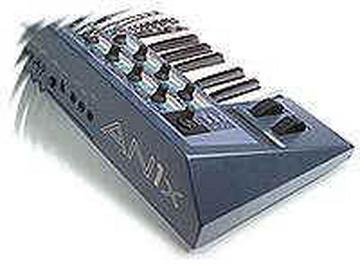
Like the others I prefer An1Xedit for dumping patches etc.
But if you still want to use Cakewalk for it read this:
(from: http://www.cakewalk.com/Support/Docs/Sysx.htm)
TTSSEQ.INI Parameters
Adding a Line to the TTSSEQ.INI File
You can modify the [Options] section of the TTSSEQ.INI file from the Windows Notepad, or from the Settings | Initialization Files section in Cakewalk. Every time you add or change a line in TTSSEQ.INI, you have to restart Cakewalk for the change to take effect.
SYSXDelayAfterF7=n
This setting causes Cakewalk to delay SYSX transmission for a certain amount of time if it encounters an F7 in a System Exclusive bank. This gives some instruments a required amount of "breathing" time which is necessary to process the SYSX transmission. The default delay is 1/18 of a second, but can be changed by also adding the SysxSendDelayMsecs=n line.
n = 0 no delay
n = 1 delay between each SYSX string
This line was introduced in Cakewalk Professional for Windows version 2.01 and Cakewalk 5.0 for DOS. (Please note that there is no fix for Cakewalk 4.0 or earlier for DOS users, or for Cakewalk Pro for Windows v1.0 users.)
SysxSendPacketSize=n
System Exclusive bytes are transmitted in packets, with a 1/18 second delay between each packet. Setting this value smaller will help slower synthesizers avoid overflowing their internal buffers. This line sets the number of bytes between each SYSX transmit delay.
n = 1024 Default value (in bytes)
SysxSendDelayMsecs=n
This setting causes Cakewalk to delay <n> milliseconds if it encounters an F7 in a System Exclusive bank.
n = 60 Default value (in milliseconds)
SysxReceiveBuffers=n
When Cakewalk receives SYSX messages, it needs to set up buffers ahead of time, since the messages can be very fast and long. This line sets the number of buffers.
n = 128 Default value
SysxReceiveBuffersSize=n
This line sets the size to allocate to each SYSX receive buffer.
n = 512 Default value (in bytes)
You don't normally need to have the total buffer space be as large as the largest SYSX message you want to receive, because during SYSX receive, Cakewalk processes each buffer, saving its data and recycling the buffer for further use. But if you have a slower PC and the message arrives very fast, there may be no time to empty and recycle buffers, so you would have to set up enough space in advance for the whole message. Note that you may not have enough available system memory in your machine to actually allocate all the buffers you request.
Also note one final detail: A long SYSX message is often composed of many little SYSX messages, each starting with F0 and ending with F7. MME drivers, in order to promptly return completed SYSX messages, stop filling the current buffer when an F7 arrives and move on to the next buffer. This is why it is better to use many, smaller buffers rather than fewer, larger ones.
*=-
"Don't mess with the 303..." -- Electro Empire
urL : http://www.mp3.com/scout303
urL : http://listen.to/scout
maiL : scout[AT]tb-303[DOT]org
icQ : <oN requesT onlY!>
-=*
Like the others I prefer An1Xedit for dumping patches etc.
But if you still want to use Cakewalk for it read this:
(from: http://www.cakewalk.com/Support/Docs/Sysx.htm)
TTSSEQ.INI Parameters
Adding a Line to the TTSSEQ.INI File
You can modify the [Options] section of the TTSSEQ.INI file from the Windows Notepad, or from the Settings | Initialization Files section in Cakewalk. Every time you add or change a line in TTSSEQ.INI, you have to restart Cakewalk for the change to take effect.
SYSXDelayAfterF7=n
This setting causes Cakewalk to delay SYSX transmission for a certain amount of time if it encounters an F7 in a System Exclusive bank. This gives some instruments a required amount of "breathing" time which is necessary to process the SYSX transmission. The default delay is 1/18 of a second, but can be changed by also adding the SysxSendDelayMsecs=n line.
n = 0 no delay
n = 1 delay between each SYSX string
This line was introduced in Cakewalk Professional for Windows version 2.01 and Cakewalk 5.0 for DOS. (Please note that there is no fix for Cakewalk 4.0 or earlier for DOS users, or for Cakewalk Pro for Windows v1.0 users.)
SysxSendPacketSize=n
System Exclusive bytes are transmitted in packets, with a 1/18 second delay between each packet. Setting this value smaller will help slower synthesizers avoid overflowing their internal buffers. This line sets the number of bytes between each SYSX transmit delay.
n = 1024 Default value (in bytes)
SysxSendDelayMsecs=n
This setting causes Cakewalk to delay <n> milliseconds if it encounters an F7 in a System Exclusive bank.
n = 60 Default value (in milliseconds)
SysxReceiveBuffers=n
When Cakewalk receives SYSX messages, it needs to set up buffers ahead of time, since the messages can be very fast and long. This line sets the number of buffers.
n = 128 Default value
SysxReceiveBuffersSize=n
This line sets the size to allocate to each SYSX receive buffer.
n = 512 Default value (in bytes)
You don't normally need to have the total buffer space be as large as the largest SYSX message you want to receive, because during SYSX receive, Cakewalk processes each buffer, saving its data and recycling the buffer for further use. But if you have a slower PC and the message arrives very fast, there may be no time to empty and recycle buffers, so you would have to set up enough space in advance for the whole message. Note that you may not have enough available system memory in your machine to actually allocate all the buffers you request.
Also note one final detail: A long SYSX message is often composed of many little SYSX messages, each starting with F0 and ending with F7. MME drivers, in order to promptly return completed SYSX messages, stop filling the current buffer when an F7 arrives and move on to the next buffer. This is why it is better to use many, smaller buffers rather than fewer, larger ones.
*=-
"Don't mess with the 303..." -- Electro Empire
urL : http://www.mp3.com/scout303
urL : http://listen.to/scout
maiL : scout[AT]tb-303[DOT]org
icQ : <oN requesT onlY!>
-=*