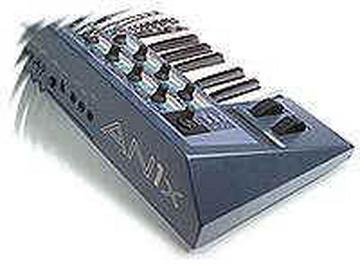
I'm using AN1Xedit flawlessly on 64bit Windows 7 (with an1x)


To: AN1x-list@yahoogroups.com
From: antret@...
Date: Wed, 9 Jun 2010 23:30:28 +0000
Subject: Re: [AN1x] bring all the power to real life


      Many thanks for this!  The an200 is on my short list of things to buy and when I realized that a number of cool thing were not available from the front panel, my eyes crossed looking at those back appendices.  :)


My question at the moment is (I haven't really looked around the group yet in all honesty) does the editor work on our computers in 2010? :)  Such as 64 bit vista?  Perhaps someone here made an update?  I don't mind using the editor, but I'm not sure I'm all for programming sysex strings for everything .....


I will continue to poke around here, but if someone can point me in a good direction, that would be much appreciated!


--- In AN1x-list@yahoogroups.com, Sobaboy <yahoo-lists@...> wrote:

>

> The only consistent way to edit all the parameters of a patch without

> hooking a computer up to the AN200 is to use an external MIDI controller

> that will allow you to assign SysEx messages to be transmitted by a

> control like a knob or button.

>

> I have tested this with a Behringer BCR2000 and a Novation Remote Zero

> SL. Neither of these is a MIDI keyboard. But you can buy the Novation

> Remote as a keyboard unit.

>

> If you just want to control the AN200 with a hardware MIDI controller

> only then you could purchase a Behringer BCR2000 and download  the

> third-party BC Manager

> (http://home.kpn.nl/~f2hmjvandenberg281/bc2000.html) software.

>

> You can use BC Manager to program the BCR2000 to send MIDI System

> Exclusive commands to the AN200 to change those parameters not exposed

> by the AN200's front panel controls or through MIDI CC#'s.

>

> I have done this, but I find that it can cause the AN200 playback to lag

> as it tries to process all the SysEx commands. This is most likely

> because I have not set the resolution parameter or the Transmit Interval

> on the BCR2000 to avoid flooding the AN200 with SysEx data.

>

> I have also done this with an Novation ReMOTE ZeRO SL. This does not lag.

> You can edit the MIDI SysEx string directly on the ReMOTE. The editing

> software for the ReMOTE series does not transfer the SysEx string

> correctly to the unit and requires manual editing after transfer.

>

> In the Control Matrix in the AN200 Editor you can also set up 15 MIDI

> Control Change commands that the AN200 will respond to on a patch by

> patch basis.

> - This requires the AN200 Editor installed and working on a computer, or

> sending SysEx command to set the parameters.

> - This will not work for the 256 Preset patches, only the 128 User

> patches. The Preset patches can't be changed and they already have

> differing Control Matrix setups.

> - This does not give you control of all the parameters of a patch.

>

> If you can resign yourself to only using the User Patches, I could see

> setting up 1-4 patches stored in U125-U128 to use as starting points for

> creating your own patches. These would start with the Control Matrix

> setup to access the parameters that you most want to access. You would

> the program your MIDI controller to send those MIDI CC#to the AN200.

>

> Why 4 patches?

> If you have Oscillator Sync off, you can select the Multi Saw waveform

> for Oscillator 1 (VCO1) which has Detune and Mix parameters where other

> Waveform types have Pulse Wave Modulation Depth and Pulse Width.

>

> The Frequency Modulation Algorithm options change depending on what Sync

> mode you are in.

>

> You can assign LFO 1 and LFO 2 to modulate VCO1 pitch, VCO2 pitch, VCA

> level and VCF cutoff. You can't edit which LFO affects those parameters

> from the front panel.

>

> So with all those variations in parameters based on certain settings you

> may want to have a couple of User Patches setup and ready to go.

>

> When you edit a patch on the AN200 you are editing a working copy of

> another preset. The changes you make will not be saved unless you

> explicitly save the patch into one of the User Patch locations. Your

> editing takes place in what Yamaha calls the Current Voice.

>

> In hexadecimal, the template for changing the value of the Ring

> Modulation Setting:

>

> F0 43 10 5C 10 10 2B value F7

>

> F0 - System Exclusive Message Start

> 43 - Yamaha manufacturer ID

> 10 - Device number

> 5C - Model ID

> 10 - Address High

> 10 - Address Mid

> 2B - Address Low (2B is the value for Ring Modulation)

> value - The value you want to set Ring Modulation to (0-127)

> F7 - System Exclusive Message End

>

> I found the format for the SysEx message in the AN200 manual, buried in

> the back beyond the index under the section MIDI Data Format as Section

> 2.1.3 AN200 Native parameter change

>

> With a string like that you would setup your external MIDI  controller

> (which can transmit SysEx) to send that message. It would replace the

> value with say the position of a knob scaled from 0 to 127 and then send

> that to the AN200 when you turn that knob.

>

> Section 1.2.18 Others has a table that lists the MIDI Control Change

> numbers (CC#) that the AN200 will respond to without resorting to

> editing the Control Matrix settings or using SysEx messages. These are

> the parameters that you could program an external MIDI controller or

> Sequencer program like Live or Logic to send to the AN200 with making

> sacrifices to the gods.

>

> There is a table <1-1> Parameter Base Address which lists the starting

> Addresses for the Current Voice and for the User patches.

> These values are the starting Address High , Mid and Low values for

> various sets of parameters.

>

> The sections after that <1-2>, <1-3>, <1-4>, <1-5>, <1-6>, <1-7> list

> the specific addresses, value ranges, names, descriptions and default

> values for all the parameters for the Current Voice.

>

> You use these to select the Address High, Mid and Low values of the

> parameter that you want to change.

>

> It also shows you the allowed values for the parameter.

>

> In order of ease of use, start with the defined CC# first for the front

> panel parameters, then the Control Matrix and finally the SysEx messages.

>

> Hope this helps,

>

> sobaboy

>


_________________________________________________________________
http://clk.atdmt.com/UKM/go/195013117/direct/01/
We want to hear all your funny, exciting and crazy Hotmail stories. Tell us now

[Non-text portions of this message have been removed]Message
RE: [AN1x] bring all the power to real life
2010-06-10 by Paul T
Attachments
- No local attachments were found for this message.