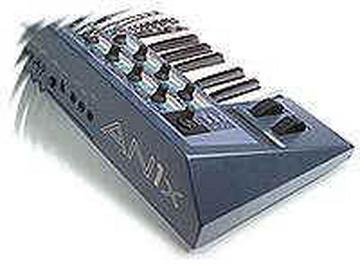
Obviously the AN1x was NOT designed for emulating mere organ sounds.
There were plenty of units marketed at the time for that purpose.

The AN1x is a Virtual Analog synth --- meant to sound like synthesizers
made from about 1968 through 1988. It is an inexpensive alternative to
having to buy a lot of different units made during that time to get
similar sounds.

If you are a new user and you haven't read the introduction part of the
manual, then you might not understand what this synth was designed for.

I am posting this to help newbies understand what they own and stop
asking silly questions.

This is an EXCELLENT virtual analog synth. Play it with enthusiasm,
program it with ingenuity, post useful ideas and questions to this
list.... You have come to the Right Place. We are here to help and get
useful ideas. Thanks for subscribing.

(The following section is from the introduction section of the manual.)
(After you read this, you shouldn't have a major reason for complaining
to the list about why it doesn't sound exactly like a trumpet or a piano
or an organ. You shouldn't want to try to make it store samples. Enjoy
it's uniqueness - understand its purpose.)


*!*!*!*!*!*!*!*!*!*!**!*!*

The Making Of A Modern Classic

The classic analog synth sound is back with a vengeance and more popular
than ever. Vintage analog synthesizers are hot items, recirculating and
finding their way into the arsenals of the world’s most innovative music
makers, many of whom weren’t even born when the voltage controlled
synthesizer was coming of age more than a quarter of a century ago.
Enter the Yamaha AN1x Control Synthesizer—a modern classic in its own
right—complete with the VCO, VCF, and VCA blocks, or "modules" that give
retro synths that famously fat, rich, warm sound, plus multiple knobs
for controlling every nuance of the sound, and even an on-board
Arpeggiator and Step Sequencer for generating pattern loops at the press
of a key. What’s much more, however, is that the AN1x incorporates
features that vintage synths could only dream about—like three onboard
programmable digital multi-effects units and a 3-band stereo EQ, a
multiple controller-to-parameter assignment architecture, a 4-track Free
EG for “hand drawing” real-time knob position movements of up to four
different tone generator parameters, plus real-time morphing between two
different sounds, and more—all of which can be customized for each of
the 128 voices and stored as individual voice data.


The History…

Why is the “analog sound” so popular in a digital age? What long and
winding road had to be
traveled—just to end up right back where we started from? Let’s take a
quick look at how we got from there
to here, and where here really is, anyway. Electronic music synthesis
has been around in one form
or another since the beginning of the 20th Century. But it wasn’t until
the early 1970s that developments in
voltage controlled synthesis technology made the concept practical—and
affordable.
As such, the voltage controlled synthesizer became less and less an
experimental curiosity in the world’s great
universities and sound labs and more and more a valid—and
revolutionary—musical instrument in its own
right. It quickly became a staple in professional recording studios, and
its myriad sounds started
gracing the ears of millions through popular recordings in literally all
genres of music.
Then came the 1980s, and the introduction of wildly popular,
affordable-for-the-masses, great-sounding and
easy-to-use digital synths like the famous Yamaha DX7. What followed was
the MIDI revolution, which drove
the rapid development of ever-more-sophisticated multitimbral digital
synthesizers and tone generators, along
with the overwhelming acceptance of digital sampling which has literally
changed the way we create and
listen to music. And all of which have gone hand-inhand with the desktop
music revolution.
Most recently there has been the introduction of breakthrough physical
modeling synthesis technology,
which has been successfully applied to the accurate reproduction of
acoustic instrument sounds through
purely electronic means, as well as the creation of new “hybrid-type”
acoustic-oriented sounds.


Enter Analog Physical Modeling…

The classic analog synth never fell out of favor with the world's most
innovative musicians. That's because it
has a special punch, power, plus important elements of interactivity
that digital synths and samplers have
tended to lack by comparison. And now, with the demand for that "classic
analog sound" due to the global popularity of techno, trance, and other
modern forms of dance music, it's hardly surprising that Yamaha—a
company consistently at the very pinnacle of electronic musical
instrument technology—would react to that demand and create a completely
new performance-oriented "control synthesizer" that takes the company's
original breakthroughs in physical modeling synthesis and uses it to
digitally "model" the analog sound-generating components which gives
voltage controlled synthesis its unique character and virtually
unlimited range of sound. And package it with a host of digital extras
to bring the technology full circle with a completeness and utility
never before possible. In short, the AN1x is a logical—and timely—
development in the evolution of electronic musical instrument history,
based on the modern needs and
demands of the world’s cutting-edge musicians. And once again, as is
often the case with creations from Yamaha, music history will never be
the same. All the tools are in the box. The rest is up to you….

(end quote from manual)

I hope this helps resolve questions about the major purpose of this
keyboard.

*Ed Edwards*

><> <>< <>< ><>
http://www.ezekielswheel.com
http://www.untiedmusic.com/ezekiel
http://mysite.verizon.net/vze29bq6
Message
Re: [AN1x] The Virtues Of Our Beloved Boards
2006-09-03 by Ed Edwards
Attachments
- No local attachments were found for this message.