Overview
Discussion about the Korg PolySix synthesizer
WE HAVE MOVED!
Yahoo! Groups is shutting down. Please visit us on https://vintagekorg.groups.io/g/Main.
Old info:
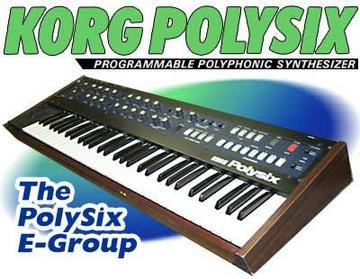
The PolySix E-Group is dedicated to the Korg PolySix Synthesizer.
- Who used it, and where is it featured?
- How to MIDI it up
- Problems you're having with yours
- PolySixes for sale
- Hints, tips
- Do you have tunes in which you've used your P6?
...and other stuff related to Korg's PolySix!
Please keep the language and tone civil.
- Members
- 825
- Created
- 2000-06-23
Search
Search this archive
Thread snapshot
Last 10 threads
- We have moved (1 messages, 2019-10-30)
- Polysix / Vintage Korg email address change. (4 messages, 2019-10-24)
- Fundraiser is UP (12 messages, 2019-10-20)
- Yahoo Groups shutting down, Polysix group will move. (36 messages, 2019-10-18)
- Fwd: [PolySix] Yahoo Groups shutting down, Polysix group will move. (2 messages, 2019-10-18)
- New User upload (3 messages, 2019-07-08)
- PolySix only works in test mode? (34 messages, 2019-05-03)
- The ADSR failing. (1 messages, 2019-04-30)
- Polysix Tuning Issue (5 messages, 2019-04-12)
- Re: [PolySix] Re: p6 "spark killer" (2 messages, 2019-03-10)