A couple of things...
One is, I mentioned here before about this, that it was a real eye opener for me to play with EQ with my guitar in the mix. I got the guitar (in the song at my site called "shot in the dark" at
http://home.online.no/~jacker ) to where I wanted it while adjusting EQ and all on my effects pedal while playing little riffs in the mix. My main point is, I wasn't soloing it, but adjusting a little, playing, adjusting, playing.... The guitar in that solo, I got exactly the guitar sound I was after. Mixed it down and was mostly done with the song. Some months later I was listening to the mix again, and for the first time I accidentally solo'ed the guitar solo...I heard it alone, not in the mix. MAAN....what a terrible sounding guitar that was. I assumed I had picked some take or other that I had not used, but found out that that terrible screeching guitar, when I brought up the rest of the mix suddenly sounded sweet and just right. Sat there and played with it and played with it, and it was amazing, without being in the mix, it just sounded thin and broke up all the time, bring up the mix and it sounded like butter! So how you want to set it really depends on if you are going to feature the one instrument sound or if it will be playing with other instruments. I am thinking about making a small MP3 of that guitar soloed and letting people hear the difference, it is that drastic.
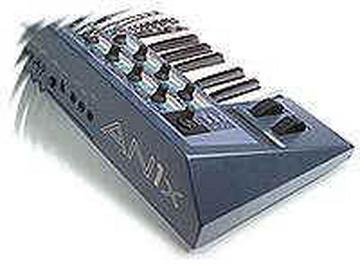
Another thing, just from my experience with the AN1x is, since I always am running mine direct into my mixer/recorder which has three band EQ, I prefer to just set it flat in the An1x and adjust at the mixer. I know the EQ on the mixer, and it is easy to work with, on top of that I often record it flat also, (unless I am really sure I need some EQ fix) and on mixdown I play with the EQ.
Also I have some guitar pedals that work well with the An1x, and there again, I can use some of the guitar amp sims and I think they are pretty well designed. I haven't tried yet, but another option I have been playing with is sending the mono signal to a small practice amp, through a guitar pedal board, etc. and then micing.
There are so many options. I think the answers you have gotten so far are really enlightening, I didn't know about the theory behind the amp sims, with low freq etc. So I am really glad you brought this up!
Good luck!
Jim
====================================================
= Check out my original music at =
=
http://home.online.no/~jacker =
= OR =
=
http://www.soundclick.com/bands/jacker_music.htm =
====================================================
----- Original Message -----
From: "Ed Edwards" <edward.edwards@...>
To: <AN1x-list@yahoogroups.com>
Sent: Monday, April 21, 2003 4:01 AM
Subject: Re: [AN1x] EQ and effects
> > The LPF refers to the fact that most tube amps lose high end when they're
> overdriven at the output stage. The harder they're driven, the more the
> high end rolls off. This LPF is a fixed amount, unlike the VCF in the AN1x.
> It helps to take the edge off the sound. There is a balance that must be
> struck between the VCA level of the patch, the Gain setting of the tube
> simulation, and the LPF frequency to get the right tone.
>
> Agreed --- now here's the hard part --- the LPF effect in a tube amp is
> dynamic. That means that at lower volumes the treble portion is let through
> but at high volumes the "scoop" effect kicks in proportionally to the amount
> of volume. Most synths can't properly simulate this audio effect.
>
> The LPF property of overdriven tube amps falls under the "happy accident"
> theory. Similar to Leo Fender's production of the Telecaster, which is sort
> of a hard body banjo, therefore the twang sound... Fender was more
> interested in profits than sound in his design but stumbled on a useful and
> different musical instrument. His happy accident was that he created a
> sound which was previously difficult to produce. The LPF property of a
> Marshall or whatever amp which has been fed voltage beyond the design's
> parameters is a happy accident. The Marshall amps were designed to provide
> "clean" guitar sounds. Players found out about the overdrive through
> experimentation. Legend has it that when Eric Clapton played his overdriven
> Marshall sound in the studio the engineer was very angry and said that the
> sound was bad, and said that nobody would listen to his record. Sorry Mr.
> Engineer. Maybe the "cabinet emulation" section of the AN1x might be able
> to provide a similar filtering effect.
>
> Ed Edwards
> Leader: Ezekiel's Wheel »»»»Retro-Progressive Rock««««
> http://www.untiedmusic.com/ezekiel
> http://artists.mp3s.com/artists/227/ezekiels_wheel.html
> °·.·°·.·°·.·°·.·°·.·°·.·°·.·°·.·°·.·°·.·°·.·°·.·°·.·°·.·°·.·°·.·°·.·°
>
>
>
> Community email addresses:
> Post message: AN1x-list@yahoogroups.com
> Subscribe: AN1x-list-subscribe@yahoogroups.com
> Unsubscribe: AN1x-list-unsubscribe@yahoogroups.com
> List owner: AN1x-list-owner@yahoogroups.com
>
> Shortcut URL to this page:
> http://groups.yahoo.com/group/AN1x-list
>
>
> Your use of Yahoo! Groups is subject to http://docs.yahoo.com/info/terms/
>
>
>