Jan,
The questions being asked in this forum -- the frequency of the LFO, MIDI
SysEx information needed to convert patches between platforms -- are not
typical end-user questions. In fact, I know many musicians who would love
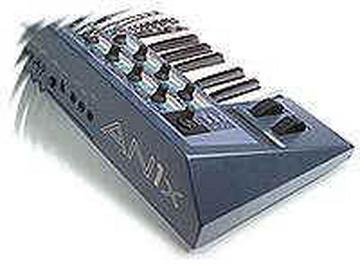
to own an AN1x, but would have no use for this information, feeling that
approaching the sound in such an analytical way spoils their creative
process. That's not to say that the questions aren't valid, but it means
that the requests are uncommon ones, and one cannot take the approach that
Yamaha is being "negligent" by not providing the information. These
questions are related to decisions and processes used by the developers,
which are rarely documented in a format for end users.
Outside of the keyboard -- in particular, synth -- world, such questions
are very rare. How many musicians are screaming at Fender for not
publishing the frequency response curves of a Twin Reverb amplifier? Or at
Tama, for a lack of mechanical drawings for their cymbal stands? Most of
them could care less, as long as the sound and features are there. Like it
or not, Yamaha is in the business of creating musical instruments, not
explaining their inner workings in fine detail.
I think the difference is that Access is a small company with a limited
product line. Under that scenario, the person you are talking to in
"support" might very well be the product's designer. (I know that was true
when I dealt with Voce, Inc. on their V3 Hammond organ clone: the support
was handled by the founder of the company!) The goal is usually to keep a
single product line alive as long as possible, through updates and such, to
minimize development expense. As companies grow larger and the product
lines diversify, this method becomes increasingly hard to manage and keep
profitable, so the teams usually specialize (hardware, software, support,
etc.). By the time you get to a large company like Yamaha, you find that
the people who designed the product usually move on to other tasks after
the product goes into production. This is great, from the view of product
breadth, not so good from the perspective of individual product
support. One of the good points about a small company is the continued
support for older products. There are down sides, too: Voce, Inc. went
out of business, and while some of their products survived under different
management, many of their products are "orphans," without support, repair,
or replacement.
Also recognize that while the AN1x has a strong following among users,
including this author, it wasn't a "runaway success." If it was, there
would probably be an AN2x on the market right now, and eBay would be
swimming in AN1x's. Creating, documenting, and releasing information on
the internal design of a product takes time and money, and diverts the same
from other projects. If the product is out of production, with a small or
moderate user base, throwing additional resources in its direction is a
difficult business decision to make.
Just my $.02 ...
Regards,
-BW
--
Bruce Wahler
Design Consultant
Ashby Solutions"
www.ashbysolutions.com
CloneWheel Support Group moderator
978.386.7389 voice
978.776.0096 fax
bruce@...At 03:43 a 03/03/2001 +0100, you wrote:
>Hello
>
> I agree with you Bruce, write to Yamaha if you have a complaint of you
>own, not to have 400 people write Yamaha because for the "fun" of it, or to
>complain about a thing they are not "expected" to make available.
>
> You could always discuss if f.ex. an LFO numeric-value-to-Hz table,
>should be made available or not. But you have to agree that if Yamaha, by
>themselves made these things available to their customers, they would have a
>wide range of satisfied customers. Take Access f.ex. they continue to make
>new sound banks, editors and system updates available for download for their
>Virus. I guarantee you that they have a huge number of satisfied customers.
>I own a Kurzweil K2000, and I can still get support on that machine, this is
>not possible at Yamaha. If your synth is a couple of years old, they hardly
>know what you are talking about.
>
> I think all this also have to do with the fact that, when getting in
>touch with Yamaha, with a problem, you often end up feeling, they have no
>clue to what you are talking about. I mean, they should know, they developed
>the machine.
>
>Jan
>
> > I've read the file "LFO to Hz NOW!!!" and at the risk of sounding
> > like a wet blanket, I'm not sure that sending 400 copies of the
> > letter to Yamaha is going to accomplish the desired result. As an
> > engineer who has both developed and supported consumer products, as
> > well as a musician who has been using synths since the early 70's,let
> > me provide a different perspective...
> >
> > While an LFO numeric-value-to-Hz table is certainly a useful item, it
> > is not in the category of something that a synthesizer manufacturer
> > is "expected" to provide.
> >
> > Regards,
>
> > Bruce Wahler
> > Design Consultant
> > Ashby Solutions"
> > www.ashbysolutions.com
> > CloneWheel Support Group moderator
> > 978.386.7389 voice
> > 978.776.0096 fax
> > bruce@...
>
>
>Yahoo! Groups
>Sponsor<http://rd.yahoo.com/M=180402.1330034.2922537.2/D=egroupmail/S=1700032144:N/A=590015/?http://www.budget.com/deals/hotdeals/lastminute.html>
>
>
>Community email addresses:
> Post message: AN1x-list@onelist.com
> Subscribe: AN1x-list-subscribe@onelist.com
> Unsubscribe: AN1x-list-unsubscribe@onelist.com
> List owner: AN1x-list-owner@onelist.com
>
>Shortcut URL to this page:
>
><http://www.onelist.com/community/AN1x-list>http://www.onelist.com/community/AN1x-list
>
>
>Your use of Yahoo! Groups is subject to the
><http://docs.yahoo.com/info/terms/>Yahoo! Terms of Service.