Ed,
I'm kinda sorry I started this thread way back when, I think a lot of
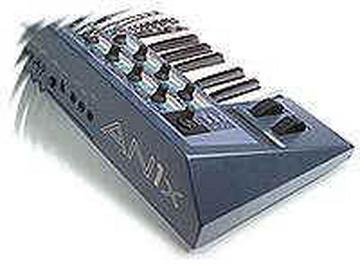
people misunderstood me. the kind of organ sounds I use the an1x for
are like the old vox continentals, and some hammond type sounds, but
mainly the vox organ, and the an1x's analog engine is perfect for
those. I have a split setup with a mellow sound below middle C and a
brighter sound above, so it's like a dual manual super continental. I
know the board was meant to be an analog synth, but then i'm known
for breaking rules. and as for the hammonds I know it can't do those
like a nord electro, but until i hit the lotto, it'll work.
On Sep 3, 2006, at 2:44 AM, Ed Edwards wrote:
> Obviously the AN1x was NOT designed for emulating mere organ sounds.
> There were plenty of units marketed at the time for that purpose.
>
> The AN1x is a Virtual Analog synth --- meant to sound like
> synthesizers
> made from about 1968 through 1988. It is an inexpensive alternative to
> having to buy a lot of different units made during that time to get
> similar sounds.
>
> If you are a new user and you haven't read the introduction part of
> the
> manual, then you might not understand what this synth was designed
> for.
>
> I am posting this to help newbies understand what they own and stop
> asking silly questions.
>
> This is an EXCELLENT virtual analog synth. Play it with enthusiasm,
> program it with ingenuity, post useful ideas and questions to this
> list.... You have come to the Right Place. We are here to help and get
> useful ideas. Thanks for subscribing.
>
> (The following section is from the introduction section of the
> manual.)
> (After you read this, you shouldn't have a major reason for
> complaining
> to the list about why it doesn't sound exactly like a trumpet or a
> piano
> or an organ. You shouldn't want to try to make it store samples. Enjoy
> it's uniqueness - understand its purpose.)
>
>
> ∗!∗!∗!∗!∗!∗!∗!∗!∗!∗!∗∗!∗!∗
>
> The Making Of A Modern Classic
>
> The classic analog synth sound is back with a vengeance and more
> popular
> than ever. Vintage analog synthesizers are hot items, recirculating
> and
> finding their way into the arsenals of the world’s most innovative
> music
> makers, many of whom weren’t even born when the voltage controlled
> synthesizer was coming of age more than a quarter of a century ago.
> Enter the Yamaha AN1x Control Synthesizer—a modern classic in its own
> right—complete with the VCO, VCF, and VCA blocks, or "modules" that
> give
> retro synths that famously fat, rich, warm sound, plus multiple knobs
> for controlling every nuance of the sound, and even an on-board
> Arpeggiator and Step Sequencer for generating pattern loops at the
> press
> of a key. What’s much more, however, is that the AN1x incorporates
> features that vintage synths could only dream about—like three onboard
> programmable digital multi-effects units and a 3-band stereo EQ, a
> multiple controller-to-parameter assignment architecture, a 4-track
> Free
> EG for “hand drawing” real-time knob position movements of up to four
> different tone generator parameters, plus real-time morphing
> between two
> different sounds, and more—all of which can be customized for each of
> the 128 voices and stored as individual voice data.
>
>
> The History…
>
> Why is the “analog sound” so popular in a digital age? What long and
> winding road had to be
> traveled—just to end up right back where we started from? Let’s take a
> quick look at how we got from there
> to here, and where here really is, anyway. Electronic music synthesis
> has been around in one form
> or another since the beginning of the 20th Century. But it wasn’t
> until
> the early 1970s that developments in
> voltage controlled synthesis technology made the concept practical—and
> affordable.
> As such, the voltage controlled synthesizer became less and less an
> experimental curiosity in the world’s great
> universities and sound labs and more and more a valid—and
> revolutionary—musical instrument in its own
> right. It quickly became a staple in professional recording
> studios, and
> its myriad sounds started
> gracing the ears of millions through popular recordings in
> literally all
> genres of music.
> Then came the 1980s, and the introduction of wildly popular,
> affordable-for-the-masses, great-sounding and
> easy-to-use digital synths like the famous Yamaha DX7. What
> followed was
> the MIDI revolution, which drove
> the rapid development of ever-more-sophisticated multitimbral digital
> synthesizers and tone generators, along
> with the overwhelming acceptance of digital sampling which has
> literally
> changed the way we create and
> listen to music. And all of which have gone hand-inhand with the
> desktop
> music revolution.
> Most recently there has been the introduction of breakthrough physical
> modeling synthesis technology,
> which has been successfully applied to the accurate reproduction of
> acoustic instrument sounds through
> purely electronic means, as well as the creation of new “hybrid-type”
> acoustic-oriented sounds.
>
>
> Enter Analog Physical Modeling…
>
> The classic analog synth never fell out of favor with the world's most
> innovative musicians. That's because it
> has a special punch, power, plus important elements of interactivity
> that digital synths and samplers have
> tended to lack by comparison. And now, with the demand for that
> "classic
> analog sound" due to the global popularity of techno, trance, and
> other
> modern forms of dance music, it's hardly surprising that Yamaha—a
> company consistently at the very pinnacle of electronic musical
> instrument technology—would react to that demand and create a
> completely
> new performance-oriented "control synthesizer" that takes the
> company's
> original breakthroughs in physical modeling synthesis and uses it to
> digitally "model" the analog sound-generating components which gives
> voltage controlled synthesis its unique character and virtually
> unlimited range of sound. And package it with a host of digital extras
> to bring the technology full circle with a completeness and utility
> never before possible. In short, the AN1x is a logical—and timely—
> development in the evolution of electronic musical instrument history,
> based on the modern needs and
> demands of the world’s cutting-edge musicians. And once again, as is
> often the case with creations from Yamaha, music history will never be
> the same. All the tools are in the box. The rest is up to you….
>
> (end quote from manual)
>
> I hope this helps resolve questions about the major purpose of this
> keyboard.
>
> ∗Ed Edwards∗
>
>> <> <>< <>< ><>
> http://www.ezekielswheel.com
> http://www.untiedmusic.com/ezekiel
> http://mysite.verizon.net/vze29bq6
>
>
>
>
>
> Community email addresses:
> Post message: AN1x-list@yahoogroups.com
> Subscribe: AN1x-list-subscribe@yahoogroups.com
> Unsubscribe: AN1x-list-unsubscribe@yahoogroups.com
> List owner: AN1x-list-owner@yahoogroups.com
>
> Shortcut URL to this page:
> http://groups.yahoo.com/group/AN1x-list
>
> The AN1x Control Synthesizer FAQ::
> http://www.geocities.com/jondl_2000/an1x_faq/an1x_faq_toc.htm
>
> Yahoo! Groups Links
>
>
>
>
>
>
"Egun On, Lagunak!" (Basque for G'day Mates)
Pete Nalda