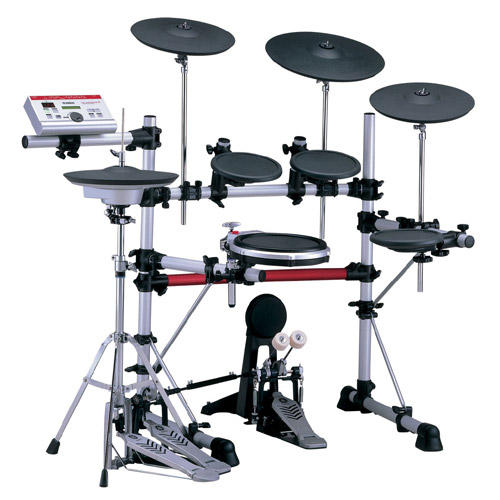
--- In DTXpress@yahoogroups.com, "cantorit" <cantorit@y...> wrote:
> I have been offered a one year old Yamaha DTXpress kit for 460
USD. I
> would be happy to read some reviews and comments on this kit and
the
> price.

Hi Timo,

The price seems right for what I assume is a XpressI (the mark II
has a few upgrades that are useful but not essential).

> My ultimate dream would be to sample the acoustic set and play the
> electronic set with the acoustic set sounds. Is this possible with
> the DTXpress?

In a word, no. Playing samples via the kit's pads/triggers is
possible but not with the Xpress module itself, which does not have
sampling capability. You would have to purchase additional equipment
to access your own samples--hardware, software, or both. But don't
sell the Xpress module short so quickly. Many group members,
including me, are acoustically oriented. The DTXPU brain contains a
wealth of sounds from which to choose, most of which are based on
acoustic percussion. You'll find the electronic geegaws as well,
some of which are entertaining, and even useful. But you can bypass
them altogether if you want. Chances are that you will find more
than one of the default kits to your liking, and you can further
mix/match/refine the given sounds to suit your taste. I'm willing to
be that you'll be mightily impressed with the range of possibilities
that you encounter.

> I have a PC with good sound cards and MIDI inputs that could be
used trough MIDI but the process to do this is unknown to
> me. E.g. the concept of triggering is beyond my experience.

The extra MIDI capability may well come in handy if you eventually
want to connect a sequencer (recording software), sampler, or other
device (say, extra inputs for more electronic pads and cymbals). To
be painfully brief, MIDI is a way for compatible instruments to
create specified noises according to programmed commands--in the
Xpress' case, gum-rubber pads equipped with piezo and/or FSR
electronic triggers capable of accessing something like 1000
percussive or melodic voices at various parametric levels within the
module. If you end up with the Xpress, this process will start
making sense immediately, or at least enough sense to generate
unprecedented levels of confusion for a while, mixed with an
unmitigated glee and a delightful obliviousness to the passage of
time. You'll be learning something new and exciting that is by no
means a sellout of your current values. E-drums have come a long
way, and the relatively inexpensive Xpress is a good representative
of its progress.

By the way, as comparatively silent as e-drums are--especially when
played through headphones--they still can make enough noise to
awaken children, irritate nearby spouses/partners, and alienate
neighors in adjoining flats. The kick pedal is probably the worst
offender. Group members have various methods of softening the blow.
You can ask them later if need be.

Woefully deficient as this little primer is, I hope that I've been
able to convey a positive glimpse of what the DTXpress offers. Don't
expect to tap all its resources quickly, or to approximate your
experience with an acoustic set right out of the box. E-drum systems
have a mind of their own, intimately related to the kind of drumming
that we've all done for years, but with their own rewards and
demands.

Ed